Home Blog Aum Family Portfolio Dashboard

How to Track AUM and Family Portfolios in One Dashboard

As a Mutual Fund Distributor (MFD), you must juggle multiple clients' portfolio details, values, and Assets Under Management (AUM). You can get bogged down trying to consolidate different family members' portfolios and understand their investment needs. Working in Excel or flipping through multiple tabs to find details on a particular client's portfolio is a pain.

With a dashboard, you can view individual clients' portfolios and the consolidated family AUM in one place. It makes it easy to track your clients' portfolios and prepare for review meetings. You can stay on top of your clients' investments and meet their needs. Using portfolio management software like JezzMoney to track your family AUM makes managing your clients' portfolios easier. It will help you manage client information and other portfolio management tasks more efficiently, freeing up time to focus on growing your mutual fund business.

Why Tracking Client AUM and Family Portfolios Separately Becomes Difficult

As an MFD's client base grows, managing individual portfolios and family investments separately can create operational challenges. Without a centralized system, tracking overall AUM and maintaining an organized view of client investments can take significant time.

  • Managing Multiple Investor Accounts: Family members often maintain separate mutual fund accounts, making it difficult to review their investments collectively while keeping individual records organized.
  • Switching Between Client Records: Repeatedly accessing different investor profiles and investment reports can slow daily portfolio management and client servicing.
  • Difficulty Consolidating Family AUM: Calculating the combined AUM of multiple family members is challenging when their investment details are kept separately.
  • Manual Spreadsheets and Repetitive Data Entry: Relying on spreadsheets to record, update, and combine portfolio information increases administrative work and the risk of data-entry errors.
  • Challenges in Preparing Portfolio Reviews: Gathering investment details from multiple sources makes it harder to produce timely, consistent, and accurate portfolio reports for individual investors and families.

A centralized portfolio management dashboard can help address these challenges by bringing individual client information and consolidated family AUM into one organized view, making portfolio tracking simpler and more efficient for MFDs.

What Is a Family Portfolio Dashboard?

A family portfolio dashboard is a centralized view that helps Mutual Fund Distributors (MFDs) manage and review multiple family members' investment portfolios in one place. Instead of checking each investor's account separately, MFDs can access individual portfolio details alongside consolidated family Assets Under Management (AUM), subject to the software's available features and data.

Connecting Individual Investor Profiles Within a Family

A family portfolio dashboard allows MFDs to group related investor profiles under a family record. For example, a husband, wife, and children's investment portfolios can be organized within a single family group while keeping each investor's records separate. This makes it easier to review investments at both the individual and family levels.

Individual Portfolio Tracking versus Consolidated Family Portfolio Tracking Essay

Individual portfolio tracking refers to managing a particular individual’s investment profile, whereas consolidated family portfolio tracking involves reviewing a group of family members’ investment holdings and overall family net worth.

The Advantages of Portfolio Visibility for MFDs

A consolidated dashboard allows MFDs to analyze clients' investment positions by providing an overview of the entire family profile without accessing each member’s data one by one. This feature would improve the MFD’s ability to review each particular client’s portfolio and gain insight into their family’s investment matters. Such a dashboard would also improve organization for families’ investment matters. To provide a convenient and effective tool for consolidated family portfolio tracking, MFDs may use the Family AUM function in JezzMoney.

Key Features to Look for in an AUM and Family Portfolio Dashboard

Choosing the right AUM and family portfolio dashboard helps Mutual Fund Distributors (MFDs) manage investor information, review family investments, and monitor portfolio performance more efficiently. The following features can organize portfolio management and simplify day-to-day client servicing.

Consolidated Family AUM View

A consolidated family AUM view lets MFDs review the combined Assets Under Management of linked family members from a single dashboard. Instead of calculating each investor's AUM separately, distributors can access an overall view of family investments.

  • View the combined AUM of linked family members.
  • Understand how investments are distributed across individual family accounts.
  • Access individual and consolidated portfolio information from one place.

Individual Client Portfolio Tracking

While consolidated family AUM provides an overall picture, individual portfolio tracking helps MFDs understand each investor's holdings and investment position. This makes it easier to review portfolios according to individual financial goals and requirements.

  • Review each investor's mutual fund holdings.
  • Access available portfolio valuations and investment details.
  • Switch between client-level and family-level views for convenient portfolio reviews.

Portfolio Valuation and Investment Overview

Portfolio valuation helps MFDs understand the current value of an investor's mutual fund investments. A dashboard that presents investment values and related information clearly can simplify portfolio monitoring and client discussions.

  • Review available portfolio valuation data.
  • Monitor changes in portfolio value over time, depending on data availability and reporting features.
  • Distinguish between invested amount, current portfolio value, and investment returns.

Family Member Grouping

Family member grouping helps MFDs organize related investor profiles under a common family portfolio. This structure makes it easier to access linked accounts while preserving individual investor records.

  • Group related investor profiles under a family portfolio.
  • Access linked member details without repeatedly searching for individual records.
  • Maintain clear associations between family members and their respective investments.

Portfolio Reports and Client Statements

Portfolio reports help MFDs present investment information in a structured, easy-to-understand format. Access to organized reports can reduce manual preparation and make individual and family portfolio reviews more efficient.

  • Generate or access portfolio reports and client statements where supported.
  • Simplify family portfolio reviews with consolidated investment information.
  • Present available portfolio details in a clear, organized format for client discussions.

Data Accuracy, Access Control, and Privacy

Accurate investor information and responsible data handling are essential when managing multiple family portfolios. A reliable dashboard should support organized records and appropriate safeguards for sensitive financial information.

  • Keep investor records organized and updated.
  • Apply appropriate access permissions to sensitive financial information.
  • Follow secure data-handling practices when managing linked family portfolios.

How JezzMoney Fits In

For MFDs looking to simplify portfolio management, JezzMoney offers Family AUM functionality to help bring family-level AUM visibility and individual investor information into a more organized workflow. This can reduce the need to manage family portfolios in separate spreadsheets and make client portfolio reviews easier. Explore JezzMoney to learn more about its mutual fund distributor software solutions.

How to Track AUM and Family Portfolios in One Dashboard: Step-by-Step

MFDs can track AUM and family portfolios more easily with a structured process and portfolio management software. With a centralized dashboard, they can organize investor records, group family members, and view both individual and consolidated investment information without relying on multiple spreadsheets.

Step 1: Organize Your Client Database

Begin by having a properly organized investor database. This should contain relevant information and investment records of your clients. Having an updated list will make it easier to sort investors and manage their portfolios, especially as your client base grows.

Step 2: Identify and Group Family Members

Identify investors who are in the same family and ensure that each of their profile records are connected accordingly. Maintain individual profiles of investors by organizing their files accordingly in the platform using its family grouping feature. This will create the framework for your family AUM by having each investor's individual or consolidated portfolio on record.

Step 3: Review Individual Client Portfolios

Access individual client portfolios to view what mutual fund holdings, valuations, and investment records exist for each investor.

Step 4: Access the Consolidated Family AUM

Access the family AUM to understand the consolidated investment position of your clients who are family members. As opposed to having to calculate the total value of the portfolios of each family member, you can use the family AUM to find a snapshot view of their combined holdings.

Step 5: Analyze Portfolio Information

Review investment summaries, valuation reports, and other relevant information to understand how an investor's family or individual holdings are structured. Compare these using the individual and family AUMs where applicable, and distinguish between an investor's portfolio value, the amount they have invested, and the returns they are recording.

Step 6: Use the Dashboard for Regular Client Reviews

Use the information obtained to conduct regular client reviews, portfolio discussions, and meetings. These can be used as a basis for your client servicing efforts, wherein you can ensure a well-organized approach to your client communication, identify changes in portfolio values, and more.

Using the capabilities of JezzMoney, MFDs can harness the power of the Family AUM features to make it easier to track and view the investments of their family clients, and manage individual client portfolios in a more organized manner. Through this centralized approach, they can reduce the need to manually view and sort investor records, and focus on improving their operations and relationship with their clients.

How a Centralized Dashboard Helps MFDs Improve Business Efficiency

As a Mutual Fund Distributor (MFD) business grows, managing multiple investor portfolios and tracking family AUM can become increasingly time-consuming. A centralized dashboard brings together relevant client and portfolio information, helping distributors simplify routine tasks, improve visibility, and manage operations more efficiently.

  • Reduces Time Spent Switching Between Investor Records: Access individual client profiles and investment information in one place, reducing the need to navigate multiple records repeatedly.
  • Simplifies Family-Level Portfolio Reviews: View consolidated family AUM alongside individual portfolios, making it easier to prepare for family investment discussions and client meetings.
  • Improves Visibility Into Overall AUM: Get a clearer overview of the AUM your distribution business manages and review available portfolio information to understand its current position.
  • Supports More Organized Client Servicing: Use centralized client information to prepare for portfolio reviews, respond to investor queries, and plan follow-ups more efficiently.
  • Helps Manage a Growing Investor Base: Maintain organized investor records and simplify portfolio management workflows as the number of clients and linked family portfolios increases.

With JezzMoney, MFDs can use Family AUM functionality to improve access to consolidated family portfolio information. A centralized approach to portfolio management reduces manual administrative work and lets distributors spend more time on client relationships and business development.

Manual AUM Tracking vs. Software-Based Portfolio Management

MFDs can track AUM and family portfolios using spreadsheets and manual records or a dedicated portfolio management software platform. Manual tracking may work for a small client base, but managing multiple investor accounts and consolidating family investments becomes more complex as the business grows. Software-based portfolio management offers a more organized way to access and review client information.

The following table highlights the key differences between the two approaches.

Comparison Factor Manual AUM Tracking Software-Based Portfolio Management
AUM Consolidation Requires manually combining investment values from separate records. Helps review consolidated AUM through available dashboard features.
Family Member Grouping Family relationships and investor details may need to be maintained separately. Supports organized family grouping where available.
Individual Portfolio Visibility Requires searching through separate spreadsheets or client records. Provides centralized access to individual portfolios, depending on the available features.
Report Preparation Often involves manual calculations, formatting, and data compilation. Can simplify access to portfolio summaries and reports where supported.
Data Updates and Maintenance Requires repetitive data entry and manual verification. Helps organize portfolio information, with update frequency depending on data integrations and platform capabilities.
Scalability Maintaining multiple records becomes more time-consuming as the client base grows. Supports more structured portfolio management as the client base grows.

Which Approach Is Better for MFDs?

Manual tracking can be sufficient for distributors managing a limited number of investor records. However, as the client base expands, consolidating AUM, organizing family portfolios, and preparing reports manually can require considerable effort.

Software-based portfolio management offers a more centralized way to access client information and review investments. When choosing a solution, MFDs should consider factors such as family AUM functionality, individual portfolio access, reporting capabilities, data update frequency, and security.

JezzMoney’s Family AUM functionality helps MFDs give clients a more accessible, convenient way to interact with their investment information. By introducing family-level AUM, the software lets MFDs aggregate family investment data and make it easier to organize and review portfolios.

How JezzMoney Helps MFDs Track AUM and Family Portfolios

JezzMoney is a mutual fund distributor software platform designed to help Mutual Fund Distributors (MFDs) manage client information and streamline their day-to-day operations. As an MFD's client base grows, having organized access to individual investor portfolios and consolidated family AUM becomes increasingly important. JezzMoney's Family AUM functionality helps distributors simplify access to family-level investment information.

Consolidated Family AUM at a Glance

JezzMoney's Family AUM functionality gives MFDs greater insight into consolidated family portfolio information through a more centralized workflow. Instead of relying on separate spreadsheets to understand family-level investments, distributors can use the family-level view to get consolidated AUM insights and access related investor information.

Organized Client Records and Portfolio Visibility

Organized investor records help MFDs navigate individual client portfolios more efficiently. By pairing family-level information with individual investor records, Family AUM functionality provides clearer insight into a client's investments and a simpler way to prepare for portfolio reviews.

Connecting Family AUM With Portfolio Management

Family portfolio tracking is but one piece of an MFD's greater portfolio management workflow. By combining family-level AUM analysis with individual investor information, MFDs can organize client servicing, prepare for conversations, and manage portfolio-related activities.

Explore JezzMoney's Family AUM Functionality

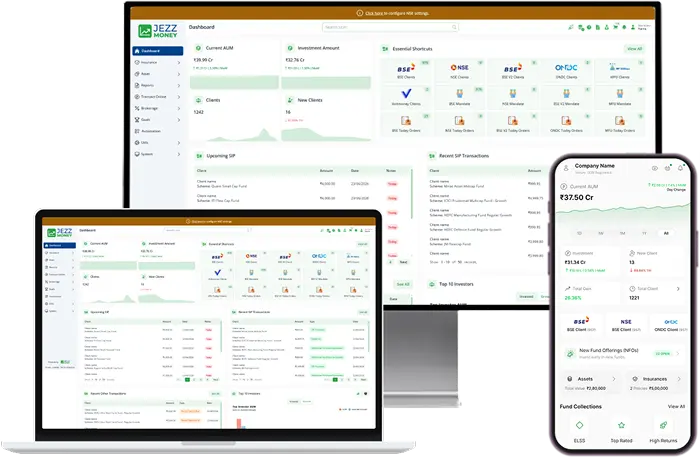
To simplify family portfolio tracking, explore how JezzMoney can support your mutual fund distribution business. A product demonstration or dashboard screenshot can help you understand how family records, consolidated AUM, and individual portfolio information are presented within the platform. Visit JezzMoney to learn more about its mutual fund distributor software and explore the features available for your business.

Best Practices for Managing AUM and Family Portfolios

Effective AUM and family portfolio management requires accurate records, regular portfolio reviews, and organized access to investor information. By following consistent practices, Mutual Fund Distributors (MFDs) can improve portfolio visibility, simplify client servicing, and better oversee family investments.

  • Review Portfolio Information Regularly: Schedule regular portfolio reviews to understand changes in investment values and track available portfolio information. Regular reviews also help MFDs prepare for client meetings and investment discussions.
  • Keep Investor and Family-Group Records Accurate: Maintain complete investor profiles and ensure family members are linked to the appropriate family group. Review records periodically to identify missing information or incorrect associations.
  • Verify Data Completeness and Freshness: Check when portfolio information was last updated and confirm that relevant investment details are available. Be mindful that valuations and portfolio data may depend on the platform's integrations and update frequency.
  • Use Consolidated and Individual Portfolio Views: Review consolidated family AUM to understand the overall investment position while retaining access to individual investor portfolios. This helps MFDs discuss family-level investments without losing sight of each investor's holdings.
  • Protect Investor Information: Use appropriate access controls and secure data-handling practices when managing client records. Follow applicable privacy requirements, data protection obligations, and relevant regulatory guidelines for financial information.
  • Explain Portfolio Values and Returns Clearly: During client reviews, distinguish between invested amounts, current portfolio values, and investment returns. Explain the reporting period and relevant limitations so investors can understand their portfolio information accurately.

Using a centralized portfolio management solution such as JezzMoney helps MFDs organize family AUM information and access individual investor records more easily. Combined with regular data checks and responsible client servicing, these practices support a more efficient and structured approach to portfolio management.

Summary

Tracking AUM and managing family portfolios becomes more challenging as an MFD's client base grows. A centralized dashboard helps simplify this process by bringing individual investor portfolios and consolidated family AUM into one place. It reduces manual effort, improves portfolio visibility, and supports more organized client servicing.

JezzMoney offers Family AUM functionality that helps MFDs access family-level investment information through a more organized portfolio-management workflow. To simplify AUM tracking and improve family portfolio visibility, explore JezzMoney to see how its mutual fund distributor software can support your business. Ready to streamline your portfolio management? Explore JezzMoney and book a demo to learn more.

FAQs

What Is the Difference Between Individual AUM and Family AUM?

Can a Family Portfolio Dashboard Combine Investments Across Multiple Investors?

What Should MFDs Look for in Family Portfolio Management Software?

How Can JezzMoney Help With Family AUM Tracking?