

Home Blog Best Practices For Mutual Fund Distributors

Best Practices for Mutual Fund Distributors in 2026

The mutual fund distribution landscape has undergone a fundamental transformation. What was once a product-driven, transaction-focused activity has evolved into a value-led advisory function. Advances in digital technology, tighter regulatory frameworks, and increasingly informed investors have reshaped expectations. Today, mutual fund distributors are expected to deliver continuous value, not only through fund selection but also by combining financial expertise with disciplined processes and technology-enabled service delivery.

Investor expectations have risen significantly. Clients now seek goal-aligned advice, transparent and unbiased recommendations, and seamless access to their portfolios through mobile applications or SaaS-based platforms. Consistent communication, visibility into portfolio performance, and clear disclosures have become essential for building trust. At the same time, regulatory compliance has become more stringent, requiring distributors to maintain accurate records, standardized workflows, and audit-ready systems. The growing adoption of digital advisory platforms has further increased the need for efficient onboarding, automated reporting, and real-time portfolio monitoring across devices.

In this evolving environment, success in mutual fund distribution is no longer driven solely by scale or volume. It depends on how effectively distributors adapt to change, embrace digital tools, and align their advisory practices with the genuine needs and expectations of investors. Those who combine advisory integrity, operational efficiency, and technology-led engagement are best positioned to build sustainable and future-ready distribution businesses.
2026 Shift From Product-Centric Selling to Goal-Based Advisory

Experienced distribution of mutual funds has clearly shifted the selling strategy from product-centric to goal-based advisory.

Understanding Investor Life Goals

Contemporary advisory considers investors' life goals as a first step in identifying and prioritizing them. Retirement planning, children's education, wealth creation, and income generation may be the themes of the respective goals. Through the documentation and thoughtful organization of these goals, distributors will be able to provide consistent, defensible advice.

Risk Profiling and Time-Horizon Mapping

Risk profiling 2026 goes well beyond the mere use of questionnaires. It also considers factors such as income stability, the asset and liability portfolio, investment experience, and the individual's response to market volatility. Matching such inputs to the time horizon for achieving the goals will help distributors determine the acceptable risk level for each goal, rather than assigning a single standardized risk level to the portfolio.

Outcome-Driven Portfolio Recommendations

Once the goals and the level of risk each goal can tolerate are defined, the portfolio is designed accordingly. This approach reduces the influence of emotional market reactions on decision-making and, over the long run, promotes disciplined and goal-aligned wealth accumulation.

Implement Advanced Portfolio Diversification Strategies

Portfolio diversification in 2026 isn’t just about picking one portfolio and leaving it. It has evolved into a dynamic, risk-management discipline driven by digitalization. Regular portfolio reviews are now essential, particularly during periods of market volatility.

Mutual fund distributors are expected to construct portfolios that strike a balance between growth, stability, and liquidity. This balance must align closely with the investor’s risk tolerance and long-term financial objectives.

Asset Allocation Across Equity, Debt, and Hybrid Funds

The foundation of effective diversification lies in a well-structured asset allocation strategy. Equity funds serve as the primary drivers of long-term capital appreciation, while debt funds provide income stability and reduce overall portfolio volatility.

Hybrid funds combine equity and debt exposures, helping to smooth market fluctuations and reduce downside risk. The allocation across these asset classes should be determined by the investor’s time horizon, return expectations, and capacity to tolerate short-term market movements.

As 2026 approaches, mutual fund distributors are increasingly shifting their focus away from individual fund features and toward strategic, goal-oriented asset allocation frameworks.

Managing Concentration Risk Due to Market Movements

Strong market rallies or sector-specific trends can unintentionally increase concentration risk within a portfolio. Without periodic rebalancing, portfolios may drift away from their original risk profile and become overly exposed to specific asset classes, sectors, or fund styles.

Modern diversification strategies emphasize the importance of at least semiannual portfolio reviews. These reviews help mitigate risk when sudden market shifts disproportionately benefit one segment of the portfolio, ensuring overall balance and resilience are maintained.

Aligning Diversification With Investor Risk Profiles

Diversification is effective only when it aligns with the investor’s risk profile. Conservative investors typically prioritize capital protection and predictable income, while growth-oriented investors are more comfortable with higher equity exposure.

By tailoring diversification strategies to match each investor’s risk capacity and financial goals, mutual fund distributors can build compliant, resilient portfolios that are better positioned to withstand market downturns and deliver consistent outcomes.

Continuously Engage through Investor Education

Investor education has changed significantly over time. Previously, it was limited to occasional events; however, it has now become a primary engagement strategy for mutual fund distributors. Today, investors have greater access to information and real-time market data, which means they are making more decisions than ever before.

Through consistent and structured education, distributors can gradually influence investor behaviour. This helps investors remain disciplined over the long term and rebuild confidence during periods of market uncertainty, strengthening the advisor–client relationship.

Why Financial Literacy Will Still Matter in 2026

Despite rising market participation, gaps in financial literacy will continue to be a major challenge. New and even experienced investors often struggle to interpret short-term performance, understand risk-adjusted returns, or separate market noise from long-term structural trends.

Distributors who can clearly explain these concepts position themselves as trusted partners rather than transactional intermediaries. This advisory role enhances credibility and long-term client retention.

Explaining SIPs, Compounding, and Volatility to Investors

Core investment concepts remain central to investor success. When investors understand that SIPs promote disciplined investing regardless of market fluctuations, that compounding drives long-term wealth creation, and that volatility is an inherent part of equity markets, they are more likely to stay committed to their plans.

Applying the same disciplined investment approach during both market booms and downturns leads to more consistent long-term outcomes.

Preventing Emotional Investment Decisions

One of the biggest risks to investment returns is emotional decision-making. Fear during market corrections and overconfidence during bull markets often result in poor timing and suboptimal outcomes.

Ongoing investor education helps set realistic expectations and builds behavioural discipline. This reduces impulsive actions and encourages decisions that remain aligned with long-term financial goals.

Leverage Technology for Scalable and Compliant Distribution

With a growing number of client accounts and increasingly strict regulatory requirements, mutual fund distributors can no longer rely on manual or fragmented systems. To achieve scalable growth, they must adopt integrated digital platforms that enhance both operational efficiency and the quality of advisory services.

How Mutual Fund Software Supports Distribution Activities

Mutual fund software enables distributors to manage distribution-related activities quickly and efficiently. It typically covers client onboarding, portfolio visibility, transaction execution, and service request management.

When all these functions are available on a single platform, distributors can significantly reduce operational errors, improve internal productivity, enhance client satisfaction, and deliver a consistent service experience.

Fully Automated Onboarding, Transactions, and Reporting

Automation is a critical requirement for building a compliant and scalable distribution business in 2026 and beyond. A fully automated onboarding process improves accuracy, reduces turnaround time, and sets the foundation for a seamless client experience.

Transaction automation minimizes manual intervention, ensuring smoother business workflows and fewer processing errors. Automated reporting further strengthens transparency by providing investors with regular portfolio updates, while also reducing the risk of compliance lapses.

Leveraging Technology for Actionable Advisory Insights

Technology also equips distributors with actionable insights that elevate advisory quality. By accessing real-time data on portfolios, performance metrics, and client behaviour, distributors can make more informed decisions.

This data-driven approach helps identify risks and opportunities earlier, improves suitability of recommendations, and leads to better advisory outcomes. As a result, investors experience higher satisfaction, and distributors build stronger, long-term, mutually beneficial relationships with their clients.

Institutionalize Portfolio Monitoring and Rebalancing

Portfolio monitoring is increasingly becoming an institutional standard rather than an optional practice. Investors and regulators now expect mutual fund distributors to maintain continuous oversight of client portfolios to ensure alignment with investment goals, risk tolerance, and evolving market conditions. Regular monitoring, combined with timely rebalancing, is essential to preserving the portfolio’s original intent over long investment horizons.

Why Regular Portfolio Monitoring Is Critical

Periodic portfolio reviews allow distributors to evaluate whether investments are performing in line with defined objectives. Changes in market cycles, interest rates, or an investor’s personal circumstances can gradually make a portfolio unsuitable if left unchecked. Regular monitoring helps identify such misalignments early, enabling corrective action before risks escalate or long-term outcomes are compromised.

Identifying and Managing Asset Allocation Drift

Asset allocation drift occurs when market movements cause certain asset classes or funds to grow disproportionately within a portfolio. If not corrected, this drift can materially alter the portfolio’s risk profile. Institutional-grade monitoring tools enable distributors to detect these imbalances promptly and rebalance portfolios in a disciplined manner, ensuring risk levels remain consistent with the investor’s original plan.

Communicating Portfolio Changes Effectively

Clear and timely communication is vital when implementing portfolio changes. Explaining the rationale behind rebalancing decisions, how adjustments align with investor goals, and what outcomes can be expected over the long term helps reinforce trust. Transparent communication reduces uncertainty and emotional reactions, whereas silence or delayed explanations can increase anxiety and undermine investor confidence.

Strengthen Compliance, Transparency, and Process Discipline

In the early days of mutual fund distribution, compliance was often viewed as a back-office responsibility. Today, it has evolved into a core operational and trust-building function. Distributors are expected to demonstrate consistency, accountability, and transparency across the entire advisory lifecycle. Strong process discipline not only reduces regulatory risk but also strengthens investor confidence.

Documentation and Audit Readiness

Stricter regulatory frameworks require comprehensive documentation to ensure audit readiness. This includes maintaining records of risk profiling, advisory rationale, investor communications, and transaction history. Well-documented processes enable distributors to manage audits and inspections efficiently while ensuring continuity and accountability in advisory operations.

Standardizing Workflows Across Advisory Operations

Standardized workflows reduce operational errors and minimize reliance on individual team members. Applying uniform processes for client onboarding, portfolio reviews, and reporting ensures accuracy, regulatory compliance, and scalability. Looking ahead to 2026, distributors with clearly defined workflows will be better equipped to manage growth while maintaining service quality and compliance standards.

Building Long-Term Investor Trust Through Transparency

Transparency is central to building and sustaining long-term investor trust. When investors understand not only outcomes but also the rationale behind decisions, confidence deepens. Embedding transparency into everyday operations reduces attrition and positions the distributor as a reliable, long-term financial partner.

Concentrate on Building Deep Investor Relations for the long-term rather than Increasing Short-Term AUM.

Sustainable success in mutual fund distribution is built on strong, long-term investor relationships rather than rapid asset accumulation. Focusing on depth of engagement instead of short-term AUM growth allows distributors to manage market volatility more effectively and create a resilient advisory practice. Meaningful relationships outperform transactional approaches that rely on weak, short-lived connections.

Retention-Focused Advisory

A retention-focused advisory model keeps investors consistently engaged throughout their investment journey. Regular portfolio reviews, goal alignment, and timely guidance reduce the likelihood of clients switching distributors. Investors who feel supported and understood over time form the backbone of a stable and sustainable distribution business, far more than occasional inflows driven by market cycles.

Communication of Investor Expectations

Market fluctuations are inevitable, but investor reactions can be guided through effective expectation management. Distributors who communicate proactively—both during market upswings and before or during downturns—help investors stay focused on long-term objectives. This structured communication reduces emotional decision-making and reinforces discipline during volatile periods.

Growth That Lasts in a Highly Competitive Market

In an increasingly competitive and digital-first environment, sustainable growth depends on building and retaining a loyal client base. Long-term clients remain engaged, advocate for the advisor, and contribute to steady growth. By prioritizing investor education, following consistent processes, and nurturing relationships thoughtfully, distributors can achieve growth that is ethical, referral-driven, and aligned with advisory integrity.

Summary

Top mutual fund distributors differentiate themselves by consistently delivering value beyond product recommendations. Their success is driven by a disciplined, client-centric advisory approach that prioritizes long-term outcomes over short-term gains.

  • Goal-based advice aligned with clearly defined investor objectives
  • Systematic diversification to balance growth, stability, and liquidity
  • Ongoing investor education to promote discipline and informed decision-making
  • Strong compliance frameworks to ensure transparency and audit readiness
  • Active management of long-term investor relationships rather than transactional engagement

Today, sustainable growth depends on delivering a consistent, transparent, and results-driven advisory experience. It is no longer about product volume or reacting to short-term market movements. Distributors who retain clients through market cycles focus on building resilient advisory systems.

  • Institutionalising regular portfolio monitoring and timely rebalancing
  • Standardising advisory and operational processes to reduce errors and scale efficiently
  • Proactively managing investor expectations through structured communication

The ability to scale and remain resilient increasingly depends on how effectively distributors integrate technology into their operations. Modern mutual fund software reduces operational costs, supports compliance and audits, enables timely client reporting, and delivers data-driven insights for better advisory decisions.

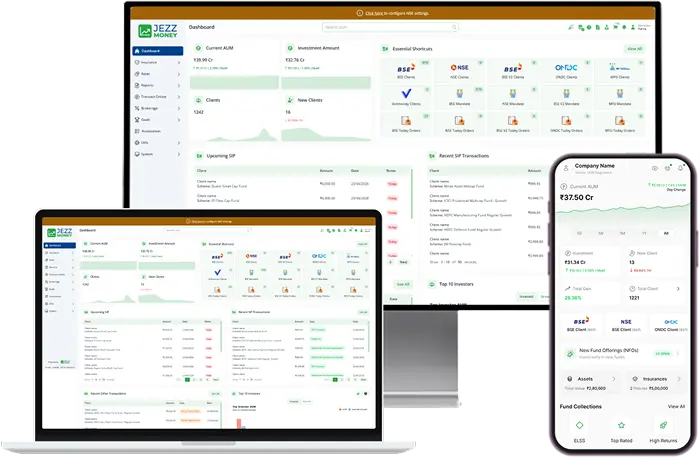
Technology-enabled distribution platforms such as JezzMoney help distributors recognise the strong link between compliance, efficiency, and future readiness. Adopting advanced digital workflows not only simplifies day-to-day operations but also aligns advisory practices with the evolving expectations of investors and regulators.

FAQs about Best Practices for MFD in 2026

Why is goal-based advisory critical for mutual fund distributors?
How does investor risk profiling work in 2026?
Why is investor risk profiling important?
How do distributors align investments with client investment goals?
What are effective portfolio diversification strategies?