Home Blog Bse Star Mf 2 0

BSE StAR MF 2.0: What MFDs Need to Know About the New Platform in 2026

With new technologies emerging in the mutual fund industry, BSE has launched its latest version, BSE StAR MF Version 2.0. This will improve performance, scalability, and functionality. If you use BSE StAR MF in your everyday business processes as a Mutual Fund Distributor (MFD), it is important to understand the changes, whether your current software supports the new version, and what you need to do to prepare.

In this blog, we will go through what BSE StAR MF 2.0 is, the changes that have been made, how you can migrate, and what you need to know as an MFD to ensure smooth business continuity.

What Is BSE StAR MF 2.0 and Why Is BSE Introducing It?

BSE StAR MF is an online platform that helps mutual fund distributors process mutual fund transactions. Through this platform, MFDs can handle investor registrations, purchase and redemption requests, SIPs, and other mutual fund transactions. To improve the platform, BSE has introduced BSE StAR MF Version 2.0. It is an upgraded version with improved performance, enhanced functionality, and better scalability. The aim is to support the growing number of mutual fund transactions and changing business needs.

Why Is BSE Upgrading Its Existing Platform?

As more investors choose mutual funds, digital transactions are also increasing. This creates a need for better technology and infrastructure.

BSE has upgraded its platform to:

  • Handle growing mutual fund transaction volumes.
  • Improve overall platform performance.
  • Provide enhanced functionality.
  • Support changing business requirements.
  • Build a more scalable and future-ready system.

Who Will Be Affected by the Migration?

The migration is important for existing BSE StAR MF members who are still using the older platform. This includes mutual fund distributors and other members who process transactions through BSE.

On 13 August 2026, BSE issued Notice No. 20260813-25, asking members still using the existing platform to migrate to Version 2.0 as soon as possible. (https://www.bseindia.com/downloads/UploadDocs/Notices/20260813-25/20260813-25.pdf)

MFDs should check their migration status and contact their software providers to understand the required steps. Those using integrated software should also confirm that their systems are ready for the new platform.

BSE StAR MF 2.0 vs Previous Version: What Has Changed?

BSE StAR MF Version 2.0 upgrades the existing mutual fund transaction platform. BSE has modernized its platform infrastructure and user experience to support growing transaction volumes and changing business requirements. The new version focuses on better performance, enhanced functionality, greater scalability, and a more flexible technology infrastructure. These improvements are intended to support the growing needs of mutual fund distributors and other platform members.

Key Changes in BSE StAR MF 2.0

1. Modernized Platform Infrastructure

BSE has upgraded its existing platform infrastructure with a more modern architecture. This is designed to support evolving technology requirements and future platform improvements.

2. Improved Performance

The upgraded platform is designed to deliver better performance as mutual fund transaction volumes continue to grow. This is important for members who depend on the platform for their daily operations.

3. Greater Scalability

As digital adoption increases, mutual fund transaction volumes are growing. Version 2.0 introduces a more scalable infrastructure to support this growth and future business requirements.

4. Enhanced Functionality and User Experience

BSE has also focused on improving platform functionality and user experience. These improvements aim to better suit the platform to the changing needs of its members.

5. Technical and Integration Considerations

Members using third-party software or their own applications should review their existing integrations. They may need to coordinate with their technology providers to complete migration, configuration, and testing requirements.

BSE StAR MF vs BSE StAR MF 2.0: Comparison

The following table highlights the changes confirmed in BSE's migration announcement.

Comparison Previous BSE StAR MF BSE StAR MF 2.0
Infrastructure Legacy platform infrastructure Modernised infrastructure
Architecture Previous platform architecture Future-ready architecture
Performance Existing performance capabilities Improved performance
Functionality Existing platform functionality Enhanced functionality
Scalability Previous infrastructure Greater scalability
User experience Existing user experience Modernized user experience
Technology readiness Existing technology setup Designed for evolving business requirements

What Does This Mean for MFDs?

For mutual fund distributors, the upgrade makes software compatibility and migration readiness important considerations. MFDs using connected applications should check whether their software provider has completed the required integration nd testing.

BSE StAR MF 2.0 is a platform upgrade. Not every feature available in an MFD's software is automatically a new feature of BSE 2.0. Actual capabilities depend on the platform and connected software.

How Will BSE StAR MF 2.0 Impact Mutual Fund Distributors?

BSE StAR MF 2.0 is an important platform upgrade for mutual fund distributors. MFDs use BSE StAR MF to manage investor registrations and process various mutual fund transactions.

With the migration to Version 2.0, distributors should review how their existing software connects with the upgraded platform. They should also check whether their daily activities and transaction workflows are ready for the change.

Here are some important areas MFDs should consider.

1. Investor Registration and UCC Management

Investor registration is one of the first steps in mutual fund transactions. MFDs need to manage investor details and Unique Client Codes (UCCs) accurately. During migration, distributors should review existing investor records and confirm that their connected software supports the required registration and data management processes.

2. Purchase, Redemption and Switch Transactions

MFDs regularly help investors with mutual fund purchases, redemptions, and switch transactions. They should check whether their software is properly connected to BSE StAR MF 2.0 and whether these transaction workflows are working as expected after migration.

3. SIP, STP and SWP Management

Systematic Investment Plans (SIPs), Systematic Transfer Plans (STPs) and Systematic Withdrawal Plans (SWPs) are important parts of regular investor servicing. MFDs should review how their software handles these transactions and check the status of existing instructions during the transition.

4. Mandate and Bank Account Management

Bank mandates allow mutual fund investors to automate recurring payments. Accurate bank account and mandate information is important for successful SIP processing. MFDs should verify that their connected software can manage mandate-related information and display the relevant status correctly.

5. Order Status and Transaction Tracking

MFDs need to track transactions to keep investors informed about their investments. They should check whether their software provides the necessary transaction status updates and helps them identify pending, successful, or rejected orders.

6. Client Servicing and Daily Operations

A platform migration can also affect the way distributors manage their daily activities. MFDs should keep client records, transaction information, and servicing workflows organized.

Connected software that brings client management, portfolio tracking, and transaction information together can simplify daily operations.

What Should MFDs Keep in Mind?

BSE StAR MF 2.0 is a platform upgrade, so MFDs should not assume that every existing workflow or software feature will change automatically. The actual impact depends on their integration and software provider. Before migrating, distributors should confirm software compatibility, test key transaction workflows, and coordinate with their technology providers.

BSE StAR MF 2.0 Migration: What Should MFDs Prepare For?

Moving to BSE StAR MF 2.0 requires some preparation from mutual fund distributors. MFDs should understand the migration requirements and check whether their existing software is ready for the upgraded platform. A few simple checks can help avoid confusion and keep daily business operations organized during the transition.

1. Check Your Existing BSE Membership and Migration Requirements

First, check your current BSE StAR MF membership status. Understand whether your account is still using the previous platform and what steps are required to migrate to Version 2.0. Refer to the latest BSE notices for official migration instructions and requirements.

2. Check Your Existing MFD Software Compatibility

If you use third-party MFD software, contact your software provider to confirm whether it supports BSE StAR MF 2.0. Ask whether any software updates or configuration changes are required before migration.

3. Understand API and Technical Configuration Requirements

MFDs using API-based integrations should review their existing technical setup. Check with your technology provider about any required API changes, credentials, configurations, or connectivity testing. This will help ensure that your software can communicate with the upgraded platform.

4. Verify Investor Data and Existing Transaction Records

Before migration, review your investor information and transaction records.

Pay attention to:

  • Investor details and UCC information.
  • Registered bank account details.
  • Existing SIP instructions.
  • Active mandates and their status.
  • Pending and recent transaction records. Accurate records can reduce operational confusion during the transition.

5. Test Transaction and Mandate Workflows

Once the required migration and technical setup are complete, check whether key workflows work correctly. Verify purchase, redemption, switch, and SIP-related processes, along with mandate registration and status tracking, wherever your integration supports them.

6. Coordinate With Your Software Provider

Stay in touch with your MFD software provider throughout the migration process. Ask for clear information about migration timelines, technical requirements, testing procedures, and support availability. If you face any issues, report them early so they can be addressed.

Quick Migration Readiness Checklist for MFDs

Checklist What to verify
BSE membership Existing membership and migration status
Software compatibility Support for BSE StAR MF 2.0
API integration Required technical updates and configuration
Investor records UCC and bank account information
Existing instructions SIPs and active mandates
Transaction testing Purchase, redemption and switch workflows
Technical support Coordination with your software provider

Final Tip: Don't wait until the last moment to check your migration readiness. Review the latest BSE instructions, speak with your software provider, and complete the necessary checks in advance. This can help you avoid unnecessary disruption to your daily MFD operations.

Note: The checklist is a practical preparation guide, not an official BSE-prescribed migration sequence. Follow the latest instructions issued by BSE and your integration provider.

Important BSE StAR MF Updates and Notices MFDs Should Know in 2026

BSE has issued several notices in 2026 related to platform migration, technical maintenance, and investor information requirements. These updates matter for mutual fund distributors because they may affect daily operations, software systems, and transaction processing.

However, not every BSE notice is related to the Version 2.0 migration. Some updates apply to the wider BSE StAR MF platform and its operational processes. Here are the important updates MFDs should know.

1. BSE StAR MF 2.0 Migration Announcement – 13 August 2026

BSE issued Notice No. 20260813-25, asking members still using the existing BSE StAR MF platform to migrate to Version 2.0 as soon as possible.

The new version introduces upgraded infrastructure, improved performance, enhanced functionality, and greater scalability.

What MFDs should do:

  • Check their existing migration status.
  • Contact their software provider.
  • Understand the technical requirements.
  • Complete the necessary migration steps.

This is a direct Version 2.0 migration update.

Migration for Members+1

2. BSE StAR MF 2.0 Platform Downtime – 27 August 2026

BSE issued Notice No. 20260827-16 regarding scheduled maintenance of the Version 2.0 platform.

The platform was scheduled to remain unavailable on 29 August 2026, from 1:00 PM to 7:00 PM.

BSE also asked members using API connections to inform their technical teams or software vendors about the maintenance.

What MFDs should do:

  • Plan transaction-related activities around scheduled maintenance.
  • Inform their software providers about downtime notices.
  • Check BSE announcements for future maintenance schedules.

This was a maintenance update specifically for the Version 2.0 platform, not a migration deadline.

3. FATCA, UBO and NPO Information Updates – July 2026

BSE issued Notice No. 20260717-32 on 17 July 2026 regarding changes to FATCA/UBO information and validation requirements.

The notice included additional NPO categories, such as:

  • Society
  • Trust
  • Foreign Contribution Regulation Act (FCRA)
  • Non-Governmental Organization (NGO)
  • Section 25 / Section 8 Company

The notice also discussed changes across the BSE StAR MF user interface, bulk file uploads, and APIs.

Important clarification: On 30 July 2026, BSE issued a further update (Notice No. 20260730-50) stating that the proposed FATCA/UBO file structure was still under evaluation. Members were asked to continue using the existing file structure and validations until further notice.

What MFDs should do:

  • Keep investor FATCA and UBO information accurate.
  • Check NPO information where applicable.
  • Follow the latest BSE and RTA instructions.
  • Coordinate with software providers before making technical changes.

These are broader BSE StAR MF operational and data-validation updates, not specific features of Version 2.0.

4. Mutual Fund Trading and Settlement Updates – August 2026

BSE Clearing Limited also issued Notice No. 20260814-29 on 14 August 2026, covering the trading and settlement schedule for the mutual fund segment for September 2026.

The notice included details about fund pay-in, unit pay-out, and settlement schedules for different types of mutual fund transactions.

What MFDs should do:

  • Check the applicable settlement calendar.
  • Understand the fund pay-in and unit pay-out dates.
  • Check scheme-specific redemption turnaround times.
  • Keep investors informed about transaction timelines.

These updates are part of regular mutual fund settlement operations and are separate from the Version 2.0 migration.

Summary of Important BSE Updates in 2026

Date BSE update What MFDs should know
13 August 2026 Version 2.0 migration Initiate migration from the legacy platform
27 August 2026 Platform maintenance Plan activities around scheduled downtime
17 July 2026 FATCA/UBO/NPO updates Review investor information requirements
30 July 2026 FATCA/UBO file structure update Continue using the existing structure until further notice
14 August 2026 Trading and settlement schedule Check settlement and transaction timelines

Note: These are selected important notices, not a complete list of all BSE announcements in 2026. MFDs should check the official BSE StAR MF notice board regularly for further updates.

For the latest information, visit the official BSE StAR MF platform and check the StAR MF Notices section.

What does this mean for MFDs?

These updates show why MFDs need to stay informed about both platform changes and regular operational requirements. Keeping investor information updated, checking software compatibility, and following BSE announcements can help distributors manage their daily transactions more effectively.

Common Challenges MFDs May Face During the Transition

Moving to BSE StAR MF 2.0 may require some changes to existing MFD workflows. While the upgraded platform aims to improve performance and functionality, distributors should be prepared for possible technical and operational challenges during the transition.

Here are some common areas that MFDs should pay attention to.

1. Software Compatibility Issues

MFDs often use third-party software to manage clients and process mutual fund transactions. If the existing software is not updated or properly integrated with BSE StAR MF 2.0, some operations may not work as expected.

What to do: Contact your software provider and confirm BSE 2.0 compatibility before completing the migration.

2. Investor Data Discrepancies

Incorrect or incomplete investor information can create problems during registration and transaction processing. Differences in investor details, bank information, or KYC records may also require additional verification.

What to do: Review investor records and correct any missing or incorrect information before migration.

3. UCC and Mandate-Related Issues

UCC details and bank mandates are important for managing investor transactions and recurring SIP payments. MFDs should check whether existing investor records and mandate information are properly reflected in their connected software after migration.

What to do: Verify UCC details, registered bank accounts, and active mandate statuses with the relevant platform or service provider.

4. Transaction Tracking and Reconciliation

MFDs need accurate transaction information to keep investors updated. During a software or platform transition, differences in transaction status or delayed updates may create confusion.

What to do: Monitor purchase, redemption, switch, and SIP transactions. Compare software records with relevant BSE or RTA transaction information, as needed.

5. Staff Training and Operational Adjustments

A platform upgrade may also require changes to existing working processes. Employees who manage investor registrations, transactions, and client servicing should understand any new procedures.

What to do: Arrange basic training for your team, share updated instructions,s and make sure everyone understands the revised workflows.

What Should MFDs Look for in Software Supporting BSE StAR MF 2.0?

Moving to BSE StAR MF 2.0 is also a good time for MFDs to review their existing software. The right software should do more than process mutual fund transactions. It should help distributors manage clients, track investments, and handle daily business operations from one place.

Here are some important features MFDs should look for when choosing software.

1. Reliable BSE StAR MF 2.0 Integration

Check whether the software supports BSE StAR MF 2.0 integration. It should help you manage supported mutual fund transactions through a connected system.

Also, ask the provider about integration status, technical requirements,s and available support.

2. Centralized Client Management

Managing investor information across multiple systems can become difficult as your client base grows.

Look for software that lets you maintain client profiles, contact details, investment information, and transaction history in one place. This makes it easier to access investor information and manage client relationships.

3. Portfolio and Transaction Tracking

MFDs need a clear view of their clients' investments and transaction activities.

Choose software that helps you track portfolio details, investment performance, purchase and redemption transactions, and other important investment information.

4. SIP and Mandate Management

SIPs are an important part of an MFD's business. Managing SIP registrations, payment mandates, and their status can take time when information is spread across different systems. Look for software that helps you manage SIP details, monitor mandate statuses, and identify transactions that need attention.

5. Digital Investor Onboarding

A simple onboarding process can make it easier to bring new investors into your business. Look for features such as digital registration, online KYC support, document collection, and investor information management. These features can help reduce paperwork and make onboarding more convenient.

6. Reporting and Business Management

As your business grows, tracking clients, investments, and performance becomes increasingly important. Choose software that provides useful reports and helps you monitor AUM, SIP business, transaction activity, and client information. These insights can help you understand your business performance and identify areas for improvement.

What to Check Before Choosing MFD Software

Feature What to check
BSE 2.0 integration Confirm integration support and current status
Client management Centralized investor records
Portfolio tracking Investment and portfolio visibility
Transaction tracking Purchase, redemption and transaction status
SIP and mandates SIP information and mandate monitoring
Digital onboarding Online investor registration and KYC support
Reporting AUM, SIP and business performance reports
Technical support Integration assistance and ongoing support

Final Tip: Don't choose MFD software based on transaction integration alone. Look for a platform that also supports client management, portfolio tracking, investor servicing, and business growth. This will help you manage more of your daily operations from one place as your distribution business expands.

How JezzMoney Helps MFDs Simplify Their Mutual Fund Operations

Managing a mutual fund distribution business involves more than processing transactions. MFDs also need to manage clients, track investments, monitor SSIPs, and handle regular investor queries. Managing all these activities across different tools can be time-consuming and make daily operations difficult.

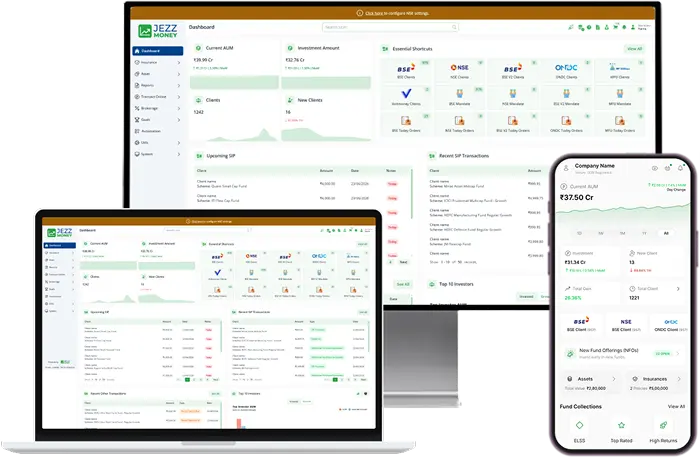
JezzMoney is an all-in-one mutual fund distributor software designed to simplify these activities. It supports BSE, NSE, BSE 2.0, MFU, and ONDC, helping MFDs manage supported mutual fund transactions through one platform.

Here is how JezzMoney helps distributors manage their business more efficiently.

1. BSE StAR MF 2.0 Integration

JezzMoney supports BSE StAR MF 2.0 integration along with other mutual fund transaction platforms. This helps MFDs manage supported investment transactions through their existing software environment. Distributors can also explore transaction options such as purchases, redemptions, switches, SIPs, STPs,s and SWPs.

2. Manage All Clients in One Place

Managing investor information becomes easier when everything is available in one place. JezzMoney provides a centralized client management system where MFDs can manage client profiles, family accounts, investment details, and transaction history. This helps distributors access important investor information and provide better client service.

3. Track Portfolios and AUM

Understanding portfolio performance is important for managing investor relationships and growing AUM. With JezzMoney, MFDs can track client portfolios, investment details, asset allocation, SIPs, and returns. The dashboard and reports also help distributors monitor their overall business performance.

4. Simplify SIP and Mandate Management

Managing multiple SIPs and mandates can become difficult as your client base grows. JezzMoney provides SIP, STP, and SWP reports, along with UCC, FATCA, eLOG, and mandate management capabilities. These tools help MFDs manage investor information and systematic investment activities more efficiently.

5. Improve Digital Investor Onboarding

A smooth onboarding experience can make it easier to bring new investors into your business. JezzMoney supports digital client onboarding, profile management, and KYC-related workflows. Its investor mobile application also gives clients a convenient way to access their investment information.

6. Manage Daily Business Operations

JezzMoney also offers CRM, lead management, automated reminders, client communication, and business reports. MFDs can manage follow-ups, track client requirements, monitor business activities, and access important reports from one platform.

Grow Your Mutual Fund Distribution Business with JezzMoney

As your investor base grows, managing everything manually becomes more challenging. JezzMoney brings client management, transaction processing, portfolio tracking, and business management tools together to help you simplify daily operations. Whether you are an individual MFD or managing a growing distribution team, JezzMoney helps you organize your business and focus more on serving investors. Ready to simplify your MFD operations? Explore JezzMoney and book a free demo to see how the platform can support your mutual fund distribution business.

Summary

BSE StAR MF 2.0 is an important upgrade for the mutual fund industry. For MFDs, understanding the changes and preparing for the migration can help avoid confusion in daily operations. Before moving to the new platform, check your software compatibility, review investor records, and coordinate with your software provider. Also, make sure your team knows any updated processes.

Having the right MFD software can make these tasks easier. JezzMoney helps distributors manage clients, track portfolios, handle transactions, and organize daily business operations from one platform. With the right technology and preparation, MFDs can spend less time on manual work and more time building stronger investor relationships and growing their business. Want to simplify your mutual fund distribution business? Explore JezzMoney and book your free demo today.

FAQs About BSE StAR MF 2.0

What is BSE StAR MF 2.0?

Is migration to BSE StAR MF 2.0 mandatory?

What is the BSE StAR MF 2.0 migration process?

Will existing UCCs and SIPs continue after migration?

Does BSE StAR MF 2.0 support API integration?