Home Blog Cybrilla Ondc Jezzmoney

Cybrilla ONDC & JezzMoney: Shaping the Future of Mutual Fund Distribution

India’s mutual fund industry has grown significantly, creating new opportunities for mutual fund distributors (MFDs) and financial advisors. As more investors move toward digital investing, expectations around online onboarding, convenient transactions, and easy portfolio access are also increasing.

This shift is pushing MFDs to adopt technology that supports faster, more connected digital distribution. The Open Network for Digital Commerce (ONDC) is part of this evolution, introducing an interoperable network approach to mutual fund transactions.

Technology providers such as Cybrilla have contributed to the ONDC mutual fund ecosystem, while platforms such as JezzMoney focus on MFDs' technology and operational requirements. In this article, we’ll explain how ONDC mutual fund distribution works, explore the Cybrilla ONDC route, and show where JezzMoney fits in this evolving ecosystem.

What Is ONDC for Mutual Fund Distribution?

The Open Network for Digital Commerce (ONDC) is an open network that lets different digital platforms and participants interact through common protocols, rather than operating within a single closed platform. Its financial-services initiatives have also expanded to include mutual fund transactions. For mutual fund distribution, this creates a different approach from a traditional investment platform. Instead of one application controlling the entire investor journey, ONDC can let separate participants connect and interact through standardized network protocols.

Interoperability is important because mutual fund transactions involve multiple participants, including investors, buyer applications, AMCs, technology providers, and transaction infrastructure. A common network framework can help these participants communicate and exchange transaction information through defined protocols.

In simple terms, ONDC provides the network layer that connects participating parties; it does not replace the investment application, AMC, MFD, or underlying transaction infrastructure.

For MFDs, the key opportunity is understanding how this network-based infrastructure can fit into their existing digital distribution and client-servicing workflows.

How Does ONDC Mutual Fund Distribution Work?

ONDC-based mutual fund distribution involves multiple participants working through a standardized network framework. Instead of keeping the entire transaction journey within one platform, different participants can perform specific roles within the ecosystem.

Investor → Buyer Application → ONDC Network → Technology/Transaction Layer → AMC → Transaction Confirmation

Investor

The investor is the end customer who uses a participating digital application to discover and transact in eligible mutual fund schemes. The investor may select a scheme, provide the required details, and initiate the transaction through the buyer application.

Buyer Application

The buyer application provides the investor-facing digital experience. It can allow investors to discover mutual fund products, view relevant information, and initiate eligible transactions through the ONDC Network.

ONDC Network

The ONDC Network provides the interoperable framework through which participating buyer- and seller-side participants can communicate using defined network protocols. It acts as the connecting layer rather than being the mutual fund investment application itself.

Technology/Transaction Provider

Technology and transaction providers support the infrastructure required to process mutual fund transactions. Depending on the setup, this layer can handle APIs, transaction processing, integrations, and communication between participating network entities and AMCs.

AMC

The Asset Management Company (AMC) is responsible for the mutual fund scheme and processes the transaction according to the applicable transaction and regulatory framework. Once the transaction is processed, the relevant confirmation is communicated back through the connected infrastructure.

Why This Flow Matters for MFDs

For MFDs, understanding these roles helps clarify that ONDC is a network layer, not a replacement for the complete mutual fund distribution ecosystem. The practical value depends on how the ONDC connectivity, transaction infrastructure, and MFD software work together to support the investor journey.

What Is Cybrilla and How Does It Connect to ONDC?

Cybrilla is a financial technology infrastructure company that provides technology for mutual fund platforms, AMCs, wealth-tech companies, and distributors. Its Fintech Primitives platform provides APIs and infrastructure for mutual fund transactions. Cybrilla also operates as a SEBI-registered RTA.

According to Cybrilla, it helped develop the ONDC mutual fund protocol in August 2024. It became the first company in India to process what it describes as a live decentralized mutual fund transaction on ONDC. Cybrilla later reported processing its first production order through ONDC via Fintech Primitives on April 23, 2025.

The important distinction is between ONDC's network layer and Cybrilla's technology layer. ONDC provides the network framework and standardized protocols that allow participating entities to communicate. Cybrilla can provide backend infrastructure and act as an Official Point of Acceptance of Transactions (OPAT) for participating AMCs. For example, Axis Mutual Fund appointed Cybrilla to provide the backend platform for its ONDC transactions.

In simple terms:

ONDC Network → Provides the interoperable network framework

Cybrilla → Provides technology/backend transaction infrastructure for participating entities

This distinction is important for MFDs. ONDC is not the investment application itself, and Cybrilla is not the ONDC Network. They represent different layers of the mutual fund transaction ecosystem.

What Does ONDC Mean for Mutual Fund Distributors?

For mutual fund distributors, ONDC introduces a network-based approach to digital distribution. It can let participating platforms and service providers connect through standardized protocols, creating new possibilities for digital mutual fund transactions.

New Digital Distribution Possibilities

ONDC can create additional digital touchpoints through which eligible mutual fund products and transactions can be accessed. For MFDs, this can support expanding digital distribution beyond a single application or platform.

Interoperability

A key feature of the ONDC approach is interoperability. Different participants can interact through common network protocols, helping connect buyer applications, technology providers, AMCs, and other participating entities.

A More Connected Digital Transaction Experience

With the appropriate technology infrastructure, ONDC-based transactions can support a digital journey from product discovery and transaction initiation to processing and confirmation. The actual investor experience, however, depends on the applications and infrastructure involved.

Potentially Broader Investor Access

Because ONDC is designed as an interoperable network, participating mutual fund products can potentially be made available through multiple connected buyer applications. This may create additional digital distribution opportunities for participating MFDs and other ecosystem participants.

Less Dependence on a Single Digital Ecosystem

ONDC's network model can provide an alternative to relying entirely on one closed digital platform for certain transaction journeys. However, MFDs still need appropriate integrations and access to participating transaction infrastructure to use these capabilities.

What MFDs Still Need to Manage

ONDC does not replace an MFD's core responsibilities. MFDs still need to manage client relationships, investor servicing, portfolio tracking, transactions, reporting, compliance-related processes, and day-to-day business operations.

This is why the MFD technology platform remains important. ONDC can provide a network layer for participating transactions. At the same time, an MFD platform such as JezzMoney can help bring transaction connectivity together with the broader tools required to run a mutual fund distribution business.

Where Does JezzMoney Fit in the ONDC Ecosystem?

For MFDs, ONDC is only one part of the digital distribution ecosystem. The bigger need is a platform that connects transaction infrastructure with the day-to-day tools needed to manage clients, portfolios, and business operations. This is where JezzMoney fits in. JezzMoney is an ONDC-registered Technology Service Provider and provides an MFD-focused platform designed to support digital distribution and everyday advisory workflows.

ONDC Connectivity for MFDs

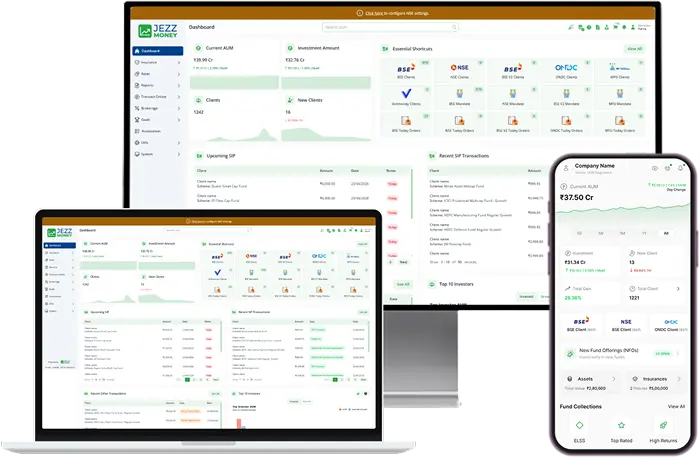
JezzMoney supports connectivity across BSE, NSE, BSE 2.0, MFU, and ONDC, giving MFDs access to multiple transaction channels through their technology platform. This means ONDC can be part of the overall transaction setup rather than requiring the MFD to operate through a completely separate system.

Client and Business Management

Beyond transactions, JezzMoney brings core MFD operations into one platform. MFDs can manage client profiles, family portfolios, onboarding, referrals, follow-ups, reports, and business-level information from a centralized system.

Portfolio and AUM Management

JezzMoney provides portfolio and AUM management tools that allow distributors to monitor investments, SIPs, portfolio performance, allocation, and business-level AUM. This connects transaction activity to the broader portfolio-management workflow.

Digital Onboarding and Transaction Management

The platform supports digital onboarding features including KYC, PAN validation, FATCA, and document management. It also supports purchases, redemptions, switches, SIPs, STPs, SWPs, mandates, and other transaction workflows through its supported transaction infrastructure.

44 AMCs and Multiple Transaction Channels

JezzMoney's mutual fund research section currently lists 44 AMCs, giving MFDs access to a broad range of fund houses through the platform. The platform also supports multiple transaction channels, including BSE, NSE, BSE 2.0, MFU, and ONDC. This multi-channel approach matters because an MFD's technology setup does not have to depend on a single transaction route.

The Role of a Fallback Setup

For MFDs, having multiple transaction channels can also provide operational flexibility. JezzMoney lists BSE 2.0 and NSE, alongside BSE, MFU, and ONDC, as supported transaction connectivity. The availability and use of a particular route can depend on the transaction, AMC, and applicable infrastructure.

In simple terms, ONDC provides a network layer. At the same time, JezzMoney brings ONDC connectivity together with the broader technology stack an MFD needs to run its business, from client onboarding and portfolio management to transactions, reporting, and day-to-day operations.

For MFDs evaluating ONDC, the key question is therefore not only whether a platform supports ONDC, but also how well that connectivity fits into the rest of their existing distribution workflow.

ONDC vs Traditional Mutual Fund Distribution Infrastructure

The move toward ONDC does not mean that existing mutual fund distribution channels will suddenly disappear. Instead, ONDC introduces an open, interoperable network approach that can work alongside existing transaction infrastructure. For MFDs, the key difference is how participants connect, how transaction journeys are enabled, and how multiple digital platforms interact through common protocols.

Area Traditional Infrastructure ONDC-Based Infrastructure
Network model Usually relies on direct, bilateral, or platform-specific connections Uses an open and interoperable network model
Connectivity Different participants may require separate integrations with platforms or service providers Participating entities can communicate through standardized network protocols and APIs
Investor access The investor journey is generally linked to the specific platform or application being used Multiple participating applications can potentially connect through the same network
Transaction flow Transactions move through established platforms, exchanges, or direct integrations Transactions can be processed through participating ONDC-enabled infrastructure
MFD technology Depends on the software, integrations, and transaction channels available to the MFD MFDs still require a capable software platform, with ONDC acting as an additional network layer
Adding connectivity New channels may require separate integrations or technical arrangements The network model is designed to support connections between participating entities through common protocols
MFD operations Client management, transactions, portfolio tracking, and reporting are handled through the MFD's technology stack These responsibilities remain with the MFD platform while ONDC can provide an additional transaction pathway

What Does This Difference Mean for MFDs?

The main difference is how the ecosystem connects, not whether one system completely replaces another. Traditional infrastructure can continue to support existing mutual fund transactions, while ONDC provides an additional network-based approach for participating entities.

For MFDs, ONDC connectivity is only one part of the overall technology setup. They still need tools for client management, digital onboarding, portfolio and AUM management, transaction processing, reporting, and day-to-day business operations.

When evaluating an ONDC-enabled solution, MFDs should look beyond ONDC connectivity alone and consider how well it integrates with the complete distribution workflow.

How MFDs Can Start Offering ONDC Transactions with JezzMoney

For MFDs, adopting ONDC doesn't have to mean building a new technology system from scratch. The right MFD platform can add the required connectivity to the existing distribution workflow, allowing distributors to focus on clients and business while the technology handles the supporting infrastructure.

JezzMoney provides an MFD-focused technology platform with ONDC connectivity and multiple transaction channels. MFDs can explore the setup based on their existing business requirements and the transaction infrastructure they need.

1. Understand Your Current Setup

Start by reviewing your existing MFD operations, transaction channels, client base, and technology requirements. This helps determine which ONDC capabilities and other transaction routes matter for your business.

2. Complete the JezzMoney Onboarding Process

Once you decide to proceed, you can complete the required business and platform onboarding. We can then configure the setup to meet the MFD's operational requirements.

3. Configure Your Transaction Channels

JezzMoney supports multiple transaction channels, including BSE, NSE, BSE 2.0, MFU, and ONDC. You can determine the applicable channels based on your business requirements and available transaction infrastructure.

4. Set Up the Digital Investor Journey

The platform supports digital processes such as investor onboarding, KYC workflows, PAN validation, transactions, and portfolio access. This allows MFDs to bring more of their investor journey into a digital workflow.

5. Manage Your MFD Business from One Platform

After the required setup is completed, MFDs can manage transaction activity alongside other important functions such as client management, portfolio tracking, AUM monitoring, and reporting.

Before You Get Started

Requirements can differ by MFD. Before implementation, it is important to confirm:

  • Whether your existing ARN is compatible with the required setup
  • Which AMCs and transaction channels are available
  • The applicable ONDC, BSE, NSE, BSE 2.0, and MFU connectivity
  • Required documentation and configuration
  • Expected implementation timeline
  • Applicable pricing, setup fees, or transaction charges

This approach allows MFDs to evaluate ONDC as part of their overall digital distribution infrastructure, rather than treating it as a standalone transaction platform.

Key Benefits of ONDC-Enabled Infrastructure for MFDs

For mutual fund distributors, ONDC-enabled infrastructure can become part of a broader digital distribution strategy. The value is not simply in having access to an ONDC transaction route. It is in connecting digital transaction capabilities with the tools an MFD uses every day to onboard investors, manage clients, track portfolios, monitor AUM, and run the business.

Here are some of the practical benefits MFDs should consider:

1. Create a Better Digital Investor Experience

Today's investors increasingly expect simple and convenient digital interactions. ONDC-enabled infrastructure can support digital mutual fund transaction journeys where participating applications and service providers work through standardized network protocols. For MFDs, this can complement digital onboarding, transaction initiation, portfolio access, and other investor-facing services. A smoother digital experience can also help reduce unnecessary manual steps in routine processes.

2. Connect to an Interoperable Transaction Ecosystem

A key characteristic of ONDC is interoperability. Instead of each participant operating in a separate ecosystem, participating entities can communicate through common network protocols. For MFDs, this creates an opportunity to connect their digital distribution workflow with a wider ecosystem of participating applications, technology providers, and mutual fund entities.

3. Access Multiple Transaction Connectivity Options

An MFD's business may involve different transaction requirements and channels. Relying on a single route can make the technology setup less flexible. An MFD platform with multiple connectivity options can bring different transaction channels together within the same operational environment. This makes it easier for distributors to manage their business while using the appropriate route for different transaction requirements.

4. Build a More Scalable Distribution Infrastructure

As an MFD's investor base, SIP book, and AUM grow, manual processes can become increasingly difficult to manage. Digital infrastructure can automate and organize repetitive workflows, allowing distributors to handle more investors and transactions more efficiently.

ONDC can form one part of this infrastructure, while the MFD software manages the wider business workflow around it.

5. Manage MFD Operations from a Centralized Platform

ONDC connectivity alone does not manage an MFD business. Distributors still need tools for client management, transaction tracking, portfolio management, reporting, follow-ups, and business monitoring.

A centralized MFD software platform can bring these functions together, reducing the need to switch between multiple disconnected systems for everyday operations.

6. Simplify Digital Investor Onboarding

Digital onboarding can make the initial investor journey more convenient by reducing paperwork and organizing important verification steps within a structured workflow. Depending on the platform and available integrations, MFDs can manage processes such as KYC-related activities, PAN validation, FATCA information, document collection, and investor registration digitally.

This can help distributors spend less time on repetitive administrative work and more time on investor servicing and business development.

7. Improve Portfolio and AUM Visibility

For an MFD, transaction processing is only one part of the business. Having a clear view of investor portfolios and overall AUM is equally important.

An integrated MFD platform can help distributors monitor client portfolios, SIPs, investments, asset allocation, and business-level AUM from a centralized dashboard. This gives MFDs a more connected view of their business and can support regular investor servicing and portfolio reviews.

The Bigger Picture for MFDs

The main advantage of ONDC-enabled infrastructure is not that it replaces every existing mutual fund transaction system. Instead, it can add an interoperable digital network layer to the distribution ecosystem.

For MFDs, the stronger technology approach is therefore to combine ONDC connectivity + multiple transaction channels + digital onboarding + client management + portfolio and AUM tracking within a single operational workflow.

This is where an MFD-focused platform such as JezzMoney can be relevant. JezzMoney brings transaction connectivity together with the broader tools MFDs need to manage their digital mutual fund distribution business.

What MFDs Should Consider Before Choosing an ONDC Solution

This creates useful decision-making content without turning the article into a promotional comparison. Consider:

  • AMC coverage
  • Transaction connectivity
  • Fallback mechanisms
  • Investor onboarding
  • Portfolio management
  • Reporting
  • Compliance support
  • API/integration capabilities
  • Support and implementation
  • Pricing and total cost

Is ONDC Replacing Mutual Fund Distributors?

No. ONDC is designed as a network and infrastructure layer, not as a replacement for mutual fund distributors. Its role is to help participating entities connect and interact through standardized network protocols for digital transactions.

MFDs continue to play an important role in investor relationships, mutual fund distribution, client servicing, transaction support, and ongoing investor communication. These responsibilities are separate from the network infrastructure that processes a transaction.

The key change is how digital transactions connect, rather than who provides distribution or investor support. An investor may use a participating digital application to initiate a transaction, while the underlying ONDC ecosystem connects the relevant participants to process it.

For MFDs, this means ONDC can be viewed as an additional digital infrastructure layer that can work alongside their existing distribution model and technology platform.

In simple terms:

  • ONDC → Connects participating digital transaction ecosystems
  • MFD → Builds investor relationships and provides distribution and servicing
  • AMC → Manages the mutual fund scheme and processes applicable transactions

This distinction is important when evaluating ONDC for MFDs. The emergence of an open network does not remove the need for MFD-focused technology; instead, it makes integrating network connectivity with everyday distribution operations more relevant.

ONDC Mutual Fund Distribution: What Comes Next?

The mutual fund distribution ecosystem is becoming increasingly digital, with investors and distributors using technology for onboarding, transactions, portfolio access, and ongoing servicing. As this adoption continues, network-based infrastructure such as ONDC can become another part of the digital distribution landscape.

Increasing Digital Adoption

Digital workflows are becoming more important for mutual fund distributors as investors expect convenient online access to investment information, transactions, and portfolio services. MFDs can use technology to reduce manual processes and create more connected investor journeys.

Greater Interoperability

Interoperability remains central to the ONDC approach. Common protocols can let participating entities connect across different digital platforms and transaction infrastructure, rather than depending entirely on a single closed ecosystem.

More Participation Across Financial Services

As ONDC's financial-services ecosystem develops, participation from different technology providers, financial institutions, and digital platforms can create additional connectivity opportunities. The actual availability of services and transaction routes will depend on participating entities, applicable protocols, and regulatory requirements.

Opportunities for Technology-Enabled MFD Businesses

For MFDs, the broader opportunity extends beyond ONDC transactions. Technology can support digital onboarding, client management, transaction processing, portfolio tracking, AUM monitoring, reporting, and investor servicing. Platforms such as JezzMoney can help MFDs bring these functions together with supported transaction connectivity.

The next phase of ONDC mutual fund distribution will therefore depend on how participating entities, technology providers, and distributors use interoperable infrastructure in practical business workflows. For MFDs, the focus can remain on combining digital transaction capabilities with the technology required to manage and grow their distribution operations.

Summary

ONDC is introducing an interoperable approach to digital mutual fund distribution, creating new ways for participating platforms, technology providers, AMCs, and distributors to connect. The Cybrilla ONDC route demonstrates how technology infrastructure can support ONDC-based mutual fund transactions, while ONDC itself provides the broader network framework.

ONDC should be viewed as an additional digital infrastructure layer, not a replacement for existing distribution channels or investor relationships. MFDs still need technology for client management, digital onboarding, transactions, portfolio tracking, AUM management, reporting, and day-to-day operations.

JezzMoney brings ONDC connectivity together with multiple transaction channels and MFD-focused business tools. Its platform helps distributors manage digital mutual fund distribution through a more centralized technology setup.

FAQs about ONDC Mutual Fund Distribution

What is ONDC mutual fund distribution?

What is the Cybrilla ONDC route?

What role does JezzMoney play in ONDC mutual fund distribution?

Is JezzMoney an ONDC-ready mutual fund software?

What transaction channels does JezzMoney support?

How does JezzMoney help MFDs with ONDC?

Can MFDs use JezzMoney without relying only on ONDC?