Home Blog Double Mfd Revenue

How MFDs Can Double Their Revenue Without Adding More Clients

For many Mutual Fund Distributors (MFDs), business growth often seems tied to one objective acquiring more clients. While attracting new investors is essential for long-term expansion, relying only on client acquisition can become expensive, time-consuming, and increasingly challenging as competition in the mutual fund industry continues to grow.

Every new client requires marketing, prospecting, meetings, KYC completion, onboarding, follow-ups, and ongoing relationship management before they begin generating meaningful recurring revenue. As your client base expands, constantly adding new investors without improving operational efficiency can stretch your time, increase costs, and reduce your ability to provide personalized service to existing clients.

The good news is that sustainable revenue growth doesn't always require more clients. Many successful Mutual Fund Distributors increase their earnings by strengthening relationships with their existing investors. Encouraging higher SIP contributions, improving client retention, increasing additional investments, managing family portfolios, generating referrals, and automating routine operations can significantly boost Assets Under Management (AUM) and recurring trail income without proportionally increasing workload.

In this guide, we'll explore practical, proven strategies to help you grow your mutual fund distribution business, increase MFD revenue, and improve profitability without depending solely on new client acquisition. You'll also learn how digital tools and automation can streamline operations, enhance client engagement, and build a scalable, efficient, and sustainable advisory practice.

Why More Clients Don't Always Mean More Revenue

For many Mutual Fund Distributors (MFDs), growth is often measured by the number of new clients added each month. While acquiring new investors is an essential part of building a distribution business, it doesn't always translate into higher profitability. In fact, focusing exclusively on client acquisition can increase costs, consume valuable time, and reduce the attention given to your existing clients, the very people who generate recurring revenue.

A sustainable mutual fund business isn't built by having the largest client list; it's built by maximizing the lifetime value of every client relationship. The most successful MFDs understand that improving client retention, increasing assets under management (AUM), and strengthening engagement often deliver better financial results than simply adding more investors.

The Hidden Cost of Client Acquisition

Every new client comes with an investment of time, effort, and money before they generate meaningful revenue. While trail commissions provide recurring income, the acquisition process itself can be resource-intensive.

Some of the hidden costs include:

  • Marketing expenses: Running digital campaigns, social media promotions, seminars, webinars, or referral programs to attract potential investors.
  • Time investment: Initial consultations, understanding financial goals, risk profiling, and educating prospective clients about suitable investment options.
  • Multiple meetings: Many investors require several discussions before making their first investment, especially first-time mutual fund investors.
  • Documentation and compliance: Completing KYC formalities, collecting documents, processing applications, and ensuring regulatory compliance.
  • Ongoing follow-ups: Calling prospects, answering queries, reminding them about pending documents, and encouraging them to complete their investments.

When these activities are repeated for every new client, acquisition costs continue to rise. If those clients invest only a small amount or discontinue their SIPs after a few months, recovering the time and effort invested becomes even more challenging.

Why Many MFDs Stay Busy but Don't Grow Their Income

It's common to see advisors working long hours while their revenue grows very slowly. The reason isn't a lack of effort; it's often a matter of where that effort is directed.

Many MFDs spend most of their day:

  • Chasing new leads.
  • Completing paperwork.
  • Following up on pending documentation.
  • Handling routine client queries manually.
  • Preparing reports in spreadsheets.
  • Sending individual reminders for SIPs and renewals.

While these tasks keep advisors occupied, they don't always contribute directly to higher income. As the client base grows, administrative work also increases, leaving less time for strategic activities such as portfolio reviews, increasing SIP contributions, cross-selling, or strengthening existing client relationships.

Without efficient systems and automation, an MFD can become busier each year without seeing a proportional increase in revenue.

The 80/20 Rule in Wealth Management

A common principle in financial advisory businesses is the 80/20 rule, also known as the Pareto Principle. In many cases, approximately 80% of an advisor's recurring revenue comes from around 20% of their clients. These are typically long-term investors with larger portfolios, multiple financial goals, and consistent investments.

Rather than spending all their energy acquiring new clients, successful MFDs focus on nurturing these high-value relationships by:

  • Conducting regular portfolio review meetings.
  • Encouraging SIP step-ups as income grows.
  • Recommending goal-based investment plans.
  • Managing investments for the entire family.
  • Providing proactive financial guidance and personalized service.

This doesn't mean ignoring new client acquisition. Instead, it means balancing growth efforts by giving equal importance to increasing the value of existing relationships. When current clients invest more, stay invested longer, and refer family and friends, your revenue can grow significantly, often without the constant pressure of finding new investors every month.

Understand Where Your Revenue Actually Comes From

Many Mutual Fund Distributors (MFDs) focus heavily on acquiring new clients because they associate business growth with a growing client base. However, the real driver of long-term success is understanding what actually generates revenue. Once you know which activities contribute the most to your income, you can spend more time on high-impact opportunities instead of constantly chasing new prospects.

For most MFDs, recurring revenue is built over time through stronger client relationships, larger Assets Under Management (AUM), and consistent investor engagement—not just by adding new names to the client list.

Trail Commissions: The Foundation of Recurring Income

Trail commissions are the backbone of a sustainable mutual fund distribution business. Unlike one-time earnings, trail commissions are generated as long as clients remain invested in their mutual funds.

This makes client retention just as important as client acquisition. When investors stay invested for years and continue to increase their holdings, your recurring income grows steadily without incurring additional acquisition costs.

The larger your overall AUM, the greater your trail income potential.

SIP Books Create Predictable Revenue

A strong SIP (Systematic Investment Plan) book provides a stable and predictable revenue stream. Every active SIP contributes to your recurring business month after month.

Instead of focusing only on adding new SIPs, successful MFDs regularly review existing SIPs and encourage clients to increase their monthly investment through SIP step-ups as their income grows.

Even small increases across multiple clients can significantly improve your recurring revenue over time.

Lumpsum Investments Add Growth Opportunities

Lumpsum investments often occur during specific financial events such as annual bonuses, business profits, inheritance, property sales, or tax planning.

Regular communication with clients helps you identify these opportunities before they invest elsewhere. Advising clients on how to deploy surplus funds into suitable mutual funds can substantially increase your managed AUM.

Additional Investments from Existing Clients

One of the most overlooked growth opportunities lies within your existing client base. A client who initially starts with a single SIP may later require investments for:

  • Retirement planning
  • Children's education
  • Marriage goals
  • Wealth creation
  • Emergency funds
  • Tax-saving investments
  • Vacation or home purchase planning

By conducting periodic financial reviews, you can uncover new investment needs without acquiring an entirely new client.

Cross-Selling Financial Solutions

Many investors have multiple financial goals but invest in only one or two products. By understanding each client's financial journey, MFDs can recommend additional investment solutions that align with changing life stages and objectives.

Examples include:

  • ELSS funds for tax saving
  • Debt funds for short-term goals
  • Hybrid funds for balanced investing
  • Children's education portfolios
  • Retirement-focused investment plans
  • Goal-based SIPs

Cross-selling not only increases AUM but also strengthens your relationship with clients by offering comprehensive financial guidance instead of a single investment solution.

Expand Relationships Through Family Accounts

One satisfied investor often represents an entire family of potential clients. Instead of managing investments for just one individual, consider extending your services to:

  • Spouse
  • Parents
  • Children
  • Hindu Undivided Family (HUF)
  • Family-owned businesses

Managing investments across multiple family members increases your AUM while improving client retention. Families also tend to consolidate their investments with advisors they trust, creating stronger long-term relationships.

Insurance and Other Financial Products (Optional)

Many MFDs also diversify their income streams by offering complementary financial products, such as life insurance, health insurance, fixed-income solutions, and other investment products, subject to applicable regulations and licenses. Providing a broader range of financial solutions can increase revenue while helping clients meet different financial needs through a single trusted advisor.

Why Growing Existing AUM Is Easier Than Acquiring New Clients

Consider this simple example.

Suppose you currently manage 100 clients, each investing ₹10,000 per month through SIPs.

Your total monthly SIP book is:

100 × ₹10,000 = ₹10,00,000

Now imagine each existing client agrees to increase their SIP by just ₹2,000 per month after a portfolio review or annual income appraisal.

Your updated SIP book becomes:

100 × ₹12,000 = ₹12,00,000

That's an increase of ₹2,00,000 in monthly investments without acquiring a single new client.

Now compare that with acquiring new investors.

If an average new client starts with a ₹10,000 monthly SIP, you would need to onboard 20 new clients to achieve the same increase in monthly investments.

Those 20 clients would require:

  • Marketing and lead generation
  • Multiple consultations
  • KYC and documentation
  • Onboarding and compliance
  • Regular follow-ups before investing

In contrast, increasing investments from existing clients typically requires far less effort because trust has already been established.

This simple comparison highlights why many successful MFDs prioritize growing AUM per client rather than simply growing the number of clients. By strengthening existing relationships, encouraging additional investments, and expanding services within client families, advisors can often achieve faster and more sustainable revenue growth with significantly lower acquisition costs.

Strategy 1: Increase Existing Client AUM Instead of Finding New Investors

One of the fastest and most cost-effective ways to grow your mutual fund business is by increasing the Assets Under Management (AUM) of your existing clients. Since these investors already know and trust you, convincing them to invest more is often much easier than acquiring a completely new client.

Many MFDs spend significant time searching for new investors while overlooking opportunities within their current client base. Existing clients are more likely to increase their investments if they receive regular financial guidance, personalized recommendations, and timely portfolio reviews.

Shift the Conversation to Goal-Based Investing

Instead of discussing mutual funds as standalone investment products, focus on your clients' financial goals.

When investments are linked to meaningful life objectives, clients are more likely to stay invested and increase their contributions over time.

Common financial goals include:

  • Retirement planning
  • Children's education
  • Buying a home
  • Wealth creation
  • Emergency fund planning
  • International education
  • Dream vacations
  • Financial independence

As clients' goals evolve, their investment requirements naturally grow, creating opportunities to increase AUM.

Conduct Annual Portfolio Reviews

A portfolio review should be more than a performance discussion—it should be an opportunity to reassess your client's financial situation.

During an annual review, ask questions such as:

  • Has your income increased this year?
  • Have your financial goals changed?
  • Are you planning any major life events?
  • Have you received a salary increase or a profit increase?
  • Are there any idle savings that could be invested?

These conversations often uncover additional investment opportunities that might otherwise go unnoticed.

Annual reviews also reinforce your value as a financial advisor rather than someone who only helps with transactions.

Encourage SIP Step-Ups

Many investors continue with the same SIP amount for years, even after receiving salary increments or business growth. Encourage clients to increase their SIP annually through a Step-up SIP strategy. Even a modest increase can create a significant impact on both the client's long-term wealth and your recurring AUM.

For example:

  • Increase SIP by 10–15% every year.
  • Match the increase with annual salary hikes or business income.
  • Explain how small incremental increases can substantially improve long-term investment outcomes through compounding.

Since the increase is gradual, clients often find it easier to accept than making a large one-time jump.

Recommend Investing Bonuses and Windfall Income

Many clients receive additional income throughout the year, including:

  • Annual performance bonuses
  • Business profits
  • Tax refunds
  • Incentives
  • Property sale proceeds
  • Inheritance
  • Maturity proceeds from fixed deposits or other investments

Rather than letting these funds remain idle in savings accounts, help clients allocate a portion toward their long-term financial goals through suitable mutual fund investments.

This approach increases AUM without requiring new client acquisition.

Use Tax Season as an Investment Opportunity

The tax-saving season is an excellent time to reconnect with clients.

Many investors focus only on reducing taxes during the last few months of the financial year. Instead of limiting the conversation to ELSS investments, discuss broader financial planning opportunities, such as:

  • Long-term wealth creation
  • Goal-based investing
  • Retirement planning
  • SIP optimization
  • Portfolio rebalancing

Regular tax-planning discussions can often lead to additional investments beyond tax-saving funds.

Strengthen Retirement Planning Conversations

Retirement planning is one of the largest long-term investment opportunities for MFDs. Many clients underestimate how much they'll need in retirement or postpone planning altogether. By helping them calculate their future financial needs and reviewing their retirement corpus regularly, you can identify opportunities to increase SIPs or make additional investments. As clients progress in their careers and their income grows, retirement contributions should grow as well.

Example: Small Increase, Big Impact

Consider this simple scenario: A client has been investing ₹10,000 per month through a SIP for the past three years. During the annual portfolio review, you discover that:

  • Their salary has increased by 20%.
  • They have received a performance bonus.
  • Their financial goals have expanded.

You recommend increasing the SIP to ₹15,000 per month.

The client agrees.

Result:

  • Monthly investment increases by ₹5,000.
  • Annual additional investment becomes ₹60,000.
  • Your managed AUM grows immediately.
  • Your future trail commission also increases.
  • No marketing costs, lead generation, or client acquisition expenses are involved.

Now imagine if just 50 existing clients increase their SIPs by ₹5,000 each. The cumulative increase in monthly investments would be ₹2.5 lakh, achieved simply by strengthening relationships with clients you already serve.

The takeaway is simple: before spending heavily on acquiring new investors, maximize the potential of your existing client base. Regular reviews, goal-based planning, step-up SIPs, and proactive financial advice can generate sustainable business growth while reinforcing your role as a trusted financial advisor.

Strategy 2: Reduce SIP Drop-Offs

Acquiring new SIPs is important, but retaining existing ones is even more valuable. Every active SIP contributes to your recurring trail income and helps build long-term Assets Under Management (AUM). When clients discontinue their SIPs, you're not just losing a monthly investment; you may also lose future trail commissions, opportunities for additional investments, and the client's long-term trust.

Many MFDs focus on adding new SIP registrations each month but pay less attention to monitoring existing SIPs. As a result, canceled or inactive SIPs quietly reduce recurring revenue over time.

Why SIP Discontinuation Hurts Revenue

A discontinued SIP has a ripple effect on your business. Beyond the immediate drop in monthly investments, it also impacts future AUM growth and recurring income.

Common reasons why investors stop SIPs include:

  • Temporary cash flow issues.
  • Change in bank account or mandate.
  • Missed auto-debit due to insufficient balance.
  • Market volatility and fear of losses.
  • Lack of regular communication from their advisor.
  • Belief that they have already invested enough.

Many of these situations are preventable if the advisor identifies them early and engages with the client proactively.

Send Automated SIP Reminders

Investors often miss SIP payments simply because they forget to maintain sufficient bank balance or are unaware of upcoming deductions.

Automated reminders sent a few days before the SIP date can help clients:

  • Keep adequate funds in their account.
  • Avoid failed transactions.
  • Stay committed to their investment plan.

Instead of manually calling every client, automated reminders ensure consistent communication without increasing your workload.

Track Missed SIP Alerts

Not every failed SIP means a client wants to stop investing. Sometimes it's due to technical issues, expired mandates, or temporary financial constraints. Receiving instant alerts for missed or failed SIPs allows you to contact the client quickly, understand the reason, and help resolve the issue before the SIP is permanently discontinued. A simple follow-up call at the right time can often save years of future investments.

Stay Connected Through Regular Communication

Clients are less likely to discontinue their investments when they understand the value of staying invested. Regular communication helps reinforce confidence during market ups and downs. Consider sharing:

  • Monthly market updates.
  • Portfolio performance summaries.
  • Investment tips.
  • Educational content about long-term investing.
  • Goal progress reports.

When clients hear from you consistently, not just during transactions, they are more likely to view you as a trusted financial partner rather than someone who only facilitates investments.

Monitor Portfolio Activity Regularly

Reviewing client portfolios isn't only about measuring returns. It's also an opportunity to identify warning signs before they become bigger problems.

Keep an eye on:

  • Inactive SIPs.
  • Declining investment frequency.
  • Reduced portfolio contributions.
  • Idle cash that could be invested.
  • Upcoming financial milestones.

Early intervention allows you to discuss concerns, recommend adjustments, and keep clients aligned with their financial goals.

How Technology Makes SIP Monitoring Easier

As your client base grows, manually tracking hundreds of SIPs becomes increasingly difficult. It's easy to miss failed transactions, delayed payments, or inactive investors when relying on spreadsheets or manual follow-ups.

Modern mutual fund software simplifies this process by providing:

  • Automated SIP reminders before investment dates.
  • Instant alerts for failed or missed SIP transactions.
  • Centralized portfolio dashboards to monitor client activity.
  • Automated WhatsApp and email communication for regular engagement.
  • Portfolio tracking and reporting to identify clients who may need attention.

With routine monitoring handled automatically, MFDs can spend less time on administrative tasks and more time helping clients achieve their financial goals.

Reducing SIP drop-offs isn't just about protecting monthly investments—it safeguards your recurring revenue, strengthens client relationships, and creates a more stable foundation for long-term business growth. Often, retaining an existing SIP is far more valuable and cost-effective than acquiring a new one.

Strategy 3: Improve Client Retention

Winning a new client is an achievement, but keeping that client invested for years is what creates a successful mutual fund distribution business. While acquiring new investors requires continuous marketing, meetings, and onboarding, retaining existing clients generates recurring revenue with significantly lower effort and cost.

Every client who stays invested continues to contribute to your Assets Under Management (AUM), trail commissions, and future investment opportunities. On the other hand, losing a long-term client means losing not only their current investments but also the potential for SIP increases, referrals, family accounts, and additional financial planning opportunities.

Simply put, retaining existing clients is usually far more profitable than constantly replacing those who leave.

Why Client Retention Matters

Long-term clients tend to:

  • Increase their investments as their income grows.
  • Continue SIPs for many years.
  • Invest additional lump sums when surplus funds become available.
  • Refer friends, family members, and colleagues.
  • Consolidate more of their investments under the guidance of trusted advisors.

As trust deepens, clients become less likely to switch advisors based solely on short-term market fluctuations or temporary underperformance.

This is why the most successful MFDs focus just as much on client retention as they do on acquiring new investors.

Schedule Quarterly Portfolio Reviews

Many advisors review portfolios only when clients request it or during tax season. Instead, make quarterly portfolio reviews a standard part of your service.

These meetings don't always have to be lengthy. Even a short review can help you:

  • Assess portfolio performance.
  • Revisit financial goals.
  • Discuss changes in income or expenses.
  • Recommend portfolio rebalancing if needed.
  • Identify opportunities to increase investments.

Regular reviews reassure clients that their investments are being actively monitored rather than forgotten after the initial transaction.

Share Easy-to-Understand Performance Reports

Most investors want to know one simple thing: How are my investments doing? Sending clear and concise performance reports at regular intervals keeps clients informed without overwhelming them with complex financial data.

A good report should highlight:

  • Current portfolio value.
  • Investment growth over time.
  • Asset allocation.
  • Goal progress.
  • Key portfolio updates.

When clients can easily understand their financial progress, they are more likely to stay confident during market fluctuations.

Celebrate Important Milestones

Strong client relationships go beyond investment transactions.

Simple gestures such as sending:

  • Birthday wishes
  • Anniversary greetings
  • Festival wishes
  • Investment milestone messages
  • SIP anniversary reminders

can make clients feel valued and remembered.

These small interactions help maintain regular contact throughout the year and strengthen the personal relationship that often influences long-term client loyalty.

Track Financial Goals, Not Just Investments

Investors don't buy mutual funds; they invest to achieve life goals. Help clients track milestones such as:

  • Retirement corpus.
  • Children's education.
  • Home purchase.
  • Wealth creation targets.
  • Emergency fund goals.

When clients can see measurable progress toward these goals, they become more motivated to continue investing, even during periods of market volatility.

Goal-based discussions also create natural opportunities to recommend additional investments whenever clients' financial circumstances change.

Provide Personalized Recommendations

Every client has different financial objectives, income levels, and risk tolerance. Generic investment advice rarely creates lasting relationships.

Instead, personalize your recommendations based on factors such as:

  • Age and life stage.
  • Income growth.
  • Risk appetite.
  • Family responsibilities.
  • Existing portfolio.
  • Upcoming financial milestones.

For example:

  • A young professional may benefit from increasing equity SIPs after a salary hike.
  • Parents of young children may need education-focused investment plans.
  • Clients nearing retirement might require a gradual shift toward balanced or debt-oriented portfolios.

When clients feel that your advice is tailored specifically to their needs, they are more likely to trust your recommendations and remain loyal over the long term.

A loyal client doesn't just generate recurring trail income; they often become a long-term advocate for your business. Satisfied investors are more likely to increase their investments, refer new clients, and entrust you with their family's financial planning. By consistently reviewing portfolios, sharing meaningful updates, celebrating important milestones, tracking financial goals, and offering personalized guidance, you can significantly improve client retention. Over time, these stronger relationships lead to higher AUM, greater advisor revenue, and a more resilient mutual fund distribution business.

Strategy 4: Cross-Sell to Existing Clients

Many MFDs make the mistake of stopping after helping a client invest in a single mutual fund or starting one SIP. While that may solve one immediate financial need, it rarely addresses the client's complete financial picture.

Every investor has multiple financial goals that arise at different stages of life. By understanding these evolving needs, you can recommend suitable investment solutions over time rather than treating each client as a one-time transaction. This approach not only increases your Assets Under Management (AUM) but also strengthens client relationships and creates multiple revenue opportunities.

Look Beyond a Single Investment

A client who starts investing for wealth creation today may later need solutions for:

  • Saving taxes
  • Planning for their child's education
  • Building a retirement corpus
  • Managing short-term savings
  • Creating an emergency fund
  • Preserving wealth as they approach retirement

Instead of waiting for clients to ask, proactively discuss these goals during your review meetings. As their trusted advisor, you are best positioned to identify gaps in their financial plan and recommend suitable investments.

Introduce Tax-Saving Investments

Many investors think about tax planning only during the last few months of the financial year. This presents an excellent opportunity to discuss Equity Linked Savings Schemes (ELSS) and other tax-efficient investment strategies.

Rather than positioning ELSS as just a tax-saving product, explain how it can also contribute to long-term wealth creation while helping clients reduce their tax liability.

Help Parents Plan for Their Children's Future

Education costs continue to rise every year, making early financial planning more important than ever.

For clients with young children, discuss long-term investment plans that can help build a corpus for:

  • Higher education
  • Professional courses
  • Overseas studies
  • Marriage expenses

Starting these conversations early often results in additional SIPs dedicated to specific financial goals.

Strengthen Retirement Planning

Retirement is one of the largest financial goals for most investors, yet many people underestimate how much they'll need after they stop working. Review your clients' retirement plans periodically and recommend increasing contributions whenever their income grows. Retirement planning naturally creates opportunities for higher SIPs, additional investments, and long-term portfolio expansion.

Recommend Debt and Hybrid Funds When Appropriate

Not every financial goal requires an aggressive equity portfolio.

Clients with short- or medium-term objectives may benefit from:

  • Debt funds for capital preservation and relatively stable returns.
  • Hybrid funds for investors seeking a balance between growth potential and risk management.

Recommending investments based on specific financial goals rather than a one-size-fits-all approach demonstrates your expertise and builds greater client confidence.

Encourage Emergency Fund Planning

Unexpected medical expenses, job changes, or business disruptions can affect anyone. Yet many investors focus entirely on wealth creation while neglecting liquidity.

Help clients create a dedicated emergency fund that aligns with their financial situation and risk profile. This not only improves their financial resilience but also broadens the range of investment solutions you manage on their behalf.

Focus on Goal-Based Investment Plans

Instead of recommending products first, begin every conversation with the client's goals.

For example:

  • A 30-year-old professional may need separate investments for retirement, home buying, and wealth creation.
  • Parents may require dedicated portfolios for children's education and marriage.
  • Business owners may need short-term liquidity alongside long-term growth investments.

When investments are aligned with clearly defined goals, clients are more likely to stay invested and continue adding to their portfolios over time.

One Happy Client Can Create Multiple Investment Opportunities

Consider this example.

A client initially approaches you to start a ₹15,000 monthly SIP for long-term wealth creation.

During your annual review, you discover that they also want to:

  • Save taxes before the financial year ends.
  • Build an education fund for their daughter.
  • Increase retirement savings.
  • Create an emergency fund for unexpected expenses.

Instead of managing a single investment, you now help the same client with multiple financial goals through appropriate investment solutions. As a result:

  • Your managed AUM increases.
  • Your recurring trail income grows.
  • The client receives a more comprehensive financial plan.
  • The relationship becomes stronger because you're addressing their broader financial needs, not just facilitating transactions.

The key takeaway is simple: one satisfied client can generate multiple investments over time. By understanding each client's life stage, financial priorities, and future aspirations, you can expand the relationship organically without the high cost of acquiring new investors. This strategy not only increases MFD income but also positions you as a long-term financial partner rather than just a mutual fund distributor.

Strategy 5: Increase Family AUM

Many Mutual Fund Distributors (MFDs) build strong relationships with individual investors but overlook one of the biggest growth opportunities already within their client base: their families. When you manage investments for only one family member, you're often serving just a fraction of the household's total investment potential. By expanding your advisory services to the entire family, you can significantly increase your Assets Under Management (AUM) while strengthening long-term client relationships.

The best part? You're not acquiring a completely new client. You're building on the trust you've already earned.

Think Beyond Individual Investors

A satisfied client often becomes the gateway to managing investments for multiple family members. During your review meetings, take the opportunity to understand the family's overall financial situation and identify who else could benefit from professional investment advice.

Potential opportunities include:

  • Spouse: Wealth creation, retirement planning, or tax-saving investments.
  • Parents: Income generation, capital preservation, or retirement-focused portfolios.
  • Children: Long-term investment plans for education, higher studies, or future financial security.
  • HUF (Hindu Undivided Family): Investment management based on the family's financial objectives and tax planning needs.
  • Business owners: Surplus cash management, retirement planning, and investments aligned with business and personal financial goals.

Each additional relationship contributes to higher AUM without requiring the same level of marketing and acquisition effort as finding entirely new investors.

Introduce Family Portfolio Management

Managing investments family-wise offers advantages for both the advisor and the client. Instead of viewing each investor separately, Family Portfolio Management provides a consolidated view of the household's financial assets, helping you deliver more comprehensive and personalized advice.

With a family-centric approach, you can:

  • Understand the family's combined financial goals.
  • Track investments across multiple members from one place.
  • Recommend suitable asset allocation based on the family's overall financial position.
  • Identify gaps in insurance, retirement, education, and wealth creation.
  • Simplify reporting by providing a consolidated portfolio view.

For clients, this creates convenience and better financial planning. For MFDs, it increases engagement, improves retention, and expands revenue opportunities within the same household.

Why Families Prefer a Single Trusted Advisor

Most families prefer working with one advisor who understands their complete financial picture rather than coordinating with multiple distributors. When you successfully manage investments for one family member, you're already building trust with the rest of the household. This trust often makes it easier to:

  • Consolidate scattered investments.
  • Start SIPs for spouses or children.
  • Plan retirement for parents.
  • Manage investments for family-owned businesses or HUFs.
  • Provide coordinated financial advice aligned with shared goals.

As more family members invest through you, your relationship becomes stronger and more difficult for competitors to replace.

How JezzMoney Helps You Manage Family Relationships

Managing multiple family members manually can become complicated as your client base grows. Tracking individual portfolios, generating separate reports, and maintaining complete visibility across family investments often requires significant administrative effort.

JezzMoney's Family Management feature simplifies this process by allowing MFDs to organize related investors under a single family group while maintaining individual investment records.

With Family Management, you can:

  • Create and manage family groups effortlessly.
  • View consolidated family portfolios alongside individual holdings.
  • Track the total family AUM from a single dashboard.
  • Generate comprehensive portfolio reports for the entire household.
  • Deliver more personalized financial advice based on the family's combined investment profile.

By managing families instead of individual investors, you not only improve the client experience but also unlock new opportunities to increase AUM and recurring revenue.

Small Relationship Expansion, Big Business Growth

Imagine you currently manage investments for 100 individual clients. If just 30 of those clients introduce their spouse or another family member, you've added 30 new investor relationships without spending on marketing campaigns, lead generation, or cold outreach.

Now consider if those families also begin investing for their children's education, retirement planning, or long-term wealth creation. Your AUM grows across multiple portfolios while your acquisition cost remains minimal.

Instead of asking, "How can I find my next client?", start asking, "How can I help my existing clients' families achieve their financial goals?" For many MFDs, the fastest path to business growth isn't outside their client base; it's already sitting around their clients' dining tables.

Strategy 6: Use Automation to Save Time

As your mutual fund business grows, so does your daily workload. What starts as managing a few dozen clients can quickly turn into handling hundreds of reports, follow-ups, transaction updates, and client requests every month.

Many Mutual Fund Distributors (MFDs) spend a significant portion of their day on repetitive administrative tasks instead of activities that actually grow their business. While these tasks are necessary, they often leave little time for client meetings, financial planning, and business development.

The solution isn't to work longer hours; it's to automate routine processes so you can focus on delivering better financial advice.

Where MFDs Spend Most of Their Time

A typical day for an MFD often includes:

  • Preparing portfolio reports.
  • Following up with clients for pending investments or documents.
  • Maintaining client data in Excel spreadsheets.
  • Sending individual emails.
  • Sharing investment updates on WhatsApp.
  • Responding to routine client queries.
  • Tracking transaction statuses.

Individually, these tasks may seem small, but together they consume several hours every week. As your client base expands, manual processes become increasingly difficult to manage and error-prone.

Automation Gives You More Time to Advise

The real value you offer isn't preparing spreadsheets or sending reminders—it's helping clients make informed financial decisions. By automating repetitive tasks, you can spend more time:

  • Conducting portfolio review meetings.
  • Identifying opportunities to increase AUM.
  • Creating personalized investment strategies.
  • Building stronger client relationships.
  • Acquiring high-value clients through referrals and networking.

Automation allows you to scale your business without proportionally increasing your workload.

Provide Clients with a Self-Service Portal

Today's investors expect instant access to their financial information. Instead of answering the same portfolio-related questions repeatedly, a client portal enables investors to access important information whenever they need it, including:

  • Portfolio holdings.
  • Investment summaries.
  • Transaction history.
  • Capital gains reports.
  • Account statements.
  • Performance updates.

Clients benefit from greater transparency, while you receive fewer routine support requests.

Generate Portfolio Reports Instantly

Creating portfolio reports manually for every client can take hours, especially during review meetings or tax season. Automated reporting allows you to generate professional, up-to-date reports within minutes. This not only saves time but also ensures consistency and accuracy across all client communications. Regular portfolio reports also help keep clients engaged and reinforce the value of your advisory services.

Simplify Client Communication with WhatsApp

WhatsApp has become one of the most preferred communication channels for investors. Instead of manually sending updates to each client, automation enables you to share:

  • Portfolio updates.
  • SIP reminders.
  • Transaction confirmations.
  • Market insights.
  • Investment-related announcements.
  • Important alerts.

Consistent communication keeps clients informed while reducing the time spent on repetitive messaging.

Automate Email Communication

Email remains an effective channel for sharing detailed financial information. Rather than drafting individual emails every time, automated workflows can send:

  • Portfolio performance reports.
  • Investment confirmations.
  • SIP reminders.
  • Tax-related communications.
  • Birthday and festival greetings.
  • Educational newsletters.

Automated emails ensure that every client receives timely communication without requiring manual effort.

Track Transactions in Real Time

Monitoring investments manually can become challenging as your client base grows.

An automated transaction tracking system helps you:

  • Monitor ongoing transactions.
  • Identify pending or failed investments.
  • Track SIP registrations.
  • Stay updated on redemption requests.
  • Respond to client queries quickly and accurately.

Having complete visibility into transaction status enables you to provide faster support and improve the overall client experience.

Scale Your Business with the Right Technology

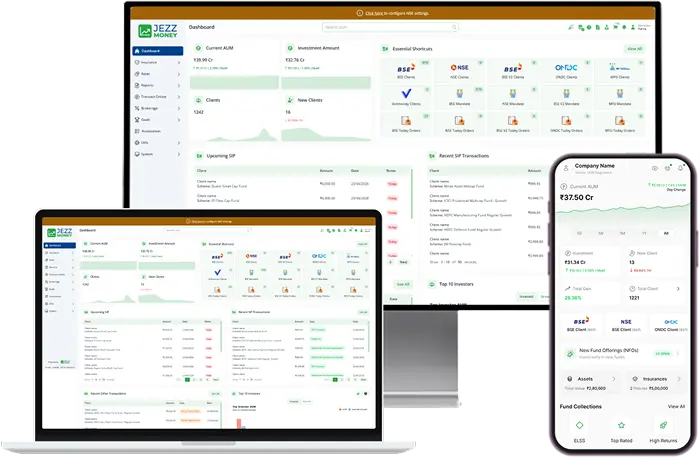
Growing an MFD business isn't about working harder, it's about working smarter. The right technology helps eliminate repetitive tasks, reduce manual errors, and efficiently manage a growing client base without compromising service quality. JezzMoney is built specifically for Mutual Fund Distributors, bringing together essential business functions into a single platform. Features such as a Client Portal, automated Portfolio Reports, WhatsApp & Email communication, transaction tracking, and centralized client management empower MFDs to spend less time on administrative work and more time strengthening client relationships, delivering exceptional service, and growing their Assets Under Management (AUM).

The impact of the right technology is best reflected in the experiences of real users. Shanti Swaroop Agarwal, Founder of Agrawal Financial Services, Ahmedabad, has been using JezzMoney for more than a year. According to him, the platform has significantly simplified client portfolio management and day-to-day business operations. He considers JezzMoney one of the most comprehensive software solutions available for Mutual Fund Distributors and appreciates the prompt support provided by the team whenever assistance is needed. By automating routine tasks and streamlining operations, JezzMoney has enabled him to spend more time engaging with clients, improving service quality, and focusing on growing his business instead of managing administrative tasks.

🎥 Hear It Directly from Our Customer

Strategy 7: Generate More Referrals

One of the most effective ways to grow your mutual fund business is through referrals. Unlike cold leads or paid marketing campaigns, referred clients already have a level of trust because they come through someone who has experienced your services firsthand.

Satisfied clients don't just continue investing; they often introduce you to friends, family members, colleagues, and business associates who are looking for reliable financial advice. This makes referrals one of the lowest-cost and highest-quality sources of new business for Mutual Fund Distributors (MFDs).

Instead of spending more on marketing, focus on creating an experience that naturally encourages clients to recommend you.

Why Referrals Work Better Than Cold Leads

When a new prospect comes through a referral:

  • They already trust your expertise.
  • The sales cycle is usually shorter.
  • They are more likely to become long-term clients.
  • Client acquisition costs are significantly lower.
  • Referred clients often generate additional referrals themselves.

In many successful advisory businesses, a large percentage of new clients come through word-of-mouth recommendations rather than advertising.

The Best Time to Ask for Referrals

Many advisors hesitate to ask for referrals because they fear appearing too sales-oriented. The key is to ask when clients have recently experienced value from your service.

Here are some ideal moments:

After Achieving a Financial Goal

When a client reaches an important milestone such as building an emergency fund, achieving a target investment amount, or successfully planning for a major life goal—they're more likely to appreciate your guidance.

This is a natural opportunity to ask:

"I'm glad we've been able to help you achieve this milestone. If you know someone who could benefit from similar financial planning, I'd be happy to assist them as well."

After a Portfolio Review

A productive portfolio review demonstrates your ongoing commitment to the client's financial success.

If the client leaves the meeting feeling informed and confident about their investments, they're often more willing to recommend your services to others.

During Tax Planning Season

Helping clients save taxes while building long-term wealth creates significant value.

After successfully assisting with tax-saving investments or financial planning, ask whether any friends, family members, or colleagues are also looking for guidance before the financial year ends.

Following an Excellent Service Experience

Sometimes the simplest reason clients refer others is that they've had a positive experience.

Whether you've:

  • Resolved a complex investment query.
  • Assisted with a smooth transaction.
  • Responded quickly during market volatility.
  • Helped simplify financial planning.

A satisfied client is often happy to recommend you if you simply ask.

Create a Simple Referral System

Referrals shouldn't depend on chance. Instead, build a simple and consistent process into your client engagement strategy.

For example:

  • Ask for referrals after every annual portfolio review.
  • Include a referral request in follow-up emails after successful meetings.
  • Mention that you're happy to help their family, friends, or colleagues with financial planning.
  • Thank clients personally whenever they introduce someone to you.

Keep the referral process simple and hassle-free for both the client and the prospect.

The easier it is for clients to refer someone, the more likely they are to do so.

Turn Happy Clients into Business Ambassadors

Imagine you have 150 satisfied clients. If just 20% of them refer one new investor each year, that's 30 qualified prospects generated through trust, not advertising. Even if only half of those referrals become clients, you've added 15 new investors without spending on digital marketing, cold calling, or lead generation campaigns.

Over time, these new clients can also become referral sources, creating a compounding effect that fuels sustainable business growth.

The most successful MFDs understand that every happy client is more than just an investor; they're a potential ambassador for your business. By consistently delivering excellent service, maintaining strong relationships, and asking for referrals at the right time, you can build a steady pipeline of high-quality clients while keeping acquisition costs low.

Strategy 8: Offer Better Client Experience

Many MFDs believe clients switch advisors because another distributor offers better-performing mutual funds. In reality, investment returns are only one part of the equation.

Most clients stay with an advisor because they feel valued, informed, and supported throughout their investment journey. A strong client experience builds trust, encourages long-term relationships, and increases the likelihood of additional investments and referrals.

When investors know they can rely on you not just during bull markets but also during periods of uncertainty, they're far more likely to remain loyal.

Clients Stay Because of Trust

Trust is the foundation of every successful advisory relationship.

Clients want confidence that you're acting in their best interests, recommending suitable investments, and helping them achieve their financial goals, not simply promoting products.

Trust is built through:

  • Honest advice.
  • Consistent follow-ups.
  • Clear explanations.
  • Long-term commitment.
  • Acting proactively rather than reactively.

The stronger the trust, the less likely clients are to switch advisors based on short-term market performance.

Maintain Regular Communication

One of the biggest reasons clients become disengaged is a lack of communication. If investors only hear from their advisor when it's time to invest or during tax season, they may begin to question the value of the relationship.

Stay connected throughout the year by sharing:

  • Portfolio updates.
  • Market insights.
  • Investment education.
  • SIP reminders.
  • Goal progress reports.
  • Important financial planning tips.

Regular communication reassures clients that their investments are being actively monitored.

Keep Investing Simple

Mutual funds, asset allocation, and market movements can feel overwhelming for many investors. Instead of using complex financial jargon, explain concepts in simple, practical language that clients can easily understand.

When clients clearly understand:

  • Why they are investing,
  • How their portfolio is performing,
  • And how each investment supports their financial goals,

they become more confident and are less likely to make emotional decisions during market fluctuations.

Be Transparent in Every Interaction

Transparency creates confidence.

Discuss both the opportunities and the risks associated with investments. Explain portfolio performance honestly, especially during periods of market volatility.

Clients appreciate advisors who communicate openly, provide realistic expectations, and address concerns promptly rather than avoiding difficult conversations.

Long-term trust is built through consistent transparency.

Respond Quickly to Client Queries

New clients expect timely responses. Whether they have a question about a transaction, portfolio performance, or a new investment opportunity, a quick response demonstrates professionalism and commitment.

Even if a complete solution isn't immediately available, acknowledging the query and providing an expected resolution timeline helps clients feel heard and valued.

Fast support often becomes a key differentiator in a competitive advisory market.

Make Information Easily Accessible

Clients appreciate convenience just as much as investment performance. Providing easy access to important information reduces friction and enhances the overall experience.

Consider offering:

  • Mobile access to portfolios so clients can view their investments anytime, anywhere.
  • Easy-to-read reports that clearly summarize portfolio performance, asset allocation, and goal progress.
  • Quick responses through preferred communication channels such as WhatsApp, email, or phone.
  • Regular updates about market developments, portfolio reviews, and important investment opportunities.

When information is readily available, clients feel more in control of their financial journey and require fewer routine support requests.

Technology Helps Deliver a Better Client Experience

As your client base grows, maintaining a consistently high level of service becomes increasingly challenging through manual processes alone.

A modern mutual fund management platform like JezzMoney helps MFDs deliver a professional and seamless client experience by providing features such as:

  • A secure Client Portal for anytime portfolio access.
  • Automated portfolio reports and investment summaries.
  • Integrated WhatsApp and email communication for timely updates.
  • Fast access to transaction details and client information.
  • Centralized client management for quicker responses and personalized service.

These tools allow you to spend less time handling administrative requests and more time delivering meaningful financial advice.

A Great Client Experience Leads to Long-Term Growth

Exceptional service doesn't just improve client satisfaction; it directly contributes to business growth.

Clients who enjoy a positive experience are more likely to:

  • Stay invested for the long term.
  • Increase their SIP contributions.
  • Consolidate more of their investments with you.
  • Introduce family members as clients.
  • Recommend your services to friends and colleagues.

In other words, a great client experience creates a cycle of higher retention, stronger relationships, more referrals, and increased AUM.

Ultimately, the most successful MFDs don't compete only on investment products; they compete on the quality of advice and the experience they deliver. When clients trust you, receive timely support, and find it easy to manage their investments, they have every reason to stay with you for years to come.

How Technology Can Increase Advisor Revenue

Growing a mutual fund distribution business doesn't always require hiring more employees or working longer hours. In today's digital-first environment, technology enables MFDs to manage a larger client base, deliver better service, and improve operational efficiency—all while keeping administrative work under control.

As your business expands, manual processes such as maintaining spreadsheets, preparing reports, tracking SIPs, and responding to routine client requests become increasingly difficult to manage. Modern MFD software streamlines these day-to-day operations, allowing advisors to focus on what truly drives revenue: building relationships and providing quality financial advice. The result is a business that can scale more efficiently without a proportional increase in operational costs.

Manage Portfolios More Efficiently

Managing dozens or even hundreds of client portfolios manually can be time-consuming and error-prone. A centralized Portfolio Management system gives advisors a complete view of client investments, asset allocation, performance, and transaction history in one place. This makes portfolio reviews faster and helps identify opportunities to recommend additional investments or rebalance portfolios based on changing financial goals.

Keep Client Information Organized

As your client base grows, maintaining accurate records becomes essential. A robust Client Management system stores important details such as contact information, investment history, communication records, and financial goals. Instead of searching through emails or spreadsheets, advisors can quickly access everything they need during client interactions, leading to faster responses and a more personalized experience.

View Investments Across Entire Families

Many advisors manage investments for multiple members of the same household. With Family Management, related accounts can be grouped to provide a consolidated view of the family's overall portfolio. This helps advisors identify opportunities to expand relationships, recommend family-based financial planning, and track total family AUM more effectively.

Track Financial Goals Instead of Just Investments

Financial goals, not individual products, drive successful investing. Goal Tracking enables advisors to monitor clients' progress toward objectives such as retirement, children's education, home ownership, or wealth creation. By regularly reviewing these goals, advisors can recommend SIP increases or additional investments whenever clients' financial circumstances change.

Monitor SIPs Proactively

Recurring SIPs are the foundation of long-term AUM growth. An effective SIP Tracking system helps advisors monitor active, pending, or missed SIPs, allowing them to address issues before they result in discontinued investments. Early intervention helps protect recurring revenue while improving the overall client experience.

Generate Professional Reports Quickly

Clients appreciate clear and timely updates about their investments. Automated Reports allow advisors to generate portfolio summaries, capital gains statements, performance reports, and investment overviews within minutes. This saves valuable time while ensuring every client receives consistent and accurate information.

Improve Communication Through Automation

Consistent communication strengthens client relationships but can become difficult to manage manually. Features such as WhatsApp Integration and Email Integration enable advisors to efficiently share portfolio updates, SIP reminders, transaction confirmations, market insights, and important announcements. Automated communication keeps clients informed without requiring individual follow-ups for every interaction.

Access Reliable Research for Better Advice

Providing quality investment advice requires timely market insights and product research. Integrated Research Tools help advisors evaluate mutual funds, compare schemes, analyze performance, and make more informed recommendations. Having research readily available improves decision-making and supports more meaningful conversations with clients.

Stay Connected with a Mobile App

Today's advisors aren't always working from their desks. A Mobile App allows MFDs to access client information, monitor portfolios, review transactions, and respond to client queries while on the move. Likewise, clients benefit from viewing their investments, tracking portfolio performance, and accessing important documents at any time, thereby enhancing convenience and engagement.

Make Better Business Decisions with Analytics

Data can reveal opportunities that are difficult to identify manually.

Business Analytics provides valuable insights such as:

  • Growth in Assets Under Management (AUM).
  • Active versus inactive SIPs.
  • Client acquisition trends.
  • Revenue performance.
  • Top-performing client segments.
  • Opportunities for cross-selling and retention.

Instead of relying on assumptions, advisors can use these insights to make informed decisions and focus on activities that contribute the most to business growth.

Technology Supports Growth; It Doesn't Replace Relationships

Technology cannot replace the trust and expertise that clients expect from a financial advisor. However, it can eliminate repetitive administrative work, improve accuracy, and make client servicing far more efficient. Platforms like JezzMoney combine capabilities such as Portfolio Management, Client and Family Management, Goal and SIP Tracking, automated Reports, WhatsApp and Email Integration, Research Tools, Mobile Access, and Business Analytics into a single ecosystem. Rather than replacing the advisor, these tools help reduce operational workload, allowing MFDs to dedicate more time to financial planning, relationship-building, and business growth.

Common Mistakes That Limit MFD Business Growth

Every Mutual Fund Distributor wants to grow their business, but growth isn't determined only by how many new clients you acquire. In many cases, slow business growth is the result of avoidable operational mistakes rather than market conditions or competition.

Many MFDs work hard every day but unknowingly follow practices that limit their revenue potential. By identifying and correcting these common mistakes, you can improve client satisfaction, increase Assets Under Management (AUM), and build a more sustainable advisory business.

1. Focusing Only on Acquiring New Clients

New clients are essential for long-term growth, but they shouldn't become your only priority.

Many advisors spend most of their time on marketing, lead generation, and prospect meetings while existing clients receive very little attention. As a result, opportunities to increase SIPs, add lump sum investments, or generate referrals are often missed.

A balanced growth strategy should include both:

  • Acquiring new investors.
  • Growing relationships with existing clients.

Often, increasing investments from your current client base delivers better returns than constantly chasing new prospects.

2. Ignoring Existing Investors

Your existing clients are one of your biggest business assets.

Unfortunately, many MFDs contact investors only when:

  • A transaction is pending.
  • Tax-saving season begins.
  • A client initiates the conversation.

Without regular engagement, clients may feel disconnected and begin exploring other advisors.

Maintaining consistent communication through portfolio reviews, market updates, and financial planning discussions helps strengthen relationships and creates opportunities for additional investments.

3. Skipping Annual Portfolio Reviews

Many investors continue with the same investment strategy for years without reviewing whether it still aligns with their financial goals.

Annual portfolio reviews allow you to:

  • Assess investment performance.
  • Rebalance portfolios when needed.
  • Discuss income growth.
  • Recommend SIP step-ups.
  • Identify new financial goals.

Without these reviews, advisors often miss valuable opportunities to increase AUM and reinforce their role as trusted financial partners.

4. Relying on Manual Operations

Managing client information through spreadsheets, handwritten notes, or multiple disconnected systems becomes increasingly inefficient as your business grows.

Manual operations often result in:

  • Duplicate work.
  • Data entry errors.
  • Missed follow-ups.
  • Delayed reporting.
  • Reduced productivity.

Adopting digital tools and automation helps streamline operations, improve accuracy, and free up time for higher-value advisory activities.

5. Poor Follow-Ups

Following up consistently is one of the simplest ways to improve client retention and revenue, yet it's often overlooked.

Without timely follow-ups, advisors may miss:

  • SIP failures.
  • Additional investment opportunities.
  • Portfolio review meetings.
  • Client concerns.
  • Documentation updates.

Regular follow-ups show clients that you're actively managing their financial journey rather than simply processing transactions.

6. Not Asking for Referrals

Many satisfied clients are happy to recommend their advisor but only if they're asked. Some MFDs assume referrals will happen naturally, but a structured referral process can generate a steady stream of high-quality prospects.

Make it a habit to request referrals after:

  • Successful portfolio reviews.
  • Goal achievements.
  • Positive service experiences.
  • Tax planning discussions.

A simple request at the right time can significantly reduce your client acquisition costs.

7. Treating Every Client the Same

Not every investor has the same financial goals, investment capacity, or service expectations. Without client segmentation, it's difficult to prioritize your efforts effectively.

Consider grouping clients based on factors such as:

  • Assets Under Management (AUM).
  • Investment goals.
  • Age and life stage.
  • Risk profile.
  • Investment activity.

Segmentation enables you to deliver more personalized advice, prioritize high-value relationships, and communicate more effectively with different client groups.

8. Avoiding Automation

Many MFDs continue performing routine tasks manually because they've always worked that way. As the client base grows, manual processes become increasingly difficult to sustain.

Tasks such as:

  • Sending SIP reminders.
  • Generating reports.
  • Tracking transactions.
  • Maintaining client records.
  • Sharing portfolio updates.
  • Scheduling follow-ups.

can all be automated using modern MFD software. Automation doesn't replace the advisor; it removes repetitive administrative work so you can spend more time helping clients achieve their financial goals.

Learn from These Mistakes and Build a Stronger Business

The good news is that these challenges are entirely within your control. Small improvements in client engagement, portfolio reviews, referrals, and automation can have a significant impact on long-term business growth. Rather than measuring success solely by the number of new clients you acquire, focus on building a business that retains clients, increases AUM, improves operational efficiency, and consistently delivers value. Advisors who avoid these common mistakes are better positioned to grow their income, strengthen client relationships, and build a more scalable and profitable mutual fund distribution business.

Action Plan for the Next 90 Days for MFD in India

Knowing the right strategies is only the first step. The real results come from consistently putting them into practice. Instead of trying to implement everything at once, focus on a structured 90-day plan that helps you strengthen client relationships, increase Assets Under Management (AUM), and improve recurring revenue.

Here's a practical roadmap you can start implementing today.

Week 1–2: Focus on Your Existing Clients

Before looking for new investors, understand where the biggest opportunities already exist within your client base.

Identify Your Top Clients by AUM

Review your client database and categorize investors based on:

  • Total Assets Under Management (AUM).
  • Monthly SIP contributions.
  • Investment activity.
  • Long-term growth potential.

Your top clients deserve proactive engagement because they often contribute a significant portion of your recurring revenue.

Schedule Annual Portfolio Reviews

Reach out to your existing clients and book review meetings.

Use these conversations to:

  • Review portfolio performance.
  • Reassess financial goals.
  • Discuss changes in income.
  • Identify additional investment opportunities.
  • Recommend portfolio rebalancing where appropriate.

Even a short review can strengthen relationships and uncover opportunities to increase investments.

Week 3–4: Increase Existing Investments

Once portfolio reviews are underway, focus on growing investments from your current clients.

Start SIP Step-Up Discussions

Many clients continue investing the same SIP amount for years despite income increases.

Discuss:

  • Annual salary increments.
  • Business growth.
  • Inflation.
  • Long-term financial goals.

Recommend increasing SIPs gradually through Step-up SIPs rather than suggesting a large one-time increase.

Reach Out to Family Members

Ask clients whether their spouse, parents, children, or family business also require investment planning.

Family financial planning often leads to:

  • Additional SIPs.
  • New investment accounts.
  • Higher household AUM.
  • Stronger long-term client relationships.

Since trust already exists, expanding within the family is often easier than acquiring completely new clients.

Month 2: Improve Efficiency Through Automation

As your client engagement increases, automation helps you maintain consistency without increasing your workload.

Automate Client Communication

Set up automated communication for:

  • SIP reminders.
  • Portfolio reports.
  • WhatsApp updates.
  • Email newsletters.
  • Birthday and festival greetings.
  • Transaction confirmations.

Consistent communication improves client engagement while reducing manual effort.

Review Inactive or Missed SIPs

Analyze your client portfolio to identify:

  • Failed SIPs.
  • Inactive investments.
  • Reduced investment activity.
  • Clients who haven't invested recently.

Contact these investors to understand the reason and, whenever possible, help them resume their investment journey. Protecting existing SIPs is often easier and more profitable than replacing them with new ones.

Month 3: Accelerate Business Growth

With stronger client engagement and improved operational efficiency, the final phase focuses on expanding revenue opportunities.

Introduce a Referral Process

Start asking satisfied clients for referrals after:

  • Successful portfolio reviews.
  • Goal achievements.
  • Positive service experiences.
  • Tax-planning discussions.

A simple and consistent referral process can generate high-quality leads without increasing your marketing budget.

Cross-Sell Goal-Based Investment Solutions

Review each client's financial plan to identify additional opportunities.

Discuss solutions for:

  • Retirement planning.
  • Children's education.
  • Tax-saving investments.
  • Emergency funds.
  • Wealth creation.
  • Short-term financial goals.

Helping clients achieve multiple financial objectives naturally increases your managed AUM.

Measure Your Progress

At the end of the 90 days, review your key business metrics to understand what's working and where further improvements are needed.

Track metrics such as:

  • Growth in total AUM.
  • Number of annual portfolio reviews completed.
  • Increase in SIP amounts.
  • New family accounts added.
  • Referral leads received.
  • Active versus inactive SIPs.
  • Client retention rate.
  • Additional investments from existing clients.

Monitoring these indicators helps you make data-driven decisions instead of relying on assumptions.

Small Improvements Create Big Results

You don't need hundreds of new clients to transform your business. Consistently improving how you engage existing investors can deliver remarkable results over time.

If you spend the next 90 days reviewing portfolios, encouraging SIP step-ups, expanding into family accounts, automating routine communication, reducing SIP drop-offs, and building a referral pipeline, you'll create a stronger foundation for sustainable growth.

The most successful MFDs don't grow by doing everything at once; they grow by consistently executing the right activities. Small improvements made every week can compound into significant increases in AUM, recurring trail income, and long-term advisor revenue.

Summary

Sustainable MFD business growth isn't about constantly acquiring new clients; it's about getting more value from the clients you already have. By strengthening client relationships, increasing existing AUM, reducing SIP drop-offs, improving retention, generating referrals, and automating routine tasks, you can grow your revenue more efficiently while delivering better service.

JezzMoney helps make this possible with powerful features like Client & Family Management, Portfolio Tracking, SIP Monitoring, automated Reports, WhatsApp & Email communication, and Business Analytics. With everything in one platform, you can spend less time on manual work and more time growing your advisory business.

Ready to scale your mutual fund business? Discover how JezzMoney can help you manage clients smarter, automate daily operations, and grow your revenue with confidence.

FAQs about Increase Revenue in MFD Business

How can MFDs increase revenue without adding more clients?

What is the fastest way to grow a mutual fund distribution business?

Why is client retention important for MFDs?

How do SIP step-ups help MFDs?

How can referrals help grow an MFD business?

How can technology help Mutual Fund Distributors?