Home Blog Goal Based Investing

Why Every MFD Should Offer Goal-Based Investing?

Many people begin investing in the market or even start an SIP without knowing what they are trying to accomplish. A good investing habit starts with connecting every investment with one of your financial goals. For example, goals can include child education, retirement savings, house buying, and so forth, which can be achieved through regular investing. The more you know about the objective, the longer you tend to hold the investment, and you tend to make fewer emotional decisions when investing. This shift in mindset has also made the job of Mutual Fund Distributors (MFDs) quite different.

These days, clients don't just want MFDs who give fund recommendations. MFDs must be able to understand the client's requirements, help plan goals, and monitor progress over time. Goal-Based Investing is just what MFDs can rely on. It encourages clients to stick to their financial goals while giving MFDs a practical, trustworthy way to get closer and increase SIP renewals over time.

This manual provides all the important information about goal-based investing, why it is a great option for MFDs at present, what advantages it can offer, and how it can be used to help clients achieve their objectives with the help of mutual funds.

What Is Goal-Based Investing?

Picking up a fund or a stock mainly based on performance or a few other factors that look good to an average investor does not equate to a successful investment. However, it is a lot better to know your financial goals clearly and invest according to them. That is basically what goal-based investing is all about.

The key to goal-based investing is to determine the investment amount, the time horizon, and the investor's ability or willingness to accept losses before investing with mutual funds or other instruments. The goal itself is the starting point, not the performance of the instruments, as was the case previously.

This approach gives every investment a purpose. It also makes it easier to stay invested during market ups and downs because the focus remains on the end goal rather than short-term returns.

Definition of Goal-Based Investing

Goal-based investing is a financial planning approach where investments are linked to specific life goals instead of being driven only by expected returns. Each investment is planned with a target amount, a timeline, and an appropriate level of risk.

For example, an investor saving for retirement after 25 years will usually need a different investment strategy than someone planning to buy a car in the next three years. The goals are different, so the investment plans should be different too.

For Mutual Fund Distributors (MFDs), this approach shifts the conversation from recommending products to helping clients achieve real financial outcomes. It creates a more personalized investment journey and strengthens long-term client relationships.

Examples of Financial Goals

Every investor has different priorities. A well-planned investment portfolio should reflect those priorities rather than follow a one-size-fits-all strategy.

Some of the most common financial goals include:

  • Child's education: Build a corpus to cover school or higher education expenses without financial stress.
  • Retirement planning: Create long-term wealth that provides a steady income after retirement.
  • Buying a home: Save systematically for a down payment or the full cost of a house.
  • Dream vacation: Plan for major travel expenses instead of relying on loans or credit cards.
  • Emergency fund: Maintain readily available savings to handle unexpected medical bills, job loss, or urgent expenses.
  • Wealth creation: Invest consistently to grow assets over the long term and achieve financial independence.
  • Marriage planning: Accumulate funds for wedding expenses without disrupting other financial commitments.

When MFDs understand these goals, they can recommend suitable mutual funds, decide the right SIP amount, and review progress regularly. Clients also gain confidence because every investment has a clear purpose and measurable target.

Why Traditional Investing Is No Longer Enough

The way people invest has changed over the years. Investors have access to more information, more investment options, and higher expectations from financial advisors. Simply recommending a mutual fund based on past performance is no longer enough. Clients want to know how each investment helps them reach a specific financial goal.

Without a structured plan, investors often lose focus. They react to market movements, compare returns with others, or stop investing before achieving their objectives. That's why goal-based investing has become a better approach for both investors and Mutual Fund Distributors (MFDs).

Investors Often Invest Without a Purpose

Many investors begin a SIP because someone recommended it or because they heard mutual funds offer good returns. However, they don't always define what the investment is meant to achieve.

Without a clear goal, it becomes difficult to decide how much to invest, how long to stay invested, or whether the current portfolio is on the right track. A defined financial goal gives every investment a direction and helps investors make better decisions.

Emotional Investing During Market Volatility

Market fluctuations are a normal part of investing. Even so, many investors panic when markets fall or become overly confident during rallies. These emotional decisions often lead to buying and selling at the wrong time. When investments are linked to a long-term goal, short-term market movements become less distracting. Investors are more likely to stay invested because they understand that reaching their goal matters more than reacting to temporary market changes.

Lack of Investment Discipline

Building wealth requires consistency. Missing SIP installments, stopping investments midway, or switching funds too frequently can affect long-term returns. Goal-based investing encourages disciplined investing. Clients know what they are working towards, making it easier to continue investing even when market conditions are uncertain. Regular contributions and periodic reviews keep the plan on track.

Difficulty Measuring Success

Many investors judge success by looking only at portfolio returns. While returns are important, they don't tell the complete story. A better question is whether the investment is helping achieve its intended goal. Is the retirement corpus growing as planned? Is the education fund likely to meet future expenses? Goal-based investing answers these questions by measuring progress against predefined financial goals rather than focusing only on short-term performance.

For MFDs, this approach also makes client reviews more meaningful. Instead of discussing market returns alone, they can show clients how close they are to achieving each financial goal and recommend adjustments whenever needed.

Benefits of Goal-Based Investing for Investors

Goal-based investing offers more than a structured investment plan. It gives investors a clear reason to stay committed, make informed decisions, and measure their financial progress. Instead of chasing the highest returns every year, they focus on achieving milestones that matter in their lives.

Clear Financial Direction

Basing investments on goals is a great solution because without a goal, investments appear meaningless. Investors may start an SIP or invest a lump sum but have no idea how much money they need or when. This problem is eliminated when investing is done with goals, as each investment then serves a purpose. Whether the goal is purchasing a house, funding a child's education, or retirement planning, the amount invested in each case will contribute to a well-defined financial goal. This kind of clear-cut financial planning makes financial management much more efficient.

Better Investment discipline

Investing for a long period will test patience. Market fluctuations are inevitable, but it is the patience of investors and not market fluctuations that determine their success. Investors who invest according to their goals usually do not allow themselves to stop their SIPs because of short-term changes in the market. A definite target encourages one to keep up regular investing habits despite erratic market conditions.

Reduced Emotional Decisions

Emotions drive many investment decisions. Market declines provoke sell-offs by some, whereas others continue to invest; at times, goal-based investing helps cut back on such impulsive actions. When investors focus not only on daily market changes but also on their long-term financial goals, they make better decisions and avoid costly mistakes.

Easier Progress Tracking

One significant point of goal planning is that progress can be easily assessed. At the moment, it will only take one to find out how much has been accumulated, how much is yet needed, and whether the progress indicates a target or not. More frequent portfolio reviews are also more useful. If a plan goes off track, it is possible to make a few early adjustments to the investment strategy rather than sitting back until the deadline arrives for the targeted period.

Higher Chances of Goal Achievement

A financial goal is easier to achieve when there is a clear plan behind it. Goal-based investing combines the right investment amount, an appropriate time horizon, and a suitable level of risk. Each part works together to improve the likelihood of success.

Investors will be better off because it gives them more confidence and fewer surprises. From the point of view of Mutual Fund Distributors (MFDs), it presents a good chance to be the client's advisor and provide them with practical help, rather than concentrate only on product selling. This is why clients themselves are a great reason for a strong connection.

The 7 Reasons That All MFDs Should Promote Goal-Based Investing

The job of a Mutual Fund Distributor (MFD) has changed quite remarkably. Today, customers don't just seek help from someone who offers product information. They need help that allows them to make better financial choices and achieve their life goals. MFDs who understand goal-related investing can go beyond selling products and become advisors who guide clients through the process with a personal approach, providing lasting value. Such a relationship benefits both clients and MFDs, and the business can also expand as a result.

Builds Long-Term Client Relationships

A client who invests with a clear purpose is more likely to stay engaged over the years. Regular discussions shift from market performance to goal progress, making every review more relevant.

As clients achieve one goal, they often begin planning for the next. This creates an ongoing advisory relationship instead of a one-time investment transaction.

Increases SIP Retention

One of the biggest challenges for MFDs is keeping SIPs active. Investors without a clear objective are more likely to stop their SIPs during market corrections or when their financial priorities change. Goal-based investing gives clients a reason to continue investing. When they understand that each SIP contributes towards a child's education, retirement, or another important milestone, they are less likely to discontinue their investments because of short-term market movements.

Creates Multiple Investment Opportunities

Most investors have more than one financial goal. A young professional may want to buy a home, build an emergency fund, and plan for retirement at the same time. This allows MFDs to recommend separate investment strategies for different goals. Instead of managing a single investment, they help clients build a complete financial plan that evolves as their needs change.

Enhancing Trust Between Advisors and Clients

When clients see that the advice they are offered is tailored to their specific needs and not just driven by the newest market trends, they tend to trust their advisors even more. MFDs can provide advice that clients believe is helpful and actionable if they are first able to comprehend their client's risk appetite, financial status, and investment horizon. Naturally, clients are more inclined to seek help from the same person for making their forthcoming financial decisions after having their financial goals supported in that way.

What Makes You Unique Among Other Distributors?

Some distributors are still quite product oriented where their main purpose is to sell insurance or funds-based products. Of course, product selling and performance figures are essential, but in most cases they are not exactly the main concerns of customers. Goal-oriented investing helps MFDs stand out. It allows them to portray themselves as professionals who can deliver sound financial planning to the clients as opposed to merely pushing investment items.

Increase Referrals

Referrals are mostly generated from delighted clients who wish to share their advisor's good experience with the people around them. Confidence, which in turn comes from positive encounters, can be converted into referrals. As soon as clients come to terms with the importance and effectiveness of their financial planning and regular portfolio check-ups, they will more frequently recommend new friends and relatives who need financial advice like theirs!

Enables Value-Based Advisory Instead of Product Selling

Investors rarely remember which fund was recommended first. They do remember the advisor who helped them plan for retirement, fund their child's education, or buy their dream home.

Goal-based investing changes the conversation from selecting products to solving financial problems. This approach strengthens the advisor's role, improves client satisfaction, and creates a business built on long-term relationships rather than one-time sales.

Common Financial Goals Every MFD Should Plan For

Many investors begin their investment journey with good intentions but without a clear plan. They invest based on market trends, recommendations from friends, or short-term performance. While this approach may generate returns for some time, it often creates problems in the long run.

Goal-based investing helps avoid these common mistakes by giving every investment a clear purpose and direction.

Investing Randomly

Some investors purchase mutual funds without defining why they are investing. They may choose a fund because it is popular or has performed well recently.

Without a financial goal, it becomes difficult to decide whether the investment is suitable or when it should be used. A clear objective makes investment decisions more focused and practical.

Chasing High Returns

High-performing funds often attract attention, but past performance does not guarantee future results.

Investors who keep chasing the best-performing funds may end up switching investments frequently. This can increase risk and disrupt long-term wealth creation. A goal-based approach keeps the focus on achieving financial objectives rather than following short-term market trends.

Frequent Portfolio Switching

Changing mutual funds too often is another common mistake. Investors may switch funds whenever markets become volatile, or another fund delivers better returns.

Frequent portfolio changes can affect long-term performance and reduce the benefits of staying invested. Portfolio adjustments should be based on changing financial goals or asset allocation, not temporary market movements.

No Investment Timeline

Every financial goal has a target date. Without a timeline, investors may not know how long they need to stay invested or how much they should invest regularly.

Setting a clear investment horizon helps select suitable mutual funds and creates realistic expectations for achieving the goal.

Ignoring Inflation

Many investors estimate future expenses using today's prices. Over time, inflation increases the cost of education, healthcare, housing, and other major life expenses.

Ignoring inflation can leave investors with a smaller corpus than they actually need. Factoring inflation into goal planning helps build a more realistic investment strategy.

Lack of Diversification

Putting all investments into a single fund or one asset class increases risk. If that investment performs poorly, the entire portfolio can be affected. A diversified portfolio spreads investments across different mutual fund categories and asset classes. This helps manage risk while supporting long-term financial goals.

Missing Annual Reviews

An investment plan should not remain unchanged for years. Income, expenses, family responsibilities, and financial goals often change over time. Regular annual reviews help investors check whether they are on track. If needed, MFDs can increase SIP contributions, rebalance the portfolio, or adjust the investment strategy to keep clients moving towards their financial goals.

Avoiding these mistakes can significantly improve the chances of achieving long-term financial goals. For MFDs, regular goal reviews also create valuable opportunities to strengthen client relationships and provide advice that remains relevant as clients' needs evolve.

How Goal-Based Investing Helps Grow an MFD's Business

Goal-based investing benefits more than just investors. It also helps Mutual Fund Distributors (MFDs) build a stronger and more sustainable business. When advice is centered on a client's financial goals, relationships deepen, client satisfaction improves, and business growth follows naturally.

Instead of focusing on one-time transactions, MFDs can create long-term partnerships that generate value for both the client and the business.

Higher Client Engagement

Clients are more engaged when discussions revolve around their personal goals rather than market performance alone. Regular conversations about retirement planning, a child's education, or wealth creation make meetings more relevant. Clients are also more likely to ask questions, seek advice, and stay involved in their financial plans.

Better Client Retention

Clients who understand the purpose of their investments are less likely to discontinue their SIPs or move to another advisor. When MFDs regularly review progress and help clients stay on track, they build stronger relationships based on trust and consistent support. This increases client loyalty over the long term.

Increased AUM

Goal-based investing often leads to larger and more organized portfolios. As clients add new financial goals, they usually need additional investments to support them. Over time, this can contribute to higher Assets Under Management (AUM). Existing clients also tend to increase their investments as their income grows or new financial priorities emerge.

More SIP Registrations

Many financial goals require regular investing instead of one-time contributions. SIPs are a practical way to build wealth gradually while reducing the impact of market volatility. By linking each SIP to a specific financial goal, MFDs can encourage clients to start new SIPs and continue existing ones with greater confidence.

Cross-Selling Opportunities

A single client may have several financial goals at different stages of life. One investment solution is rarely enough. This creates opportunities to recommend suitable mutual fund categories, additional SIPs, retirement planning, child education planning, or other investment solutions that support the client's overall financial plan.

Simplified Annual Appraisals

When annual reviews focus on progress toward milestones, not just market results, they become more useful.

MFDs can explain the percentage of each goal that has been completed; they can also discuss whether the current strategy fits the client and what changes should be made.

These discussions are not only of huge benefit to the clients but also strengthen the trust between the adviser and the client.

Advantageous Advisory Services

Consumers nowadays are more interested in financial advice rather than product promotions. They are looking for a person who understands their goals and supports them in making well-considered decisions.

By engaging in goal-based investing, an MFD can appear as an advisor that a client can trust rather than merely one who hands out funds. Differentiation like this would be a competitive advantage, and the market in general can benefit significantly.

Greater Client Value for Lifecycle

A long-lasting business with a customer usually means greater profit for a business owner. Upon completing a particular goal, clients usually go back to planning another one. Their investment requirements also keep changing with the progression of their careers/financial situations/families.

By assisting clients with milestones, MFDs can continue to offer timely and relevant advice for several years. This not only raises the lifetime value of clients but also ensures that a solid base is created for the business to grow over the years.

Goal-based investing is more of a planning method. For MFDs, it is actually the way to get more customers and increase their base. With goal-based investing, an MFD can be more closely connected with their clients; their investing behavior changes positively, AUM increases, and the MFD can provide the client with continuing, genuine financial advice.

How should MFDs offer Goal-Based Investing?

Promoting goal-based investing is not just a matter of suggesting the right mutual funds; it is more about implementing a method that keeps customers focused on their financial targets throughout the course of their investment. Following best practices can help MFDs provide quality advice, drive higher client satisfaction, and build lasting relationships.

Conduct In-depth Goal Discovery Meetings

At the heart of every winning financial plan is a deep understanding of the client's requirements and personal situation. Only after such in-the-trenches client conversations should you even bring up investments.

Get to know their key life events and future intentions: for example, are they going to be a homebuyer? Do they need an emergency savings plan in place? Will they retire soon or is it still years away? How is a child's educational plan going?

After the interview, you will understand a lot more about their financial vision and probably even some new ones the client had no idea about and had forgotten to mention.

Prioritize goals according to the degree of importance and time frame

Very often, clients' goals are not only different in nature but come at different times and levels of importance.

You are not supposed to tell your clients that, but it's true; the clients might even have some of their goals prioritized wrong and need a second opinion.

To avoid confusion in the client's mind, guide them so that each goal is placed under its level of importance and desired timeline. This kind of roadmap will help them not only in the short run, but also make it possible to adjust the investment plan with future goals or current market conditions.

For instance, building an emergency fund is probably going to be more of a priority than saving for a really grand trip or an elaborate vacation. At the same time, retirement has to stay your priority and can be dealt with gradually if you're patient enough! This helps you allocate assets to your goals more smartly.

Keep Educating on Inflation

Folks tend to overlook quite a dramatic rise in costs due to inflation over the years. For example, something that costs you 20 lakhs today could cost you a lot more after ten, fifteen, or twenty years. Therefore, it becomes really essential to highlight the effects of inflation, not only in terms of a decrease in purchasing power, but in the whole planning phase of investing. When a customer is explained the idea of inflation and how much it can impact a client's purchasing power over the long-term investment horizon, then he is likely to invest a bigger amount of his resources and also make better use of them in the early stage.

Reward the Customer by Giving Realistic Return Expectations

A common error that a financial expert can easily make is overpromising and underdelivering. For example, by making the customer believe that the product or service can deliver the promised outcome without any caveats. In this respect, a good approach would be to explain market fluctuations as part of the investment process to a fund investor and focus on long-term wealth creation rather than one-time market performance.

Suggestions for fund selection could include reviewing investment strategies that best match the customer's financial objectives and capacity to withstand market-related risk. Rather than chasing market performance as a short-term phenomenon, such investment advice is expected to be from a long-term investment perspective of a fund buyer.

To be the market leader in such a product, one should keep customers in mind, as well as customer satisfaction.

Make Sure that you rebalance portfolios as the Client's Objectives or Investment Preferences Evolve.

The financial advisory industry knows that clients change their investment requirements from time to time; hence, the professional needs to keep in touch with the client.

Detailed client reviews on an annual or half-annual basis are useful not only to check how the client's assets have performed so far but also to identify ways to enhance the investments, such as increasing one's Systematic Investment Plan contribution. The review would also include a check whether the investments in the portfolio remain well-suited to the client.

Such portfolio adjustment is necessary when the client or the market environment is in a state of flux. A regular portfolio review helps the client understand the investment process more deeply and achieve the best investment outcome, while remaining loyal to the financial provider.

Use Visual Goal-Tracking Dashboards

Clients understand their progress more easily when they can see it. Goal-tracking dashboards, progress charts, and visual reports show how much of the target corpus has been achieved and what remains. These visuals make review meetings more engaging and help clients stay motivated.

Keep Communication Proactive

Don't wait for clients to contact you. Stay connected through regular updates, investment insights, review reminders, and important notifications. Consistent communication reassures clients that their investments are being monitored and strengthens confidence in your advisory services.

Update Plans as Life Circumstances Change

Financial goals are not fixed forever. A promotion, marriage, the birth of a child, or a change in income can all affect investment priorities. Review financial plans whenever major life events occur. Updating the investment strategy at the right time helps clients stay on track and ensures their portfolio continues to support their changing financial goals.

By following these suggestions, MFDs can give clients counsel beyond fund selection. The advice continues, and the recommendations and investment plans are tailored to match the clients' life situations. This leads to stronger relations, better client retention, and more justification for the goal-based investment strategy.

JezzMoney's Way to Help MFDs in Goal-Based Investing

Without appropriate technology, managing many clients and their financial goals can be really difficult. Whether it is creating an investment plan, tracking progress, or portfolio review, you will be doing all those processes with exact data and doing follow-ups now and then.

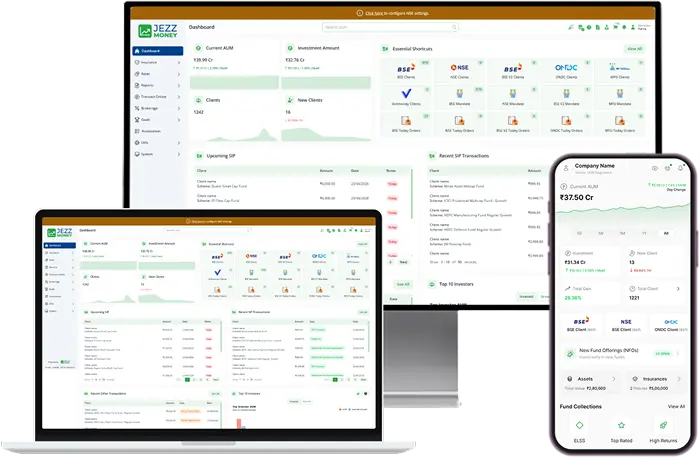
JezzMoney makes it easier to provide your clients with goal-based investing services through its user-friendly platform and features. MFDs will benefit from planning tools, portfolio management, and client engagement features, combined to make a structured, goal-based investing experience much more accessible.

  • Goal-Based Financial Planning: JezzMoney allows MFDs to create customized investment plans based on each client's financial goals. Whether the objective is retirement planning, a child's education, buying a home, or long-term wealth creation, advisors can build investment strategies that match the client's target amount and investment horizon.
  • AI-Powered Risk Profiling: Every investor has a different level of risk tolerance. JezzMoney's AI-powered risk profiling helps assess a client's financial profile, investment experience, and comfort with market fluctuations. This enables MFDs to recommend investment strategies that align with the client's risk appetite.
  • Mutual Fund Recommendations: Selecting suitable mutual funds becomes easier when client goals and risk profiles back recommendations. JezzMoney helps MFDs identify investment options that support long-term financial planning rather than relying only on recent fund performance.
  • SIP and Financial Calculators: The platform includes a range of SIP and financial calculators that simplify investment planning. MFDs can estimate monthly SIP amounts, calculate future investment values, and help clients understand how regular investing supports their financial goals.
  • Client and Family Portfolio Management: Many investors manage investments for themselves and their family members. JezzMoney enables MFDs to organize and monitor individual and family portfolios from a single dashboard, making portfolio management more efficient.
  • Goal Tracking Dashboards: Clients can monitor their progress through visual goal tracking dashboards. They can see how much of their target has been achieved, how their investments are performing, and whether they are on track to meet their financial goals. This makes review meetings more productive and easier to understand.
  • Automated Review Reminders: Regular reviews are an important part of goal-based investing. JezzMoney helps MFDs stay connected with clients by sending automated reminders for portfolio reviews, SIP follow-ups, and other important milestones. This reduces the chances of missed reviews and improves client engagement.
  • Portfolio Analytics: The platform provides detailed portfolio analytics that help MFDs evaluate investment performance, monitor asset allocation, and identify opportunities for portfolio rebalancing. These insights support better investment decisions and more informed client discussions.
  • Consolidated Reports: Preparing reports manually can be time-consuming. JezzMoney generates consolidated portfolio reports that present investment performance, asset allocation, and goal progress in a clear and professional format. These reports improve transparency and make financial reviews more meaningful.
  • Secure Client Login: Clients can securely access their portfolios through a dedicated login. They can review investments, track financial goals, and stay updated on their portfolio whenever they need. This transparency builds confidence and strengthens long-term relationships between MFDs and their clients.

JezzMoney helps MFDs spend less time on administrative tasks and more time advising clients. The result is a smoother investment experience, stronger client relationships, and a more efficient way to deliver goal-based investing.

Summary

The way investors choose financial advisors has changed. They no longer want someone who only recommends mutual funds. They want guidance that helps them achieve real financial goals with confidence and clarity. Goal-based investing meets those expectations. It gives every investment a clear purpose, encourages disciplined investing, and makes it easier to measure progress over time. For Mutual Fund Distributors (MFDs), it also creates stronger client relationships, improves SIP continuity, and opens the door to long-term business growth.

MFDs can deliver advice that goes beyond product recommendations. They can help clients prepare for life's biggest milestones while building trust that lasts for years. The result is better client outcomes, higher client retention, increased Assets Under Management (AUM), and a stronger advisory practice. Managing multiple clients and financial goals becomes much easier with the right technology. Platforms like JezzMoney provide the tools MFDs need to deliver goal-based investing efficiently. From goal planning and SIP calculators to portfolio tracking, risk profiling, client engagement, and consolidated reporting, everything is available in one place.

If you're looking to strengthen client relationships and grow your mutual fund business, it's time to make goal-based investing a core part of your advisory approach. Explore how JezzMoney can help you deliver smarter financial planning and a better investment experience for every client.

FAQs about Goal-Based Investing

What is goal-based investing?

Why is goal-based investing important?

How do MFDs benefit from goal-based investing?

Can SIPs be used for goal-based investing?

How often should financial goals be reviewed?