Home Blog Increase Sip Book Size

Strategies to Increase SIP Book Size Without Adding New Clients

The Indian mutual fund industry has witnessed remarkable growth over the past decade, driven largely by the widespread adoption of Systematic Investment Plans (SIPs). By 2026, the industry's Assets Under Management (AUM) had crossed ₹81 lakh crore, while monthly SIP inflows consistently exceeded ₹30,000 crore, reflecting investors' growing confidence in disciplined, long-term investing. Today, SIPs are widely used to achieve financial goals such as retirement planning, children's education, wealth creation, and home ownership.

Despite this encouraging trend, many investors follow a common pattern: they start with a modest SIP and rarely increase the investment amount over time. An investor who began with a ₹2,000 or ₹5,000 monthly SIP five years ago often continues investing the same amount, even after receiving multiple salary hikes or experiencing significant income growth. While continuing a SIP is a positive habit, failing to increase contributions means the investment may not keep pace with inflation, rising living costs, or expanding financial goals.

This behavior presents a significant opportunity for Mutual Fund Distributors (MFDs) and Independent Financial Advisors (IFAs). Acquiring new clients typically requires substantial marketing efforts, lengthy sales cycles, and continuous lead generation. In contrast, encouraging existing clients to increase their SIP contributions is usually faster, more cost-effective, and far more profitable over the long term. Since these investors already trust their advisor and understand the value of mutual funds, they are generally more receptive to recommendations such as Step-Up SIPs, goal-based investing, portfolio optimization, and additional investment solutions.

However, many MFDs fail to capitalize on this opportunity. Client portfolios are often reviewed only during periods of market volatility, when investors become anxious about their investments. Step-Up SIP campaigns are frequently limited to a single annual reminder or a generic communication. In many cases, client interactions revolve around transaction confirmations rather than proactive financial guidance. As a result, SIP amounts remain unchanged for years, slowing the growth of recurring revenue and limiting the expansion of Assets Under Management (AUM).

Growing an SIP book does not always require acquiring more clients. Often, the greatest opportunity lies within an advisor's existing client base. By identifying investors whose financial capacity has increased, maintaining regular engagement, and recommending timely SIP enhancements, MFDs can significantly improve client outcomes while accelerating business growth.

In this guide, you'll discover practical and proven strategies to grow your SIP book without adding new clients. You'll learn how to identify upselling opportunities within your existing investor base, use behavioural finance principles to encourage higher SIP contributions, increase client engagement through personalized communication, leverage technology for automated follow-ups, and build a stronger, more predictable recurring revenue stream over the long term.

What Is a SIP Book and Why Does It Matter?

A SIP Book refers to the total value of all active Systematic Investment Plans (SIPs) managed by a Mutual Fund Distributor (MFD) or Independent Financial Advisor (IFA). It is typically measured by the total monthly SIP inflows generated from existing investors, representing the recurring investments clients make every month.

For example:

  • If an advisor manages 500 active SIPs of ₹2,000 each, the SIP Book is ₹10 lakh per month.
  • If the advisor manages 1,000 active SIPs with an average contribution of ₹5,000 each, the SIP Book grows to ₹50 lakh per month.

Unlike one-time investments, a SIP Book creates predictable and recurring business, making it one of the most valuable assets for any advisory practice.

How a SIP Book Impacts Recurring Revenue and AUM

Building a larger SIP Book directly contributes to higher Assets Under Management (AUM) and creates a stable source of recurring revenue. Every monthly SIP adds fresh capital to client portfolios, and as investments continue over the years, both portfolio values and trail commissions grow through regular contributions and market appreciation.

For MFDs and IFAs, this translates into several business advantages:

  • Consistent monthly business instead of depending primarily on one-time investments.
  • Higher AUM through continuous SIP inflows and long-term market growth.
  • Improved client retention, as SIP investors are more likely to stay invested through different market cycles.
  • Greater business stability with predictable recurring income, even during periods of market volatility.

A strong SIP Book also enhances the overall value of an advisory business because recurring revenue is generally more predictable and sustainable than transaction-based income.

Benefits of Building a Larger SIP Book

Growing your SIP Book offers long-term advantages that go far beyond increasing monthly collections.

  • Higher recurring income through regular SIP inflows and trail commissions.
  • Faster AUM growth without relying solely on acquiring new clients.
  • Lower client acquisition costs, as increasing investments from existing clients is more cost-effective than acquiring new ones.
  • Better investor retention, since SIP investors typically remain invested for longer periods.
  • Greater business predictability through stable monthly cash flows.
  • More opportunities to cross-sell products such as ELSS funds, Hybrid Funds, Children's Funds, Retirement Funds, and goal-based investment solutions.
  • Stronger client relationships through regular portfolio reviews and personalized financial planning.

In today's competitive mutual fund industry, a larger SIP Book is more than just a performance metric it is a key indicator of a scalable, sustainable, and resilient advisory business. Rather than focusing exclusively on acquiring new clients, successful MFDs consistently work to increase SIP contributions from existing investors, creating long-term value for both their clients and their business.

Why Existing Clients Are the Biggest Growth Opportunity

Many Mutual Fund Distributors (MFDs) and Independent Financial Advisors (IFAs) spend a significant portion of their time and budget acquiring new investors. While expanding your client base is important, one of the most profitable growth opportunities often lies within your existing clients. They already trust your advice, understand the value of mutual funds, and are far more likely to increase their investments than someone you're approaching for the first time.

Investor relationships are built on trust. Most clients prefer to continue working with an advisor they know rather than switching to someone new. This gives MFDs a unique opportunity to strengthen relationships through regular portfolio reviews, personalized financial guidance, and recommendations that evolve with each client's changing financial needs. Rather than focusing only on acquiring new investors, advisors can increase SIP contributions from existing clients with significantly lower effort and cost.

Lower Client Acquisition Cost

Acquiring a new client typically involves marketing expenses, lead generation, multiple follow-ups, KYC completion, onboarding, and convincing the investor to begin their first SIP. This process may take weeks or even months.

In comparison, encouraging an existing investor to increase their SIP amount or start an additional SIP requires far less effort. Since the relationship and trust have already been established, the conversion cycle is shorter, resulting in a much better return on both time and resources.

Higher Trust and Conversion Rates

Trust is one of the most influential factors in financial decision-making. Existing clients have already experienced your service, portfolio guidance, and support during different market conditions, making them more receptive to investment recommendations.

They are more likely to:

  • Increase their monthly SIP amount.
  • Start a Step-Up SIP.
  • Invest for new financial goals.
  • Diversify into additional mutual fund categories.

Compared to cold leads, existing clients generally deliver much higher conversion rates because they already have confidence in your expertise and advice.

Better Long-Term Client Retention

Investors who actively engage with their financial advisor tend to remain invested for longer periods. Regular portfolio reviews, proactive communication, market updates, and goal-based planning strengthen client relationships and reduce the likelihood of SIP discontinuation or advisor switching.

Higher retention also leads to consistent SIP inflows, growing Assets Under Management (AUM), and stable recurring revenue over time.

Easier Portfolio Expansion

Every investor's financial journey changes over time. A client who initially invested for tax savings may later require solutions for retirement planning, children's education, wealth creation, or purchasing a home. These life events create natural opportunities to expand their investment portfolio.

Instead of replacing existing investments, advisors can recommend:

  • Additional SIPs for new financial goals.
  • Higher SIP contributions after salary increments.
  • Investments in different mutual fund categories based on changing risk profiles.
  • Goal-based portfolios aligned with future financial objectives.

This approach not only increases the client's investment potential but also strengthens the advisor-client relationship by delivering continuous value throughout the investor's financial journey.

The fastest way to grow a SIP Book is not always by acquiring more investors—it is often by helping existing clients invest more effectively. Through regular engagement, personalized financial planning, and timely investment recommendations, MFDs and IFAs can increase recurring SIP inflows, improve client satisfaction, and achieve sustainable AUM growth without significantly increasing acquisition costs.

10 Proven Strategies to Increase SIP Book Size Without Adding New Clients

Growing your SIP Book doesn't always require adding more clients. In many cases, your existing investor base offers the greatest opportunity to increase recurring investments and Assets Under Management (AUM). By understanding your clients' evolving financial needs and engaging them proactively, you can significantly increase monthly SIP inflows while strengthening long-term relationships.

1. Conduct Regular Portfolio Review Meetings

One of the biggest mistakes many MFDs make is reviewing portfolios only during periods of market volatility. Instead, schedule portfolio reviews at least once or twice a year to evaluate investment performance, financial goals, risk tolerance, and changes in income.

These meetings often uncover opportunities to:

  • Increase existing SIP amounts.
  • Start additional SIPs for new financial goals.
  • Rebalance portfolios based on changing market conditions.
  • Introduce tax-saving or retirement-focused investment solutions.

Clients value proactive financial advice, making regular portfolio reviews one of the most effective ways to grow your SIP Book.

2. Encourage a Step-Up SIP Every Year

A Step-Up SIP allows investors to increase their SIP contribution automatically by a fixed amount or percentage every year. Since many salaried professionals receive annual salary increments, allocating a portion of that increase toward investments can significantly enhance long-term wealth creation without affecting their lifestyle.

For example:

  • Current SIP: ₹5,000 per month
  • Annual Step-Up: 10%
  • Investment Period: 20 years

The resulting investment corpus can be substantially higher than maintaining the same SIP amount throughout the investment period. Make Step-Up SIP discussions a standard part of every annual portfolio review.

3. Convert Lump Sum Investors into SIP Investors

Many investors contribute only when they receive bonuses, incentives, or tax refunds. While lump-sum investments are valuable, encouraging these investors to start regular SIPs creates predictable monthly inflows and promotes disciplined investing.

SIPs can be recommended for goals such as:

  • Children's education.
  • Retirement planning.
  • Long-term wealth creation.
  • Buying a home.
  • Vacation planning.

Recurring investments improve investment discipline while creating more stable business revenue.

4. Identify Under-Invested Clients

Many investors continue investing the same SIP amount for years despite substantial increases in income. Reviewing your client database can help identify investors who have the capacity to invest more.

Look for:

  • High-income clients with relatively low SIP contributions.
  • Investors whose SIPs have remained unchanged for several years.
  • Clients approaching major financial milestones.
  • Investors maintaining surplus balances in savings accounts.

These investors often represent the easiest opportunities to increase recurring investments.

5. Promote Goal-Based Financial Planning

Rather than discussing mutual funds alone, focus conversations on life goals. Investors are generally more willing to increase their investments when they understand how those contributions help achieve meaningful financial objectives.

Common goals include:

  • Retirement planning.
  • Children's education.
  • Marriage planning.
  • Wealth creation.
  • Buying a home.
  • International education.
  • Financial independence.

Goal-based planning helps investors visualize future financial requirements and often encourages higher SIP contributions.

6. Increase SIP Amounts After Salary Increments

Most salaried professionals receive annual salary hikes, promotions, or bonuses. However, only a small percentage automatically increase their investments.

Run annual campaigns during appraisal season encouraging clients to invest part of their salary increase instead of spending the entire amount.

For example:

"If your monthly salary has increased by ₹10,000, consider investing just ₹2,000 more into your SIP to accelerate your financial goals."

This simple behavioural change can substantially increase your SIP Book over time.

7. Cross-Sell Suitable Mutual Fund Categories

Many investors hold only one or two equity funds despite having multiple financial goals. Portfolio reviews create opportunities to recommend additional fund categories that better align with their objectives.

Depending on the investor's profile, consider introducing:

  • Hybrid Funds.
  • Debt Funds.
  • ELSS Funds.
  • Children's Funds.
  • Retirement Funds.
  • International Funds (where appropriate).
  • Index Funds.

Cross-selling should always be based on the client's financial goals and risk profile rather than simply increasing investment size.

8. Use Personalized SIP Recommendations

Generic investment messages rarely generate meaningful action. Personalized recommendations based on each client's financial situation are far more effective.

Use data such as:

  • Current SIP amount.
  • Investment tenure.
  • Goal progress.
  • Income level.
  • Age.
  • Risk profile.

For example:

"Based on your retirement goal, increasing your SIP by ₹3,000 per month today could help bridge your projected retirement corpus gap."

Personalized advice feels more relevant and significantly improves conversion rates.

9. Automate Follow-Ups Through CRM and WhatsApp

Many SIP growth opportunities are lost simply because advisors fail to follow up consistently. A CRM integrated with WhatsApp, email, and SMS can automate regular client communication.

Automation can be used for:

  • Portfolio review reminders.
  • Birthday and anniversary greetings.
  • SIP top-up reminders.
  • Step-Up SIP campaigns.
  • Market update newsletters.
  • Goal progress reports.

Automated communication keeps clients engaged while saving valuable time.

10. Educate Investors During Market Volatility

Market corrections often create fear, causing some investors to pause or discontinue their SIPs. Experienced advisors recognize these periods as opportunities to reinforce investor confidence.

Educate clients about:

  • Rupee Cost Averaging.
  • Long-term wealth creation.
  • The benefits of continuing SIPs during market declines.
  • Historical market recoveries.
  • The importance of remaining invested.

Rather than reducing investments during corrections, informed investors often choose to increase their SIPs, enabling them to accumulate more units at lower prices.

If you want to grow your SIP Book, focus on creating more value for your existing clients rather than relying solely on acquiring new investors. Regular portfolio reviews, annual Step-Up SIP campaigns, personalized financial planning, automated communication, and continuous investor education can significantly increase recurring SIP inflows. Advisors who consistently engage with their clients are better positioned to grow their Assets Under Management (AUM), strengthen client loyalty, and build a sustainable advisory business over the long term.

Common Mistakes That Prevent SIP Book Growth

Many Mutual Fund Distributors (MFDs) and Independent Financial Advisors (IFAs) focus primarily on acquiring new clients and often overlook opportunities to grow investments from their existing client base. As a result, Systematic Investment Plan (SIP) contributions remain unchanged for years, recurring revenue stagnates, and Assets Under Management (AUM) grow more slowly than they could. In many cases, increasing SIP contributions from existing investors is far more efficient than acquiring new clients. Avoiding the following common mistakes can help advisors grow their SIP Book without significantly increasing marketing costs or effort.

1. Lack of Regular Client Communication

One of the biggest reasons for SIP stagnation is inconsistent client engagement. Many advisors communicate only during market volatility or when processing transactions, which gradually turns the relationship into a purely transactional one rather than a trusted advisory partnership.

Regular communication through portfolio updates, market insights, financial education, and personalized check-ins keeps investors engaged and creates natural opportunities to discuss increasing SIP contributions. Even a monthly newsletter or a quarterly review call can strengthen relationships and encourage better financial decisions.

2. Ignoring Step-Up SIP Opportunities

Many investors begin with a SIP of ₹2,000 or ₹5,000 per month and continue investing the same amount for several years, even as their income increases. Advisors who fail to recommend Step-Up SIPs miss one of the easiest opportunities to grow recurring investments.

Ideal occasions to suggest a SIP increase include:

  • Annual salary increments.
  • Promotions or bonuses.
  • Business growth.
  • Improved cash flow.
  • Changes in financial goals.

Making Step-Up SIP recommendations a standard part of every annual portfolio review benefits both the client's long-term wealth creation and the advisor's recurring SIP Book.

3. Skipping Annual Financial Reviews

A client's financial situation is constantly evolving. Income levels, family responsibilities, career progression, and financial goals change over time, influencing investment requirements.

Without regular portfolio reviews, advisors may miss valuable opportunities to:

  • Increase SIP contributions.
  • Introduce new goal-based investments.
  • Rebalance portfolios.
  • Recommend suitable mutual fund categories.

Scheduling annual or semi-annual financial reviews helps ensure investment plans remain aligned with each client's objectives while creating opportunities to grow long-term investments.

4. Providing Generic Investment Recommendations

Every investor has unique financial goals, income levels, risk tolerance, and investment horizons. Sending identical investment recommendations to every client often results in low engagement and poor conversion rates.

Instead, advisors should personalize recommendations using each client's financial profile. For example, suggesting a higher SIP contribution after a salary increase or recommending a dedicated SIP for a child's education feels relevant and actionable, making investors more likely to respond positively.

5. Focusing Only on New Client Acquisition

Many advisors assume business growth depends entirely on acquiring more clients. While expanding the client base remains important, relying exclusively on new acquisitions can be expensive, time-consuming, and unpredictable.

Existing clients already trust your advice, understand your investment approach, and have experienced your service. As a result, they are generally much more likely to increase their investments than new prospects are to begin investing.

A sustainable growth strategy balances new client acquisition with proactive initiatives such as portfolio reviews, Step-Up SIP campaigns, personalized financial planning, and ongoing client engagement to increase investments from the existing client base.

Growing your SIP Book is not just about finding more investors—it's about unlocking the full potential of the clients you already serve. By maintaining regular communication, promoting Step-Up SIPs, conducting periodic financial reviews, providing personalized recommendations, and balancing client acquisition with retention, MFDs and IFAs can build a stronger, more sustainable SIP Book while achieving consistent long-term AUM growth.

Best Tools to Grow SIP Book Efficiently

Growing your SIP Book is not just about having the right strategy it's also about using the right technology. Modern Mutual Fund Distributors (MFDs) and Independent Financial Advisors (IFAs) can save time, improve client engagement, and increase recurring SIP investments by leveraging digital tools that automate routine tasks and provide actionable insights. Instead of manually tracking portfolios, sending reminders, or calculating investment goals, technology enables advisors to deliver a more personalized and professional experience while focusing on building stronger client relationships.

1. Portfolio Analytics Tools

Portfolio analytics tools help advisors monitor client portfolios in real time and identify opportunities to increase investments. They provide valuable insights into portfolio performance, asset allocation, investment concentration, and progress toward financial goals.

With portfolio analytics, advisors can:

  • Identify under-invested clients.
  • Detect inactive or stagnant SIPs.
  • Recommend portfolio rebalancing.
  • Track AUM growth and portfolio performance.
  • Generate professional portfolio review reports.

These insights make annual review meetings more meaningful, data-driven, and action-oriented.

2. CRM Automation

A Customer Relationship Management (CRM) system centralizes client information and automates routine tasks, ensuring that no follow-up opportunity is overlooked.

A robust CRM enables advisors to:

  • Maintain complete client profiles.
  • Schedule portfolio review meetings.
  • Track client interactions.
  • Automate follow-up reminders.
  • Segment clients based on investment behaviour.
  • Manage leads and referrals efficiently.

By automating administrative activities, advisors can dedicate more time to personalized financial planning and investor engagement.

3. SIP Calculators

SIP calculators are among the most effective tools for educating investors and demonstrating the benefits of long-term investing. They help clients visualize how increasing their SIP amount or choosing a Step-Up SIP can significantly enhance future wealth creation.

Commonly used calculators include:

  • SIP Calculator.
  • Step-Up SIP Calculator.
  • Lumpsum Calculator.
  • Retirement Planning Calculator.
  • Child Education Planning Calculator.
  • Goal-Based Investment Calculator.

When investors see projected outcomes based on different investment scenarios, they are often more motivated to increase their monthly contributions.

4. Client Reminder Automation

Consistent communication plays a crucial role in growing a SIP Book. Automated reminder systems help advisors stay connected with investors without requiring manual follow-ups.

Automation can be used for:

  • SIP due date reminders.
  • Portfolio review appointments.
  • Step-Up SIP campaigns.
  • Birthday and anniversary greetings.
  • Investment goal milestone updates.
  • Market updates and newsletters.

Regular communication strengthens investor relationships and creates more opportunities for additional investments.

5. Goal Planning Tools

Goal planning software shifts conversations from products to financial outcomes. Instead of simply recommending mutual funds, advisors can show clients exactly how much they need to invest to achieve specific life goals.

These tools support planning for:

  • Retirement.
  • Children's education.
  • Marriage.
  • Home purchase.
  • Wealth creation.
  • Emergency fund planning.

Goal-based planning improves investor confidence and often encourages higher SIP contributions because investments are directly linked to meaningful financial objectives.

6. Mutual Fund Research Platforms

Access to reliable mutual fund research enables advisors to make well-informed investment recommendations based on performance, risk, consistency, and suitability.

A comprehensive research platform typically provides:

  • Fund performance analysis.
  • Risk and return comparisons.
  • Rolling return analysis.
  • Portfolio holdings.
  • Fund manager insights.
  • Category rankings.
  • Fact sheets and detailed research reports.

Well-supported recommendations build investor trust, improve confidence, and contribute to better long-term investment decisions.

Why an Integrated Platform Makes the Difference

While each of these tools offers value individually, an integrated mutual fund platform that combines portfolio analytics, CRM, SIP calculators, client communication, goal planning, and mutual fund research creates a far more efficient advisory experience.

With a unified platform, advisors can manage client relationships, automate communication, monitor portfolios, identify SIP growth opportunities, and deliver personalized recommendations from a single dashboard. This not only improves operational efficiency but also supports scalable business growth.

Technology has become an essential driver of SIP Book growth. By leveraging portfolio analytics, CRM automation, SIP calculators, client reminder systems, goal planning software, and mutual fund research platforms, MFDs and IFAs can provide more personalized advice, strengthen investor relationships, and consistently increase recurring SIP inflows without relying solely on acquiring new clients.

How Technology Helps MFDs Increase SIP Book

Technology has transformed the way Mutual Fund Distributors (MFDs) manage client relationships and grow their businesses. Instead of relying on spreadsheets and manual processes, modern advisory platforms enable MFDs to identify growth opportunities, automate routine tasks, and deliver a seamless investment experience. By leveraging the right technology, advisors can improve client engagement, increase recurring SIP investments, and scale their business more efficiently.

1. Client Segmentation

Every investor has unique financial goals, income levels, risk tolerance, and investment behaviour. Technology enables MFDs to segment clients based on these characteristics, making it easier to deliver personalized investment recommendations.

For example, advisors can quickly identify:

  • Clients whose SIP amounts have remained unchanged for several years.
  • High-income investors with relatively low monthly SIP contributions.
  • Clients approaching retirement or other major financial milestones.
  • Investors without goal-based investment plans.
  • Clients suitable for Step-Up SIP campaigns.

Targeted communication based on client segmentation delivers significantly higher engagement and conversion rates than generic campaigns.

2. Automated Reminders

Managing follow-ups for hundreds or thousands of investors manually is both time-consuming and inefficient. Automated reminder systems help ensure that important opportunities are never missed while maintaining consistent communication throughout the year.

Automation can be used for:

  • Portfolio review appointments.
  • Step-Up SIP reminders.
  • SIP due date notifications.
  • Goal progress updates.
  • Birthday and anniversary greetings.
  • Market insights and educational content.

Regular and timely communication keeps investors engaged and creates natural opportunities to increase their SIP contributions.

3. Portfolio Insights

Modern portfolio management tools provide real-time visibility into client investments, enabling advisors to make informed, data-driven recommendations.

These insights help MFDs:

  • Identify underperforming or unbalanced portfolios.
  • Track portfolio growth and Assets Under Management (AUM).
  • Detect inactive or discontinued SIPs.
  • Recommend portfolio rebalancing.
  • Identify opportunities to increase SIP contributions.

Rather than relying on assumptions, advisors can use actionable data to deliver personalized financial guidance aligned with each client's objectives.

4. Digital Onboarding

A smooth onboarding experience creates a strong first impression and enables investors to begin their investment journey without unnecessary delays.

Digital onboarding simplifies processes such as:

  • Online KYC verification.
  • Paperless documentation.
  • eSign integration.
  • Bank mandate registration.
  • SIP registration.
  • Secure document uploads.

By reducing paperwork and manual processes, digital onboarding improves client convenience while enabling advisors to onboard investors faster and more efficiently.

5. Mobile App Engagement

Today's investors expect access to their portfolios anytime and anywhere. A dedicated mobile application enhances the overall investor experience by providing transparency, convenience, and continuous engagement.

Through a mutual fund app, investors can:

  • Track portfolio performance in real time.
  • Monitor SIP status.
  • View transaction history.
  • Download account statements.
  • Receive investment notifications.
  • Use financial calculators.
  • Access mutual fund research and insights.

Frequent interaction with the app keeps investors connected to their financial goals and creates additional opportunities for portfolio expansion.

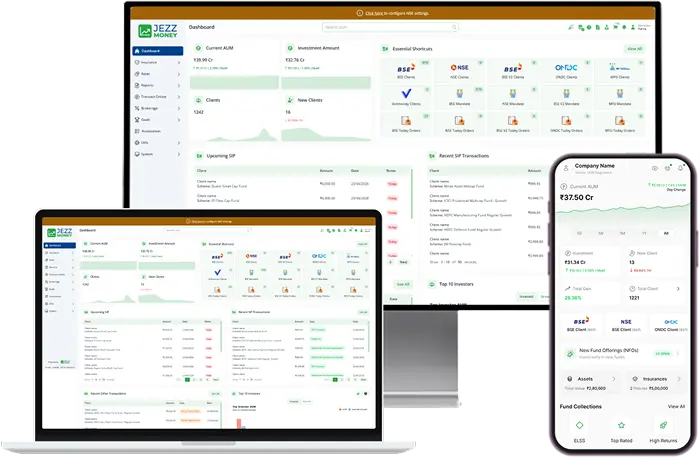
6. Reporting Dashboards

Business dashboards provide advisors with a comprehensive view of their practice, enabling better decision-making through real-time business intelligence.

A reporting dashboard can track:

  • Monthly SIP inflows.
  • Assets Under Management (AUM).
  • Active and inactive SIPs.
  • Client growth trends.
  • Revenue performance.
  • Portfolio distribution.
  • Client engagement metrics.

These insights help advisors identify growth opportunities, measure campaign effectiveness, and continuously optimize strategies to expand their SIP Book.

The Future of SIP Book Growth Is Digital

As investor expectations continue to evolve, technology has become a competitive advantage rather than simply a convenience. MFDs who embrace digital solutions can automate repetitive tasks, deliver personalized financial advice at scale, and build stronger, long-lasting client relationships. Instead of spending valuable time on administrative work, advisors can focus on strategic initiatives that increase recurring SIP investments and maximize long-term client value.

Technology empowers MFDs to grow their SIP Book by combining automation, data analytics, and personalized investor engagement. Features such as client segmentation, automated reminders, portfolio insights, digital onboarding, mobile applications, and business dashboards improve operational efficiency, strengthen investor relationships, and drive sustainable AUM growth without relying solely on acquiring new clients.

How Technology Helps MFDs Increase SIP Book

Technology has transformed the way Mutual Fund Distributors (MFDs) manage client relationships and grow their businesses. Instead of relying on manual processes and spreadsheets, modern advisory platforms enable MFDs to identify growth opportunities, automate routine tasks, and deliver a seamless investment experience. By leveraging the right technology, advisors can improve client engagement, increase recurring SIP investments, and scale their business more efficiently.

1. Client Segmentation

Every investor has different financial goals, income levels, risk appetite, and investment behaviour. Technology allows MFDs to segment clients based on these factors, making it easier to deliver personalized investment recommendations.

For example, advisors can quickly identify:

  • Clients whose SIP amounts haven't increased in years.
  • High-income investors with low monthly SIPs.
  • Clients approaching retirement or other financial milestones.
  • Investors without goal-based investment plans.
  • Clients eligible for Step-Up SIP campaigns.

Targeted communication based on client segments significantly improves engagement and conversion rates compared to generic marketing.

2. Automated Reminders

Following up with hundreds or thousands of clients manually is almost impossible. Automated reminder systems ensure that no important opportunity is missed while maintaining consistent communication throughout the year.

Automation can be used for:

  • Portfolio review appointments.
  • Step-Up SIP reminders.
  • SIP due date notifications.
  • Goal progress updates.
  • Birthday and anniversary greetings.
  • Market insights and educational content.

Regular, timely communication keeps investors engaged and encourages them to increase their SIP contributions when appropriate.

3. Portfolio Insights

Modern portfolio management tools provide real-time insights into every client's investment portfolio, helping advisors make informed recommendations.

These insights help MFDs:

  • Identify underperforming or unbalanced portfolios.
  • Track portfolio growth and Assets Under Management (AUM).
  • Detect inactive or discontinued SIPs.
  • Recommend portfolio rebalancing.
  • Find opportunities to increase SIP amounts.

Instead of making assumptions, advisors can use data-backed insights to deliver personalized financial guidance that aligns with each client's objectives.

4. Digital Onboarding

A smooth onboarding experience creates a positive first impression and encourages investors to start their investment journey without unnecessary delays.

Digital onboarding solutions simplify processes such as:

  • Online KYC verification.
  • Paperless documentation.
  • eSign integration.
  • Bank mandate registration.
  • SIP registration.
  • Secure document uploads.

Reducing paperwork and manual processes improves client convenience while allowing advisors to onboard investors more efficiently.

5. Mobile App Engagement

Today's investors expect access to their investments anytime and anywhere. A dedicated mobile app enhances the overall client experience by providing transparency and convenience.

A mutual fund mobile app can help investors:

  • Track portfolio performance in real time.
  • Monitor SIP status.
  • View transaction history.
  • Access account statements.
  • Receive investment notifications.
  • Use financial calculators.
  • Explore mutual fund research and insights.

Frequent interaction with the app keeps investors connected to their financial goals and increases opportunities for additional investments.

6. Reporting Dashboards

Business dashboards provide MFDs with a complete overview of their advisory practice, enabling them to make data-driven decisions.

A comprehensive dashboard can track:

  • Monthly SIP inflows.
  • Assets Under Management (AUM).
  • Active and inactive SIPs.
  • Client growth trends.
  • Revenue performance.
  • Portfolio distribution.
  • Client engagement metrics.

With clear business insights, advisors can identify growth opportunities, measure campaign performance, and develop strategies to expand their SIP Book continuously.

The Future of SIP Book Growth Is Digital

As investor expectations continue to evolve, technology is becoming a competitive advantage rather than a convenience. MFDs who adopt digital tools can automate repetitive tasks, deliver personalized financial advice at scale, and build stronger client relationships. Instead of spending time on administrative work, advisors can focus on strategic activities that increase recurring SIP investments and long-term client value.

Technology empowers MFDs to grow their SIP Book by combining automation, data analytics, and personalized client engagement. Features such as client segmentation, automated reminders, portfolio insights, digital onboarding, mobile applications, and business dashboards help advisors improve operational efficiency, strengthen investor relationships, and drive sustainable AUM growth without relying solely on client acquisition.

Summary

In today's competitive mutual fund industry, the most successful advisors are those who focus on strengthening long-term client relationships rather than relying solely on acquiring new investors. By combining regular portfolio reviews, annual Step-Up SIP campaigns, personalized financial planning, data-driven insights, and digital engagement, Mutual Fund Distributors (MFDs) and Independent Financial Advisors (IFAs) can steadily grow their SIP Book, improve client retention, and build a scalable advisory business with consistent recurring revenue and sustainable Assets Under Management (AUM) growth.

If you're looking to streamline your operations and accelerate SIP Book growth, JezzMoney's Mutual Fund Distributor Software provides everything you need in a single platform. From portfolio analytics and CRM automation to digital onboarding, client engagement, mutual fund research, and 50+ financial calculators, JezzMoney helps you manage your advisory business more efficiently while delivering a superior investor experience. Equip your business with the right technology and turn every existing client into a long-term growth opportunity.

FAQs Strategies to Increase SIP Book

How can I increase my SIP Book without getting new clients?

What is the fastest way to increase SIP AUM?

What is a Step-Up SIP?

How often should MFDs review client portfolios?

Why is investor education important for SIP growth?

Which technology helps increase SIP Book size?