

Home Blog Mfd Tax Compliance Checklist India

Tax and Compliance Checklist for Indian Mutual Fund Distributors

The tax and legal requirements for mutual fund distributors (MFDs) in India have become increasingly complex in recent years. Earlier, distributors mainly needed to report income and renew their ARN. Today, they must also comply with GST regulations, provide detailed income breakups, stay updated with regulatory changes, and meet stricter reporting standards. Even partial compliance gaps can expose distributors to penalties, cash-flow disruptions, or regulatory scrutiny.

The introduction of GST on mutual fund commissions, updates to SEBI norms, and a stronger focus on brokerage transparency have collectively changed how MFDs operate. Beyond paying taxes, distributors are now required to maintain accurate records, reconcile income across multiple AMCs, and ensure their tax filings reflect the actual brokerage earned. Without the right systems and tools, ongoing mutual fund distributor tax compliance can quickly become complex and error-prone.

This handbook serves as a one-stop guide for individual MFDs, IFAs, partnership firms, and distributor companies seeking to simplify mutual fund distribution income tax and remain compliant throughout the year. Along with a clear, practical checklist covering key tax, GST, and regulatory responsibilities, it helps distributors reduce compliance risk, gain better financial visibility, and focus on scaling their business with confidence.
Regulatory & AMFI Compliance Requirements for Mutual Fund Distributors

Meeting AMFI compliance requirements in India is the first step in the chain of legal obligations that a mutual fund distributor must fulfil. The most critical compliance requirement is obtaining and maintaining a valid ARN (AMFI Registration Number). Distributors must ensure timely ARN renewals, including payment of renewal fees and completion of mandatory certification requirements. If an ARN expires, commission payouts can be suspended, putting business continuity at serious risk.

EUIN compliance is equally important, particularly for firms and distributors operating with multiple employees or relationship managers. Every individual involved in selling or advising on mutual funds must hold an active EUIN, and all transactions must be correctly mapped at the employee level to meet regulatory expectations.

In addition, distributors are required to complete KYD (Know Your Distributor) formalities and maintain overall SEBI compliance as regulations continue to evolve. These measures are designed to promote transparency, suitability, and ethical selling practices. Any lapse such as an inactive ARN, incorrect EUIN mapping, or incomplete KYD can result in penalties, commission suspensions, legal consequences, or reputational damage. Staying compliant is therefore essential not only for regulatory adherence but also for maintaining trust and long-term business sustainability.

Coverage of GST on Mutual Fund Distributors in India

Many mutual fund distributors are unsure whether GST applies to their commission income. In simple terms, GST is applicable because commissions and brokerage earned by distributors are treated as taxable services under GST law. As a result, most mutual fund distributors are required to comply with GST regulations.

GST on mutual fund brokerage is charged at 18% on the total commission received from AMCs. To avoid mismatches or compliance notices, distributors must correctly account for GST while raising invoices and filing returns. GST registration becomes mandatory once a distributor’s annual turnover crosses the prescribed threshold. Distributors working with multiple AMCs must consider their total gross income when determining registration requirements. Understanding the reverse charge mechanism (RCM) is also important.

In certain cases, GST liability may fall on the recipient of the service under RCM, making it essential for distributors to clearly understand how and when RCM applies to their transactions. Proper GST compliance helps ensure smooth commission payouts and significantly reduces the risk of penalties or fines.

GST Return Filing & Record-Keeping Checklist

Accurate return filing and proper documentation are essential for smooth GST compliance for mutual fund distributors. Registered distributors are required to file GSTR-1 (outward supplies and commission invoices) and GSTR-3B (summary of GST liability and payment) within the prescribed timelines to avoid interest, late fees, or regulatory notices.

GST Return Filing Checklist

  • File GSTR-1 with correct AMC-wise commission details
  • File GSTR-3B reflecting accurate GST liability
  • Match GST payable with commission income earned
  • Pay GST on time to avoid interest and penalties

Invoice & Record-Keeping Checklist

  • Raise GST-compliant invoices to AMCs
  • Maintain records of commission statements and payout reports
  • Preserve expense invoices for rent, software, marketing, and professional fees
  • Ensure all invoices contain the correct GSTIN and tax details

Input Tax Credit (ITC) Checklist

  • Claim ITC only on eligible business expenses
  • Verify supplier GSTIN and invoice validity
  • Reconcile the ITC claimed with GSTR-2B data
  • Track unclaimed or reversed ITC regularly

Common GST Filing Mistakes to Avoid

  • Missing GST return filing deadlines
  • Incorrect GST calculation on commission income
  • Claiming ineligible input tax credit
  • Mismatch between GST returns and brokerage records

Following this checklist helps mutual fund distributors remain compliant, minimise errors, and stay audit-ready throughout the financial year.

Income Tax Rules for Mutual Fund Distributors

Mutual fund distributors who understand income tax compliance can avoid both under-reporting income and paying excess tax. Commissions and brokerage earned from mutual fund distribution are treated as taxable income and must be accurately disclosed in the income tax return. This includes trail commissions, incentives, and any other earnings received from AMCs.

Commission income is generally classified as business income rather than professional income. This classification impacts the applicable ITR form, eligible expense deductions, and audit requirements. Choosing the correct income head ensures legal compliance and reduces the risk of issues during tax assessments.

Mutual fund distributors are allowed to deduct legitimate business expenses incurred to generate income. These may include office rent, staff salaries, software subscriptions, marketing expenses, internet and telephone bills, and professional fees. Maintaining proper documentation is mandatory to substantiate these deductions.

Income Tax Compliance Checklist

  • Accurately report all commission and trail income
  • Correctly classify income as business income
  • Maintain proper records for all allowable business expenses
  • Evaluate whether advance tax is applicable based on total tax liability
  • Pay advance tax in instalments to avoid interest and penalties

Following these guidelines helps mutual fund distributors manage cash flow efficiently while remaining compliant with income tax regulations throughout the year.

Presumptive Taxation vs Regular Taxation for MFDs

Presumptive taxation for mutual fund distributors is an optional scheme that allows eligible distributors to declare income as a fixed percentage of turnover, without maintaining detailed books of accounts. This approach is generally suitable for small distributors with simple operations and relatively low expenses.

While presumptive taxation simplifies compliance, it may not always be the most tax-efficient option. Distributors with higher operating costs, multiple employees, or expanding businesses may benefit more from regular taxation, which allows deduction of actual business expenses.

Presumptive Taxation

  • Lower compliance burden
  • No deduction allowed for actual business expenses
  • No detailed bookkeeping required
  • May result in higher tax outgo for growing MFDs
  • Reduced likelihood of tax audit
  • Limited flexibility for income planning

Presumptive taxation can simplify compliance for small mutual fund distributors, but it involves clear trade-offs. Although it reduces administrative effort and audit exposure, it may not suit distributors with rising income or significant operating expenses. Evaluating these pros and cons helps MFDs select a taxation method aligned with their business size, cost structure, and long-term growth objectives.

When Regular Taxation Is the Safer Option

  • When business expenses are high
  • When turnover is increasing steadily
  • When operating as a firm, LLP, or company
  • When detailed visibility into income and expenses is required

Tax Audit Applicability Checklist

  • Review annual turnover against prescribed limits
  • Assess profit declared under the presumptive scheme
  • Maintain books of accounts if an audit becomes applicable
  • Understand tax audit requirements to avoid penalties

Choosing the right taxation method is a strategic decision. Mutual fund distributors should review their tax position annually to ensure compliance while optimising overall tax liability.

TDS on Mutual Fund Commission & Brokerage Reconciliation

AMCs are required by regulation to deduct TDS on mutual fund commissions before releasing brokerage payouts to distributors. This TDS is reflected in the distributor’s Form 26AS and must be accurately reported while filing the income tax return. Since commission income is often received from multiple AMCs, maintaining precise TDS records is essential to avoid reporting errors.

Regular brokerage reconciliation helps mutual fund distributors ensure that the commission income reported in tax returns truly reflects business earnings. Distributors should periodically compare AMC payout statements with internal brokerage reports and Form 26AS. Any mismatch, short deduction, or missing entry should be promptly followed up with the respective AMC to prevent loss of tax credit.

As trail commissions accrue over time and may be paid monthly or quarterly, they require careful tracking. Proper tax treatment of commission income ensures it is reported in the correct financial period and that corresponding TDS credits are accurately matched.

TDS & Brokerage Reconciliation Checklist

  • Track TDS credits regularly in Form 26AS
  • Reconcile AMC-wise brokerage agreements with payout statements
  • Identify and correct TDS short deductions or mismatches
  • Maintain consistent records of trail commission income
  • Ensure correct reporting of TDS credits in the income tax return

Implementing a structured reconciliation system reduces compliance risk, improves income transparency, and significantly minimises the chances of tax-related surprises.

Year-End Tax and Compliance Checklist for MFDs

A systematic year-end review helps mutual fund distributors close the financial year without compliance gaps. This checklist aligns regulatory, GST, and income tax requirements well before final filings and audits.

Year-End Compliance Checklist

  • Check ARN expiry date and apply for renewal if required
  • Ensure EUIN is obtained for all employees and sub-distributors
  • Reconcile total GST liability with GSTR-3B filings and payments
  • Match brokerage income with AMC statements and GST returns
  • Verify Form 26AS and AIS against actual commission earned
  • Review trail commission income to ensure correct tax treatment
  • Check advance tax payments and identify any outstanding liabilities
  • Assess tax audit applicability and maintain required documentation
  • Prepare for timely GST and income tax return filing

Reviewing this checklist before year-end helps identify and correct errors early, avoid penalties, and gain a clear view of income and compliance status for the upcoming financial year.

Common Tax & Compliance Mistakes Mutual Fund Distributors Should Avoid

Even seasoned mutual fund distributors face the risk of compliance lapses due to inadvertent errors or the absence of a structured system. If compliance were handled proactively and systematically, a significant portion of regulatory risk and potential financial loss could be avoided.

Common Compliance Mistakes Mutual Fund Distributors Make

  • Overlooking GST Registration: Many distributors delay or forget to register for GST even after crossing the prescribed turnover threshold. This can create issues with AMC commission payouts and lead to backdated tax liabilities, along with interest and penalty charges.
  • Incorrect Income Reporting: Failing to report total commission income, including trail commissions, often causes mismatches between income tax returns, Form 26AS, and AIS. Such discrepancies can trigger tax notices and scrutiny.
  • Poor Brokerage Visibility: Without a reliable system to track brokerage across multiple AMCs, distributors struggle with reconciliation, inaccurate tax filings, and even missed income. Lack of visibility makes effective tax and cash-flow planning nearly impossible.
  • Delayed Filings and Penalties: Late GST returns, income tax filings, or advance tax payments attract interest and penalties. Repeated delays increase the likelihood of audits or regulatory action, especially as authorities are becoming more vigilant.

Distributors who identify and address these gaps early can remain compliant, maintain income transparency, and shift their focus toward business growth instead of dealing with avoidable compliance stress.

Technology Can be Tax & Compliance Helper for Mutual Fund Distributors

If you are a distributor working with multiple AMCs, manually handling tax and regulatory requirements can be time-consuming and prone to errors. Using mutual fund distributor software for compliance brings structure, accuracy, and end-to-end visibility to the entire process.

Centralised Brokerage Tracking

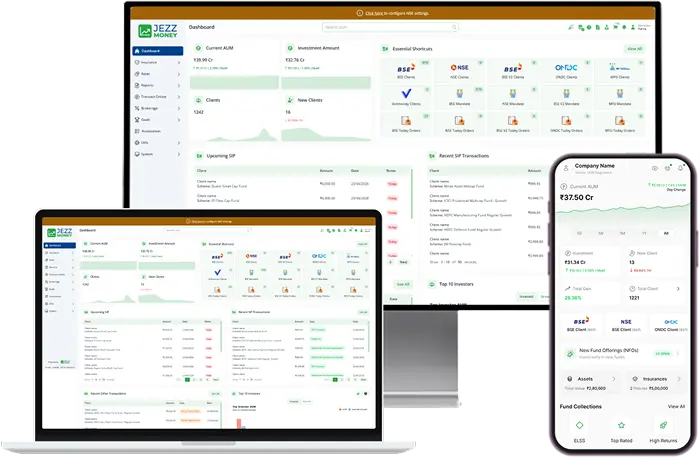
With the help of technology, distributors can view commission and trail income from multiple AMCs in one central dashboard. Without software, this would require extensive manual reconciliation. Centralised tracking improves income visibility and supports more accurate reporting and tax planning.

GST-Ready Reports

Compliance-focused software generates GST-ready summaries that align brokerage income with tax filings. These reports simplify GST return filing and significantly reduce the risk of errors, omissions, or missed tax liabilities.

Audit-Friendly Data Access

Well-organised and easily accessible records are invaluable during tax audits or regulatory reviews. Software enables quick access to historical income data, invoices, and reconciliation reports without manual effort.

Compliance Alerts and Automation

Automation helps manage critical compliance tasks such as ARN renewals, GST return filings, and income tax deadlines. Timely alerts reduce dependence on spreadsheets and ensure compliance activities are completed on schedule, minimising penalties.

Key Benefits of Technology for Mutual Fund Distributors

  • Lower risk of non-compliance
  • Improved income and brokerage visibility
  • Greater focus on client servicing and business growth

Summary

Tax and regulatory compliance is no longer a one-time or year-end activity for mutual fund distributors. With GST obligations, evolving SEBI norms, and a growing emphasis on income transparency, proactive compliance has become essential to avoid penalties, operational disruptions, and unnecessary stress.

A checklist-based approach helps distributors stay organised throughout the year. By breaking compliance into clear, manageable steps covering GST, income tax, brokerage reconciliation, and regulatory requirements distributors can reduce errors, gain better visibility into their income, and remain audit-ready at all times.

For growing MFDs, compliance should be seen as a business enabler rather than a burden. Strong systems and disciplined processes not only minimise risk but also support informed decision-making and long-term growth. For distributors looking for an advanced, automated way to manage compliance, GST, and brokerage visibility more efficiently, explore the tools and features available at Jezzmoney to streamline operations and improve accuracy.

Adopting a structured compliance framework allows mutual fund distributors to focus on what matters most building investor trust and scaling their business with confidence.

FAQs Tax and Compliance

Is GST mandatory for all mutual fund distributors?
Which ITR form should mutual fund distributors file?
Is a tax audit applicable to small mutual fund distributors?
Is TDS deducted on mutual fund commission income?
Can mutual fund distributors claim business expenses against commission income?
How long should mutual fund distributors maintain tax and compliance records?