Home Blog Mutual Fund Brokerage Without Spreadsheets

Understand Your Mutual Fund Brokerage Without Spreadsheets

Brokerage tracking remains a persistent challenge for many mutual fund distributors. Income details are often spread across multiple reports, emails, and statements, forcing distributors to rely on manual calculations to understand their earnings. While Excel sheets are commonly used as a workaround, maintaining accuracy over time becomes increasingly difficult and error-prone, especially as the volume of transactions grows.

Many distributors focus heavily on Assets Under Management (AUM), assuming that higher AUM automatically translates into higher income. In reality, brokerage earnings vary significantly based on scheme type, asset class, commission structure, and payout terms. Without clear visibility into brokerage and payout data, it becomes difficult to assess true profitability, track business growth, or make informed strategic decisions.

Limitations of Spreadsheets for Brokerage that are Not so Obvious

Spreadsheets are not an adequate tool for handling the complexities of mutual fund brokerage tracking. As a distribution business grows with more clients, schemes, and AMCs, every update demands additional manual effort. Data has to be entered repeatedly, formulas need constant adjustments, and figures must be rechecked. What begins as a simple Excel file gradually turns into a time-consuming monthly task that can take hours or even days to complete.

The biggest risk with spreadsheets lies in error management. A missed entry, an overwritten formula, or an incorrect commission rate can distort income calculations without immediate visibility. In many cases, distributors only discover these errors when actual payouts do not match expectations, by which time corrective action becomes difficult.

Another major limitation of spreadsheets is the lack of real-time visibility and insight. They display static numbers but do not provide meaningful analysis. Comparing brokerage across months, identifying income trends, or determining the most profitable clients and schemes requires additional manual work. Analyzing historical performance becomes increasingly challenging unless multiple files are maintained with absolute consistency.

The complexity increases further when tracking payouts and sub-broker commissions. Multiple payout structures, varying commission percentages, and partnerships with different stakeholders make it extremely difficult to maintain accuracy using spreadsheets alone. Instead of offering clarity and control, spreadsheets often leave distributors dependent on manual processes, struggling with delayed insights, and constrained in their ability to make timely, data-driven business decisions.

What Mutual Fund Distributors Actually Need From Brokerage Tracking

Mutual fund distributors need more than a simple brokerage total. Effective brokerage tracking must deliver structured, actionable insights that support daily operations as well as long-term business planning. Without this clarity, income visibility remains incomplete and decision-making becomes reactive rather than strategic.

A critical requirement is the ability to view total brokerage and net earnings simultaneously. Distributors should clearly understand:

  • Gross brokerage earned from client investments
  • Brokerage shared with sub-brokers and partners
  • Net income retained by the business

When these figures are not distinctly separated, it becomes difficult to assess true profitability, control costs, or plan sustainable growth.

Another essential capability is tracking income at a granular level across clients and AMCs. Brokerage data should clearly highlight:

  • Income contribution from each individual client
  • Revenue generated from different AMCs
  • Scheme-wise performance across fund houses

Such insights allow distributors to focus on high-value clients, strengthen relationships with the most profitable AMCs, and allocate effort where it delivers the highest return.

Asset-class-wise brokerage analysis is equally important. A detailed breakdown across equity, debt, and hybrid funds helps distributors:

  • Identify income distribution across asset categories
  • Evaluate whether higher-risk assets are translating into proportionate income
  • Avoid overdependence on asset classes that generate low or inconsistent brokerage

This alignment ensures that growth in AUM translates meaningfully into growth in income.

Finally, effective brokerage tracking must support easy comparison across time periods. A robust system should enable:

  • Month-on-month and year-on-year income comparisons
  • Trend analysis of brokerage payouts
  • Evaluation of the impact of business strategies over time

With structured, time-based insights readily available, distributors can set realistic targets, make faster decisions, and confidently measure progress. When brokerage tracking delivers this level of visibility and organization, it strengthens control, improves transparency, and creates a solid foundation for scalable business growth.

How Modern Mutual Fund Software Solves Brokerage Confusion

Contemporary mutual fund software simplifies what was once a complex and fragmented brokerage tracking process. Instead of juggling scattered reports, emails, and spreadsheets whenever brokerage confirmations arrive, distributors gain access to a single, centralized repository that consolidates all brokerage and payout information. This eliminates duplication, reduces dependence on multiple sources, and ensures consistent, reliable reporting.

Integrated Brokerage and Payout Tracking

Modern platforms integrate brokerage, commissions, and payout figures into a single system. Income data is automatically reconciled, removing the need to compare multiple AMC statements or payout files. This integration makes brokerage tracking more dependable and significantly reduces manual effort.

Automated Calculations and Reporting

Mutual fund software automates brokerage calculations based on predefined commission structures. Sub-broker payouts, gross income, and net earnings are computed automatically, and reports can be generated instantly. This automation minimizes errors and saves distributors substantial time each month.

Visual Dashboards for Better Clarity

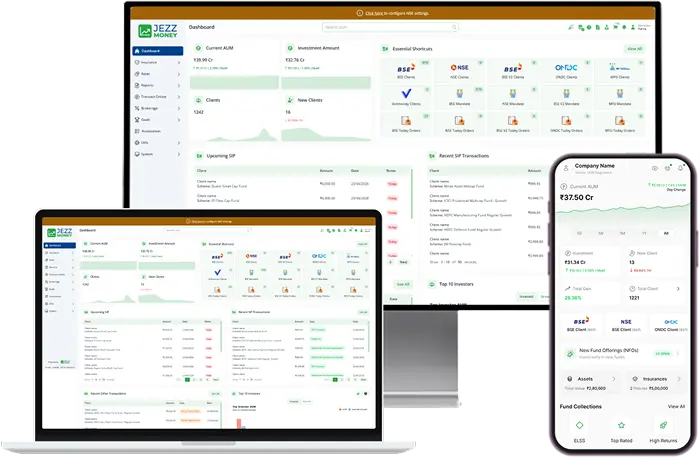
Instead of navigating complex spreadsheets, distributors can view brokerage performance through intuitive graphical dashboards. Charts, summaries, and structured breakdowns make it easy to understand income distribution, identify trends, and detect inconsistencies without technical complexity.

Faster and More Confident Decision-Making

With accurate data and real-time visibility, distributors can make quicker and more informed decisions. Whether reviewing sub-broker performance, evaluating asset-class income contribution, or planning growth strategies, modern software turns brokerage data into practical, actionable insights.

Overall, modern mutual fund software goes beyond simplifying brokerage tracking. It enables distributors to shift their focus away from manual calculations and reconciliation toward strategic planning, client engagement, and sustainable business growth.

Brokerage Insights That Help Grow a Distribution Business

Accurate brokerage insights go far beyond presenting income figures. They play a critical role in scaling and strengthening a mutual fund distribution business. When distributors have clear visibility into their income data, they can move from reactive management to proactive, evidence-based growth planning.

Identifying High-Income-Generating Schemes and Clients

Brokerage insights enable distributors to identify which schemes and clients contribute the most to revenue, not merely those with the highest AUM. This clarity allows distributors to focus their time and advisory effort where it delivers the greatest value.

  • Strengthen relationships that consistently generate meaningful income
  • Prioritize advisory efforts with higher revenue potential
  • Avoid overinvesting time in low-return segments

Enhancing Sub-Broker Performance

For distributors working with sub-brokers, detailed brokerage analytics provide transparency and accountability. Clear data makes it easier to evaluate performance and improve collaboration.

  • Understand income contribution from each sub-broker
  • Review payout efficiency and commission structures
  • Identify performance gaps and growth opportunities

With transparent insights, distributors can set realistic targets, improve accountability, and help partners perform better.

Identifying Sustainable Income-Generating Asset Classes

Different asset classes contribute differently to brokerage income over time. Granular insights help distributors evaluate where income is being generated consistently.

  • Analyze brokerage contribution from equity, debt, hybrid, and other asset classes
  • Maintain the right balance between stability and growth across market cycles
  • Ensure that AUM growth aligns with sustainable income generation

This alignment ensures business growth is supported by real revenue strength rather than asset accumulation alone.

Driving Growth Through Data, Not Guesswork

When brokerage data is structured, accessible, and accurate, distributors can plan growth with confidence. Data-driven insights enable better strategic decisions.

  • Set achievable and realistic income targets
  • Measure the impact of strategy changes over time
  • Make informed decisions backed by actual performance data

Distributors equipped with accurate brokerage insights gain clarity, confidence, and control, enabling them to build a scalable and sustainable business model for long-term success.

What JezzMoney is Building for Mutual Fund Distributors

JezzMoney is focusing on a focused set of brokerage intelligence capabilities and supporting features that address real, day-to-day operational challenges faced by mutual fund distributors. Each feature is designed to eliminate scattered reporting and spreadsheet dependency by delivering structured, decision-ready insights.

Brokerage and Income Dashboard (Coming Soon)

This will serve as a centralized dashboard that allows distributors to view brokerage performance instantly and efficiently. Gross brokerage, payouts, and net income will be visible in one place without the need for manual reconciliation. The dashboard will highlight income trends, month-on-month movement, and overall profitability at a glance, enabling faster reviews and more confident planning.

Payout and Sub-Broker Tracking

JezzMoney will introduce a structured payout management system that provides clear visibility into sub-broker and partner commissions. Distributors will be able to track payouts at an individual sub-broker level, align commission structures accurately, and clearly distinguish between earned and paid amounts. This transparency reduces disputes, improves trust, and supports better partner performance management.

Client, AMC, and Asset-Wise Analytics

Brokerage and income data will be analyzed across three critical dimensions to provide meaningful insights:

  • Client-wise: Identifying clients who contribute meaningful income, not just higher AUM.
  • AMC-wise: Understanding revenue contribution and the effectiveness of relationships with different fund houses.
  • Asset-wise: Correlating brokerage generation across equity, debt, hybrid, and other asset classes.

These analytics help distributors focus on high-impact clients, manage risk exposure more effectively, and ensure AUM growth translates into sustainable income.

Custom Date Range Reporting

Distributors will be able to generate reports for any selected time period, enabling flexible analysis beyond standard monthly statements. This supports year-on-year comparisons, performance reviews of specific strategies or campaigns, and precise tracking of income and payouts over time, keeping business insights aligned with real-time activity.

JezzMoney is emerging as a practical brokerage intelligence layer that supports modern distribution businesses. By shifting distributors from manual tracking to structured, scalable, and data-driven management, it enables better control, clearer decision-making, and long-term business growth.

From Excel Dependency to Smart Brokerage Management

Moving away from spreadsheets is not merely a technology upgrade; it represents a fundamental operational shift in how a mutual fund distribution business is run. Efficient brokerage management software replaces fragmented, manual processes with structured systems, making daily operations smoother, more reliable, and far more scalable.

How Software Reduces Operational Burden

Manual brokerage tracking requires constant data entry, reconciliation, and cross-verification across multiple reports. This approach is time-consuming, stressful, and prone to errors such as missed entries or incorrect calculations. Brokerage management software automates these processes by calculating brokerage, managing payouts, and generating reports from a single source of truth. As a result, routine work becomes lighter, error rates drop significantly, and month-end closures turn into a predictable, streamlined process rather than a high-pressure task.

Improved Visibility and Stronger Control

With access to granular data and accurate analytics, distributors gain complete visibility into gross brokerage, payouts, and net income. Detailed breakdowns at the client, AMC, and asset-class levels ensure there is no hidden or untracked revenue. This transparency enables better expense control, clearer accountability for sub-brokers, and faster identification of income gaps or inefficiencies. Decisions are no longer based on assumptions but on reliable, actionable data.

Supporting Scalable Business Growth

As the number of clients, schemes, and payout structures increases, spreadsheets quickly reach their limits. Modern brokerage management software is built to handle growing complexity without adding operational strain. With accurate outputs and fewer manual bottlenecks, distributors can onboard more clients, collaborate with additional partners, and expand assets under management without losing control or service quality. This creates a foundation for steady, sustainable growth.

By reducing the time spent on data handling and reconciliation, brokerage management software frees distributors to focus on higher-value activities such as advisory work, client relationship building, and strategic business expansion.

Summary

Mutual fund distributors can no longer treat brokerage as a secondary metric loosely linked to AUM. Brokerage is the true indicator of business profitability, sustainability, and long-term growth potential. As competition intensifies and payout structures tighten under shrinking margins, distributors must have clear visibility into where their income is coming from, how it is trending over time, and what factors influence it. Without this clarity, planning is driven by assumptions, and decisions are often reactive rather than strategic.

Modern mutual fund software replaces fragmented reports and spreadsheet dependency with structured, automated, and insight-driven brokerage management. By centralising data, improving transparency, and enabling meaningful analytics, the right tools help distributors reduce operational complexity, gain tighter control over income, and scale their businesses with confidence. This is where JezzMoney a mutualfund software helping distributors build a transparent, efficient, and future-ready brokerage management system.

FAQs about Mutual Fund Brokerage

What​‍​‌‍​‍‌ features should mutual fund software for distributors include?
How does a brokerage analytics dashboard help MFDs?
How can distributors track mutual fund payouts accurately?
What challenges do distributors face in sub-broker commission management?
Can brokerage analytics help identify profitable clients and schemes?
How does distributor software reduce operational workload?