Home Blog Portfolio Rebalancing Strategies

Portfolio Rebalancing Strategies for Long-Term Investors

Your investment portfolio does not remain static over time. As markets fluctuate and global factors evolve, different asset classes begin to perform differently. For instance, equities may grow rapidly during a bull market, while debt or gold may move more gradually or behave differently. As a result, your original asset allocation gradually shifts without any active intervention.

To stay aligned with your financial goals, your investment strategy needs to adapt to these changes. Many investors in India follow an “invest and forget” approach, especially through SIPs, but this can lead to portfolio imbalances over time. You may unknowingly take on more risk than intended or lose the stability needed during volatile market conditions. This imbalance can impact both your returns and overall financial confidence.

This is where portfolio rebalancing becomes essential. It involves realigning your portfolio back to its original asset allocation to maintain the desired balance between risk and return. By doing so, it helps enforce investment discipline, reduces the influence of emotional decision-making, and ensures your portfolio remains consistent with your long-term financial objectives.

What is Portfolio Rebalancing?

Portfolio rebalancing is important because your investments do not remain in the same proportions over time. As markets move especially in a dynamic market like India, where equities can be volatile your portfolio can gradually become either riskier or overly conservative without you realizing it. What once started as a well-balanced investment mix can shift significantly if it is not reviewed and adjusted periodically.

Rebalancing also helps maintain discipline in your investment approach. Many investors contribute regularly through SIPs but do not evaluate whether their portfolios continue to align with their financial goals. Without rebalancing, you may end up allocating more capital to already overperforming assets while neglecting others. Over time, this imbalance can impact both returns and risk exposure in unintended ways.

Most importantly, rebalancing ensures that your long-term financial goals stay on track. Whether you are investing for retirement, children’s education, or wealth creation, your portfolio is designed with a specific asset allocation strategy. Rebalancing helps preserve this structure, ensuring your investments continue to work in line with your original plan.

Why Portfolio Rebalancing Matters for Indian Investors

What started as a balanced allocation can gradually become too risky or overly conservative over time. Portfolio rebalancing helps restore your investments to their original structure, ensuring they remain aligned with your financial goals and risk tolerance. It also prevents over-allocation to a single asset class simply because it is performing well.

Key Benefits of Portfolio Rebalancing

  • Helps manage risk during market volatility
  • Keeps your portfolio aligned with your financial goals
  • Maintains the intended asset allocation
  • Prevents overexposure to high-performing assets like equity
  • Helps lock in gains instead of only relying on paper profits
  • Reduces emotional investing and impulsive decisions
  • Brings discipline to your overall investment strategy
  • Keeps SIP investments properly balanced over time
  • Supports consistent long-term wealth creation

Rebalancing is especially important in goal-based investing. Whether you are investing for retirement, children’s education, or wealth creation, each goal requires a carefully planned mix of equity and debt. As markets move, your allocation may drift away from this plan. Rebalancing ensures that your portfolio continues to reflect your intended strategy.

At the same time, it helps you avoid emotional decisions such as investing more when markets are high or reacting impulsively during downturns by providing a structured and disciplined approach to managing your investments.

Understanding Asset Allocation Rebalancing

Asset allocation rebalancing is the process of adjusting your portfolio to maintain the original mix of asset classes, such as equities, debt, and gold. When you start investing, you decide this allocation based on your goals, risk appetite, and time horizon. However, as markets move, the value of each asset changes. Equity may grow faster in a bull market, or debt may provide stability during uncertain times. This naturally shifts your allocation away from what you initially planned.

Rebalancing helps you correct this shift by bringing your portfolio back to its target allocation. It ensures that your portfolio does not become too risky or too conservative over time. Instead of reacting to market movements, rebalancing keeps your investment strategy consistent and aligned with your long-term plan.

Types of Asset Classes in India

A well-diversified portfolio in India typically includes a mix of the following asset classes:

1. Equity (Growth-Oriented Investments)

Equity mutual funds are the main drivers of long-term wealth creation. They have the potential to generate higher returns but also come with short-term volatility.

  • Large-cap funds: Invest in established companies; relatively stable during market fluctuations
  • Mid-cap funds: Offer a balance between growth and risk
  • Small-cap funds: Higher growth potential but more volatile

Equity is suitable for long-term investors who can stay invested despite market ups and downs.

2. Debt (Stability-Oriented Investments)

Debt funds provide stability and predictable returns, making them important for balancing risk in a portfolio.

  • Liquid funds: Ideal for very short-term needs or emergency funds
  • Short-term funds: Suitable for investors looking for better returns than savings accounts with moderate risk
  • Gilt funds: Invest in government securities; no credit risk, but affected by interest rate changes

Debt helps protect your portfolio during market corrections and provides liquidity when needed.

3. Gold (Diversification & Hedge)

Gold acts as a hedge against inflation and market uncertainty. It usually performs differently from equity and debt, which makes it useful for diversification.

  • Sovereign Gold Bonds (SGBs): Offer fixed interest along with price appreciation
  • Gold ETFs: Market-linked and easy to trade

Including gold in a portfolio helps reduce overall volatility, especially during economic uncertainty.

Why Asset Allocation Matters More Than Returns

Many investors focus only on selecting the best-performing funds, but in reality, asset allocation plays a bigger role in long-term outcomes. Even a good fund cannot compensate for an unbalanced portfolio. For example, having too much equity may give higher returns in the short term but can also lead to higher losses during market corrections.

A well-allocated portfolio ensures that:

  • Risk is spread across different asset classes
  • Returns are more stable over time
  • The impact of market volatility is reduced

Rebalancing ensures that this allocation remains intact, regardless of market movements.

How Asset Allocation Aligns with Your Profile

1. Risk Profile

Your risk tolerance decides how much volatility you can handle.

  • Aggressive investors can allocate more to equity
  • Moderate investors balance between equity and debt
  • Conservative investors prefer a higher allocation to debt

Rebalancing ensures your risk level does not increase unintentionally over time.

2. Investment Horizon

The duration of your investment determines the level of risk you can take.

  • Long-term (10+ years) – Can handle higher equity exposure for growth
  • Medium-term (3–7 years) – Balanced allocation between equity and debt
  • Short-term (1–3 years) – Focus on capital protection through debt

As your goal gets closer, rebalancing gradually shifts your portfolio towards safer assets.

3. Financial Goals

Each financial goal requires a different strategy and allocation.

  • Retirement planning: Higher equity in early years, gradually shifting to debt
  • Children’s education: Balanced approach with increasing stability closer to the goal
  • Wealth creation: Long-term equity-focused allocation

Rebalancing ensures your portfolio evolves alongside your goals and timelines.

Role of Rebalancing in Asset Allocation

Asset allocation is not a one-time activity; it requires regular monitoring and adjustments. Rebalancing plays a key role in:

  • Restoring the original allocation after market movements
  • Maintaining the desired risk-return balance
  • Ensuring consistency in your investment strategy
  • Supporting long-term wealth creation without unnecessary risk

In simple terms, asset allocation determines how your portfolio is structured, and rebalancing ensures that structure is maintained over time.

When Should You Rebalance Your Portfolio?

There is no single fixed rule for rebalancing. The right approach depends on your investment style, goals, and how actively you track your portfolio. However, most investors and MFDs follow a few practical methods to decide when to rebalance.

1. Time-Based Rebalancing

This is the simplest and most commonly used approach. You rebalance your portfolio at regular intervals such as quarterly, half-yearly, or annually, regardless of market conditions.

This method works well for investors who prefer a disciplined routine and do not track markets frequently. In India, many investors review their portfolios once or twice a year, making annual or semi-annual rebalancing a practical choice.

  • Easy to follow and implement
  • Suitable for long-term investors and SIP-based portfolios

2. Threshold-Based Rebalancing

In this approach, you rebalance only when your asset allocation deviates beyond a certain limit, typically 5% to 10% from the original allocation. For example, if your equity allocation was 60% and rises to 70%, you rebalance to bring it back to 60%.

This method is more responsive to market movements and ensures your risk level remains controlled.

  • More precise and market-responsive
  • Helps control risk more effectively

3. Life-Event-Based Rebalancing

Your financial situation evolves over time, and your portfolio should reflect those changes. Major life events often require adjustments in asset allocation.

For example:

  • Marriage or starting a family
  • Change in income or job
  • Retirement or nearing a major financial goal

During such events, your risk capacity and financial priorities may shift, making it important to rebalance accordingly.

  • Aligns investments with changing life situations
  • Helps adjust risk based on new responsibilities

4. Market-Triggered Rebalancing

This approach involves rebalancing in response to major market movements, such as strong bull runs or sharp corrections. In India, equity markets can move quickly—during rallies, equity allocation may increase significantly, and during downturns, it may fall sharply.

Rebalancing during such phases helps maintain balance and manage risk effectively.

  • Useful during extreme market conditions
  • Helps avoid overexposure during bull markets and underinvestment during corrections

Many investors and MFDs use a combination of time-based and threshold-based strategies. For example, reviewing the portfolio annually while also checking for significant allocation deviations in between. Ultimately, the key is not how frequently you rebalance, but whether your portfolio remains aligned with your goals, risk profile, and overall investment strategy.

Top Portfolio Rebalancing Strategies

There are different ways to rebalance a portfolio, and the right strategy depends on how actively you manage your investments and your comfort with market movements. For most Indian investors and MFDs, a practical and disciplined approach works best.

1. Calendar-Based Rebalancing

This is the most straightforward method. You rebalance your portfolio at fixed intervals, such as once a year or every six months, regardless of market conditions. It works well for investors who don’t want to track markets frequently and prefer a simple, routine-based approach. Many retail investors in India follow annual portfolio reviews, making this method easy to adopt.

  • Fixed schedule (yearly, half-yearly, etc.)
  • Simple and easy to implement
  • Suitable for long-term and SIP investors

2. Threshold-Based Rebalancing

In this strategy, you rebalance only when your asset allocation moves beyond a certain limit, typically 5% to 10% from the original allocation. For example, if your equity allocation was 60% and rises to 68–70%, you rebalance to bring it back to 60%. This method is more responsive to market changes and helps keep your risk level under control.

  • Based on allocation deviation, not time
  • More accurate and market-driven
  • Helps maintain consistent risk levels

3. Hybrid Rebalancing Strategy

This approach combines both time-based and threshold-based methods. You review your portfolio at regular intervals, but you also rebalance if the allocation crosses a defined limit before that.

This is one of the most practical strategies, especially for MFDs managing multiple client portfolios. It balances discipline with flexibility.

  • Combines structure and responsiveness
  • Suitable for advisory-based portfolio management
  • Helps avoid both over- and under-rebalancing

4. Cash Flow Rebalancing

Instead of selling existing investments, this method uses new investments, such as SIPs or lump-sum additions, to adjust the portfolio allocation. For example, if equity allocation exceeds the desired level, new investments can be directed to debt funds to restore balance. This reduces the need for frequent buying and selling.

  • Uses fresh investments to rebalance
  • Minimizes transaction costs and taxes
  • Ideal for regular SIP investors

5. Tactical Rebalancing

This is a slightly advanced approach that makes small adjustments based on market outlook or economic conditions. It does not involve major changes but allows minor deviations from the original allocation to capitalize on opportunities.

This strategy is more suitable for experienced investors or MFDs who actively track markets and understand risk.

  • Allows limited flexibility based on market conditions
  • Requires experience and active monitoring
  • Not recommended for beginners

Which Strategy Should You Choose?

For most Indian investors, a combination of calendar-based and threshold-based rebalancing works best. It keeps the process simple while ensuring that your portfolio does not drift too far from your original plan. The key is consistency—choosing a strategy and following it regularly matters more than trying to time the market.

How MFDs Can Use Portfolio Rebalancing as a Value Proposition

For Mutual Fund Distributors (MFDs), portfolio rebalancing is not just a technical activity it can become a strong value-added service that sets you apart from transactional advisors. Instead of focusing only on new investments or product recommendations, rebalancing enables you to provide continuous, structured guidance to your clients.

One of the most effective ways to position this is by presenting rebalancing as a regular advisory service rather than a one-time action. When clients know their portfolio is actively reviewed and adjusted based on a defined strategy, it builds trust and reinforces your role as a long-term advisor.

Rebalancing also plays a crucial role in improving client retention and engagement. Regular portfolio reviews create consistent touchpoints to discuss performance and make meaningful recommendations. This ongoing interaction enhances client confidence and reduces the likelihood of them switching advisors.

Benefits for MFDs

  • Positions you as a long-term advisor instead of a transactional distributor
  • Strengthens client trust through structured and consistent portfolio management
  • Improves client retention and long-term engagement
  • Creates regular opportunities for portfolio reviews and advisory conversations

Using data-driven insights further strengthens your advisory approach. By tracking asset allocation, portfolio drift, and risk levels, you can recommend rebalancing actions based on objective data rather than assumptions. This makes your advice more transparent and easier for clients to understand.

Using Rebalancing for Investor Education

Rebalancing also gives you a powerful way to educate clients. Many investors react emotionally to short-term market movements investing more when markets are high and panicking during downturns. Rebalancing helps reinforce disciplined investing and the importance of staying focused on long-term goals.

  • Helps clients avoid emotional decision-making
  • Encourages a long-term investment mindset
  • Builds stronger and more informed investor behavior

Integrating Rebalancing into Advisory Practice

Incorporating rebalancing into periodic portfolio reviews makes your advisory process more structured and professional. Whether conducted quarterly, half-yearly, or annually, it can become a standard part of your client servicing model.

  • Standardizes portfolio review processes
  • Enhances professionalism and consistency
  • Improves overall portfolio outcomes for clients

By making rebalancing a core part of your advisory offering, you position yourself as a proactive, reliable, and value-driven financial partner.

Steps to Rebalance a Portfolio

Rebalancing a portfolio is a simple but structured process. Following clear steps ensures that your decisions are practical, goal-based, and not driven by market emotions.

1. Review Current Asset Allocation

Start by checking your existing portfolio. Understand how much is currently invested in equity, debt, gold, or any other asset class. This gives you a clear picture of where your portfolio stands today.

2. Compare with Target Allocation

Next, compare your current allocation with your original or desired allocation. This target allocation is usually based on your financial goals, risk profile, and investment horizon.

3. Identify Deviations

Look for gaps between your current and target allocation. For example, if equity has increased from 60% to 70%, it means your portfolio has become more aggressive than planned. These deviations help you decide whether rebalancing is needed.

4. Decide Rebalancing Method

Once deviations are identified, decide how you want to rebalance:

  • Buy/Sell approach – Sell from over-allocated assets and invest in under-allocated ones
  • Cash flow approach – Use new investments (SIPs or lump sum) to adjust allocation

The right method depends on your portfolio size, market conditions, and tax impact.

5. Execute with Tax Efficiency in Mind

Before making any changes, consider the tax implications—especially for mutual funds in India. Selling investments may trigger capital gains tax, so plan transactions carefully. In some cases, reinvesting proceeds rather than selling can be more tax-efficient.

6. Monitor and Document Changes

After rebalancing, keep track of the changes made. Regular monitoring ensures your portfolio stays aligned over time. For MFDs, documenting these actions also helps in client reporting and building trust through transparency.

Following these steps makes portfolio rebalancing more systematic and ensures that your investments remain aligned with your long-term financial goals.

Tax Implications of Rebalancing in India

While rebalancing is important for maintaining your portfolio, it can also trigger taxes, especially when you sell mutual fund units. Understanding the tax impact helps you rebalance more efficiently without reducing your overall returns.

Capital Gains Tax: Equity vs Debt Funds

The tax treatment depends on the type of mutual fund:

  • Equity Funds: Gains are taxed based on how long you have held the investment. Equity enjoys relatively favourable tax treatment compared to other assets.
  • Debt Funds: Gains from debt funds are taxed as per your income tax slab (as per current rules), which can be higher for many investors. This makes frequent rebalancing in debt funds less tax-efficient if not planned properly.

Short-Term vs Long-Term Tax Impact

The holding period plays a key role in taxation:

Short-Term Capital Gains (STCG)

  • Equity funds: Sold within 1 year → taxed at 15%
  • Debt funds: Taxed as per the income slab

Long-Term Capital Gains (LTCG)

  • Equity funds: Gains above ₹1 lakh taxed at 10% (without indexation)
  • Debt funds: Taxed as per income slab (no indexation benefit under current rules)

Because of this, frequent buying and selling can increase your tax liability, especially if done within the short term.

Strategies to Minimize Tax Liability

Rebalancing does not always mean selling investments. A smart approach can help you reduce taxes:

1. Use Fresh Investments

Instead of selling existing investments, direct new SIPs or lump sum investments into under-allocated assets. This helps restore balance without triggering capital gains tax.

2. Offset Gains with Losses

If you have investments that are currently at a loss, you can use those losses to offset gains from other investments. This strategy, known as tax-loss harvesting, helps reduce your overall tax burden.

3. Plan Rebalancing Timing Carefully

Try to rebalance after completing the long-term holding period, especially for equity funds. This can significantly reduce the tax rate compared to short-term gains. Also, avoid frequent rebalancing unless necessary.

Portfolio rebalancing should always be done with a tax-aware approach. The goal is not just to maintain allocation, but also to ensure that taxes do not unnecessarily reduce your returns. A balanced strategy that uses fresh investments, properly timed exits, and avoids excessive transactions can make rebalancing more efficient for Indian investors.

Common Mistakes to Avoid in Portfolio Rebalancing

Portfolio rebalancing is a simple concept, but many investors make small mistakes that can reduce its effectiveness. Avoiding these can help you get better results and keep your investment strategy on track.

1. Over-Rebalancing (Too Frequent Changes)

Rebalancing too often can do more harm than good. Constant buying and selling increases costs and may not add much value.

  • Avoid making changes too frequently
  • Stick to a defined schedule or threshold

2. Ignoring Transaction and Tax Costs

Every time you sell an investment, it may involve exit loads, brokerage (if applicable), and capital gains tax. Ignoring these costs can reduce your actual returns.

  • Always consider tax impact before selling
  • Prefer cost-efficient methods like using fresh investments

3. Emotional Decision-Making

Many investors rebalance based on fear or greed rather than a plan. For example, selling everything during a market fall or increasing equity exposure during a rally.

  • Follow a rule-based approach
  • Avoid reacting to short-term market noise

4. Not Aligning with Financial Goals

Rebalancing without considering your financial goals can lead to wrong decisions. Your allocation should always reflect your goals, time horizon, and risk profile.

  • Revisit your goals before making changes
  • Ensure allocation still matches your objectives

5. Treating Rebalancing as Market Timing

Rebalancing is not about predicting markets or maximizing short-term returns. It is about maintaining balance and managing risk. Trying to time the market defeats the purpose of rebalancing.

  • Focus on allocation, not market predictions
  • Use rebalancing as a discipline, not a strategy to beat the market

Rebalancing works best when it is simple, consistent, and goal-driven. Avoiding these common mistakes ensures that your portfolio stays aligned, cost-efficient, and focused on long-term wealth creation.

Tools and Technology for Portfolio Rebalancing

Today, managing and rebalancing a portfolio has become much easier thanks to technology. For both investors and Mutual Fund Distributors (MFDs), the right tools can simplify tracking, improve accuracy, and make rebalancing more efficient and timely.

1. Portfolio Tracking Tools

Portfolio tracking tools help investors get a clear view of their investments in one place. They show current allocation, performance, and changes over time.

  • Track equity, debt, and other asset allocations
  • Identify portfolio drift easily
  • Help in making informed rebalancing decisions

These tools are especially useful for investors managing multiple funds or accounts.

2. MFD Platforms and CRM Systems

For MFDs, using dedicated platforms and CRM systems helps manage multiple client portfolios efficiently. These systems provide a structured way to track client investments, review portfolios, and recommend rebalancing.

  • Centralized view of all client portfolios
  • Better client communication and reporting
  • Helps deliver consistent advisory services

3. Automated Alerts for Allocation Drift

Many modern platforms offer automated alerts when your portfolio allocation moves beyond a set limit. This makes it easier to take action at the right time instead of manually tracking everything.

  • Alerts when allocation deviates (e.g., beyond 5–10%)
  • Helps in timely rebalancing
  • Reduces the need for constant monitoring

4. Data-Driven Advisory Platforms in India

Advanced advisory platforms use data and analytics to support better decision-making. These tools help MFDs and investors better understand portfolio risk, performance, and allocation gaps.

  • Provide insights based on real data, not assumptions
  • Help recommend suitable rebalancing actions
  • Improve overall portfolio management quality

Using the right tools and technology makes portfolio rebalancing more structured, timely, and effective. Whether you are an investor or an MFD, technology helps you stay informed, reduce manual effort, and ensure your portfolio remains aligned with your financial goals.

Summary

Portfolio rebalancing is a simple habit, but it makes a big difference over time. Markets will keep changing, and your portfolio will naturally move away from its original allocation. A disciplined rebalancing strategy helps you bring it back on track, so your investments continue to match your goals and risk level. It keeps your approach structured instead of reactive.

This discipline supports better wealth creation. By maintaining the right balance among equity, debt, and other assets, you avoid unnecessary risk while still benefiting from market growth. It also helps you follow a practical approach locking in gains when needed and staying invested with clarity, rather than making decisions based on market noise.

The key is to review portfolios regularly and not ignore allocation changes over time. For Mutual Fund Distributors (MFDs), rebalancing is a strong way to add value through consistent guidance and structured advisory.

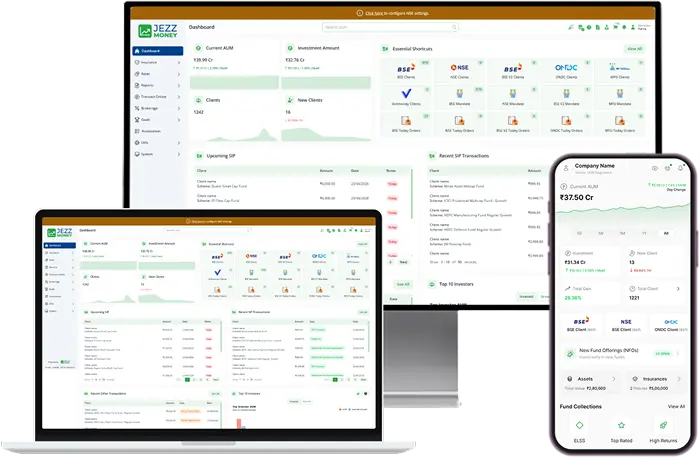
With the right support and tools, platforms like smart portfolio management and rebalancing solutions on JezzMoney can help both investors and MFDs manage portfolios more effectively and stay aligned with long-term financial goals.

FAQs about Portfolio Rebalancing

What is portfolio rebalancing, and why is it important?
How often should you rebalance your portfolio in India?
What is the best portfolio rebalancing strategy?
Does rebalancing incur taxes in mutual funds?
Can I rebalance my portfolio without selling investments?
Is portfolio rebalancing suitable for SIP investors?
What happens if I don’t rebalance my portfolio?