Home Blog Reduce Mutual Fund Distribution Errors

How to Reduce Operational Errors in Mutual Fund Distribution

Operational errors in mutual fund distribution often arise from complex, multi-step processes. These processes include managing investor data, checking compliance requirements, reconciling transactions, and preparing timely reports. Distributors who rely on manual workflows, spreadsheets, and scattered data to manage multiple folios significantly increase the risk of errors. Even minor issues, such as incorrect folio entries, mismatched transactions, or missed SIP updates, can disrupt daily operations if not resolved promptly.

Such errors carry both financial and reputational consequences. Distributors who report inaccurately or fail to comply with SEBI and AMFI regulations may face regulatory scrutiny. Delays in portfolio updates or mistakes in client communication can erode investor trust, and over time, this can damage long-term client relationships. In a business where accuracy, transparency, and credibility are critical, operational inefficiencies can directly limit growth potential.

This article explains why operational errors occur, the risks they pose to mutual fund distribution businesses, and practical steps to reduce them. It also highlights how technology and automation can significantly reduce manual effort, improve accuracy, and streamline workflows from end to end.

Common Operational Errors in Mutual Fund Distribution

Operational accuracy is what keeps a mutual fund distribution business running smoothly. Yet, many distributors still rely on manual processes and fragmented tools, which significantly increase the likelihood of errors. Understanding these common operational issues is a critical first step toward building a process that is more reliable, compliant, and scalable.

Incorrect Data Entry

Manual data entry is one of the leading causes of operational errors. Distributors often enter folio numbers, PAN details, KYC information, SIP dates, and transaction values into spreadsheets or local systems. Even a small typing error, such as an incorrect digit or date, can result in inaccurate reports, reconciliation mismatches, or failed transactions. As the client base grows, the probability of such errors increases exponentially.

Mismatched Transactions

Transaction mismatches arise when purchase, SIP, STP, or SWP entries maintained by the distributor do not align with AMC or RTA records. These discrepancies typically occur due to manual updates, delayed data feeds, or differences in cut-off timings. Reconciling such mismatches manually is time-consuming and error-prone, leading to delays in client reporting and unnecessary follow-ups.

Delayed Client Reporting

Many distributors depend on spreadsheets and multiple data sources to prepare monthly or quarterly client reports. As reporting deadlines approach, teams are forced to rush data collection, verification, and consolidation. This time pressure increases the risk of errors and creates operational bottlenecks, ultimately limiting the distributor’s ability to respond promptly to client queries.

Failure to Update Important Compliance Changes

Compliance requirements in the mutual fund industry are dynamic. SEBI and AMFI frequently update norms related to KYC, FATCA, risk profiling, documentation, and communication standards. Distributors without a structured system to track and implement these changes often miss mandatory compliance actions. Such lapses expose the business to regulatory risk and weaken operational credibility.

Poor Client Communication Tracking

Client communication is a core responsibility of mutual fund distributors. However, many still rely on unstructured methods such as spreadsheets, manual reminders, or multiple messaging apps. This fragmented approach leads to missed SIP renewal reminders, delayed NAV updates, and inconsistent follow-ups. Poor communication tracking not only frustrates clients but also disrupts SIP continuity and long-term business growth.

These challenges highlight that operational efficiency and accuracy cannot be left to chance. As the mutual fund industry becomes increasingly data-driven and compliance-focused, distributors must establish clear, well-defined workflows. Addressing these common errors is essential for sustainable growth, improved client satisfaction, and long-term business stability.

Why Operational Errors Happen

As assets under management grow and client expectations continue to rise, operational limitations become increasingly visible and costly. Understanding the root causes of these inefficiencies is essential for building a workflow that is more streamlined, accurate, and resilient to errors.

Manual and Spreadsheet-Driven Processes

Many distributors still rely heavily on spreadsheets and manual data entry. While this approach may work at a smaller scale, it lacks standardisation as the business expands. Variations in naming conventions, inconsistent data-entry formats, and the absence of validation rules create conditions that lead to frequent errors and make them difficult to identify. In addition, manual processes make version control challenging and obscure the source of inaccuracies.

Too Many Platforms (KRAs, AMCs, RTAs, Email, WhatsApp)

Mutual fund distribution requires interaction with multiple systems—KRA portals for KYC verification, AMC and RTA platforms for transactions and statements, email for formal communication, and messaging applications for quick client updates. Managing these platforms independently results in fragmented workflows and scattered information. Constantly switching between systems increases cognitive load on teams and raises the risk of missing critical data, updates, or reports.

Scaling Without Tools

As a distributor’s business grows, maintaining accurate records becomes exponentially more complex. An expanding client base leads to more folios, higher transaction volumes, increased compliance requirements, and additional communication touchpoints. Without suitable automation tools, these activities quickly become unmanageable, and errors multiply. Manual systems that once seemed adequate eventually turn into operational bottlenecks that slow productivity and reduce accuracy.

Lack of Automation or Centralized Data

When data is spread across multiple files, emails, applications, or local systems, there is no single source of truth. This fragmentation makes transaction reconciliation, consistent reporting, and compliance monitoring difficult. The absence of automation also prevents timely updates, systematic validation checks, and real-time error detection. Without a centralized platform, even experienced teams struggle to maintain a high level of operational precision.

Proven Strategies to Reduce Operational Errors

Reducing operational errors in mutual fund distribution requires a combination of disciplined processes and intelligent technology. By implementing structured workflows and leveraging automation, distributors can significantly improve accuracy, efficiency, and compliance. The following strategies provide a clear roadmap for minimising errors and building a more scalable operational model.

Standardise All Client Data and Processes

One of the most effective ways to reduce errors is to ensure that all data is captured and maintained in a consistent format. Standardisation eliminates confusion, improves searchability, and simplifies reporting.

  • Use uniform naming conventions for clients, folios, and investment categories.
  • Define clear document requirements for onboarding, risk profiling, and compliance.
  • Maintain all files and data in a centralised digital repository instead of local devices or email threads.

This structured approach significantly reduces duplication, omissions, and version-related errors.

Use Automated Reconciliation Tools

Reconciliation is one of the most error-prone tasks when handled manually. Automated reconciliation tools compare distributor records with AMC or RTA data to identify mismatches instantly.

  • Transactions are automatically synced and validated against official records.
  • Discrepancies are flagged in real time, minimising unnoticed errors.
  • Teams spend less time cross-checking data and chasing missing information.

This improves accuracy while freeing up time for client servicing and business development.

Implement Portfolio Reporting Automation

Manual portfolio reporting is time-consuming and inconsistent, particularly during month-end or quarter-end cycles. Automated reporting tools simplify and standardize the process.

  • Reports are generated automatically from validated, up-to-date data.
  • Monthly and quarterly reports can be scheduled and delivered without manual effort.
  • Errors caused by manual compilation, formatting, or emailing are eliminated.

Automation ensures timely, professional reporting that strengthens client confidence.

Automate Client Communication

Many operational issues arise due to missed or inconsistent communication. Automated communication systems ensure timely and uniform outreach.

  • SIP, STP, and SWP reminders are sent automatically.
  • Portfolio performance updates are delivered consistently.
  • Compliance alerts for expiring KYC, missing documents, or mandate renewals are triggered automatically.

This leads to improved client experience and better investment continuity.

Maintain a Compliance Checklist

Regulatory lapses can be costly. A structured compliance checklist ensures that all mandatory requirements are tracked and completed.

  • Monitor KYC updates and revalidations.
  • Track FATCA declarations and ensure timely submission.
  • Record and follow up on SIP mandate registrations.
  • Schedule reminders for risk profiling and suitability assessments.

A checklist-driven approach reduces compliance gaps and keeps the practice aligned with SEBI and AMFI norms.

Adopt a Single Source of Truth

Maintaining all data within one unified system significantly improves accuracy across operations.

  • Client, folio, transaction, and compliance data is stored on a single platform.
  • Updates reflect instantly across all functions, preventing inconsistencies.
  • Reporting, reconciliation, and communication rely on the same verified dataset.

A single source of truth not only minimizes errors but also enhances audit readiness and long-term scalability.

Technology’s​‍​‌‍​‍‌ Role in Error Reduction

To reduce manual errors, ensure compliance, and increase operational efficiency, technology plays a critical role for mutual fund distributors. Modern MFD software significantly reduces errors arising from manual handling by consolidating data, standardising workflows, and automating repetitive tasks through a single, reliable system. By moving away from fragmented tools and spreadsheets to a unified automated platform, distributors can improve accuracy, speed, and scalability across their operations.

How MFD Software Minimises Operational Risk

An automated mutual fund operations platform offers several key advantages that directly reduce operational risk:

1. Data Accuracy
Automated data synchronisation with AMCs and RTAs ensures that folio details, transactions, and client records are continuously updated and validated. This minimises manual data-entry errors, prevents mismatches, and maintains a dependable single source of truth.

2. Workflow Consistency
Digitised and standardised workflows eliminate variations caused by individual handling. Each process—from client onboarding to reporting—is executed according to predefined rules, reducing dependency on specific team members and lowering the risk of procedural errors.

3. Activity Logs and Auditability
The system maintains detailed logs of every action performed. This ensures complete traceability, simplifies regulatory audits, and strengthens internal accountability. Distributors can easily track who performed which action and when, reducing ambiguity and operational risk.

Key Features to Look for in MFD Automation Tools

To meaningfully reduce operational errors and build long-term efficiency, distributors should evaluate software solutions that offer the following essential features:

Reconciliation Engine

An automated reconciliation engine continuously compares distributor records with official AMC and RTA data. It identifies mismatches in real time, highlights discrepancies clearly, and prevents errors from flowing into client reports. This feature alone can eliminate a substantial portion of operational mistakes.

Digital Onboarding

A digital onboarding workflow ensures that KYC, FATCA, documentation, and risk profiling requirements are handled consistently. Built-in validation rules prevent incomplete submissions, reduce back-and-forth communication, and ensure regulatory compliance from the very beginning.

Portfolio Reporting Automation

Automated reporting tools generate timely, accurate, and error-free portfolio reports using verified data. Reports can be scheduled monthly or quarterly, removing the manual effort involved in data collation, formatting, and distribution.

Client App or Portal

A dedicated client app or web portal allows investors to independently access their portfolios, transactions, SIP details, and performance reports. This reduces routine service queries and ensures transparent, real-time communication.

Audit Trails

Comprehensive audit trails provide complete visibility into every data change, transaction, and communication. These records are essential for compliance management, internal reviews, and demonstrating adherence to regulatory requirements during audits.

How JezzMoney Helps MFDs Reduce Errors by 80%

JezzMoney is an innovative platform for mutual fund distribution that improves efficiency and reduces operational errors by automating key workflows, centralising data, and eliminating manual tasks. Its end-to-end automation enables mutual fund distributors (MFDs) to manage portfolios, compliance, transactions, and client communication with accuracy and consistency.

Automated Data Sync with RTAs

JezzMoney synchronises distributor records with RTA and AMC systems in real time, ensuring that folios, SIPs, and transaction data remain accurate and up to date. This automated data flow removes the need for manual reconciliation and significantly reduces mismatches and reporting errors.

Centralised Portfolio Reporting Dashboard

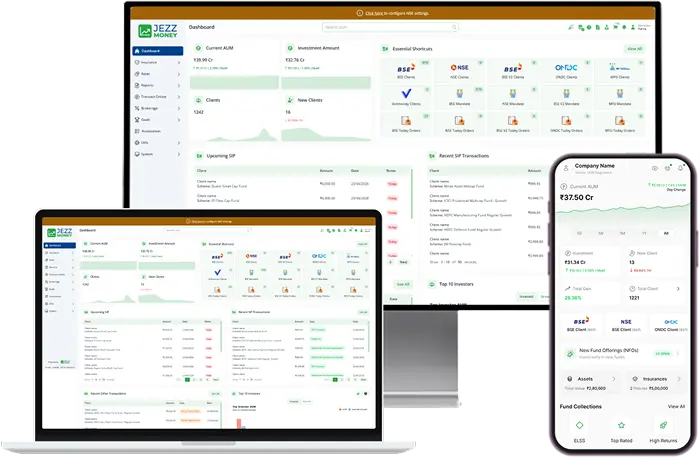
A unified dashboard consolidates all client portfolios, AUM insights, transactions, and performance data in one place. Automated reporting tools generate professional, error-free monthly and quarterly statements without the manual compilation effort typically required.

One-Click Communication and Reminders

The platform automates client communication across email and WhatsApp. SIP reminders, portfolio updates, compliance alerts, and personalised messages can be sent with a single click, ensuring timely and consistent communication while eliminating tracking errors.

Compliance Tracking Modules

JezzMoney includes structured compliance workflows for KYC, FATCA, mandate renewals, documentation tracking, and regulatory updates. Automated alerts and compliance dashboards help distributors stay aligned with SEBI and AMFI requirements without relying on spreadsheets or manual follow-ups.

Scalable Infrastructure for 10–10,000 Clients

The cloud-based architecture supports distributors of all sizes. Whether managing a small client base or thousands of folios, the platform maintains speed, accuracy, and uniform workflows, ensuring operational efficiency at scale.

Digital Onboarding & Paperless KYC

Digital onboarding tools streamline e-KYC, PAN validation, and FATCA documentation. Built-in validation rules minimise data-entry errors and ensure complete, accurate client records from the very beginning.

Mutual Fund Transactions & One-Click Execution

JezzMoney enables seamless execution of SIPs, lump sum investments, STPs, SWPs, and redemptions through integrated transaction modules. Automated processing reduces manual intervention, lowers error rates, and improves turnaround time.

Client Management & Family Portfolio Tracking

Comprehensive client management features track KYC status, risk profiles, documentation, and family-group portfolios. Consolidated information reduces fragmentation and improves data accuracy across all client touchpoints.

Advanced Analytics, Reports & Fund Research

The platform offers advanced analytics covering capital gains, asset allocation, portfolio performance, trend analysis, and fund research. These insights help distributors deliver more accurate advisory recommendations and quickly identify portfolio anomalies.

White-Label Branding & Customisation

JezzMoney allows distributors to offer a fully branded digital experience. Customised apps, portals, and reports help build a professional brand identity while delivering automated, error-free communication and reporting.

Lead Management

An integrated lead management system captures inquiries, tracks follow-ups, and automates engagement workflows. This reduces manual oversight, improves conversion rates, and minimises errors associated with scattered lead tracking.

Mobile Accessibility & Real-Time Updates

Distributors and clients can access real-time portfolio data, NAV updates, and transaction details across mobile and desktop platforms. This ensures that all stakeholders operate with the most accurate and up-to-date information at all times.

Best Practices for Long-Term Error Prevention

Maintaining operational accuracy over time requires more than simply deploying technology. Mutual fund distributors must adopt disciplined, repeatable practices that ensure reliability, regulatory compliance, and continuous improvement. These long-term best practices act as a safeguard against errors becoming embedded in day-to-day operations.

Regular Audits

Periodic internal audits should be conducted on a consistent basis. Audits help identify data inconsistencies, verify the accuracy of records, and uncover gaps in existing procedures. They also ensure that reconciliation, client records, compliance documentation, and reporting meet regulatory standards. Regular audits enable early detection of issues and ensure corrective actions are taken at the root level before client impact occurs.

Training Staff on New Tools

Technology delivers value only when teams are trained to use it effectively. Ongoing training ensures that employees understand new systems, follow standardised workflows, and fully utilise automation features instead of reverting to manual processes. A well-trained team operates more consistently and is far less prone to operational errors.

Quarterly Process Review

Operational processes must evolve as the business grows. Quarterly process reviews provide an opportunity to evaluate current workflows, identify bottlenecks, and update procedures that may no longer be efficient or relevant. These reviews help keep operations scalable, compliant, and aligned with business objectives, while also incorporating team feedback and reinforcing best practices.

Using Analytics to Detect Anomalies

Data analytics plays a critical role in maintaining operational accuracy. By monitoring dashboards and key performance metrics, distributors can identify early warning signs such as transaction mismatches, irregular SIP activity, client inactivity, or potential compliance lapses. Early detection through analytics enables proactive intervention, prevents larger issues, and supports informed decision-making to maintain consistently high operational standards.

Summary

Operational precision cannot be ignored in mutual fund distribution. It forms the foundation of trust, regulatory compliance, and long-term client relationships. Even minor lapses in data entry, reporting, or client communication can undermine credibility and expose distributors to regulatory and financial risks. By implementing structured workflows, automation, and continuous process improvements, mutual fund distributors can significantly reduce operational errors and deliver a reliable, transparent experience to their clients.

Operational efficiency is what ultimately separates distributors who can scale sustainably from those who struggle to grow. This distinction becomes even more critical as the industry grows increasingly digital and compliance-driven. Leveraging technology platforms such as JezzMoney enables seamless end-to-end operations, minimises manual intervention, and ensures a consistent, error-free workflow, making sustainable growth achievable at every stage.

See how JezzMoney helps you eliminate operational errors.

Book a Demo | Start Free Trial | Explore Features

FAQs about MFD Operational Errors

What causes most operational errors in mutual fund distribution?

How can MFDs reduce manual mistakes in daily operations?

What is automated reconciliation, and why is it essential for MFDs?

How does portfolio reporting automation improve operational efficiency?

What tools can help MFDs ensure better compliance management?

How can client communication automation reduce operational errors?

What are the benefits of using centralized MFD software instead of multiple platforms?