Home Blog Retirement Calculator Client Meeting

How to Use a Retirement Calculator in a Client Meeting

Retirement planning helps clients prepare for their future financial needs. For Mutual Fund Distributors (MFDs) in India, it is an opportunity to understand clients' goals and guide them toward a practical savings plan.

Inflation, rising healthcare costs, and changing lifestyles can make retirement expenses difficult to estimate. Many investors may also be unsure how much they need to save.

A retirement calculator helps MFDs estimate the retirement corpus a client may need and the monthly SIP required to work toward that goal. By discussing these estimates during client meetings, MFDs can help clients understand their financial gaps and make informed decisions. Regular portfolio reviews and consistent savings can also help clients stay on track as their needs change.

What Is a Retirement Calculator and How Does It Help MFDs?

A retirement calculator helps estimate how much money a client may need to maintain their lifestyle after retirement. For Mutual Fund Distributors (MFDs), it makes retirement planning conversations easier to understand and more practical.

The calculator considers the client's current age, retirement age, monthly expenses, inflation, existing savings, and expected investment returns. Based on these inputs, it estimates the required retirement corpus and the monthly SIP needed to reach that goal.

MFDs can use these results to identify potential savings gaps and discuss suitable next steps with clients. However, the results are estimates, not guaranteed outcomes. Actual returns and future expenses may vary, so assumptions should be reviewed regularly.

What Information Should MFDs Collect Before Using a Retirement Calculator?

Before using a retirement calculator, Mutual Fund Distributors (MFDs) should understand the client's financial situation and retirement goals. This helps provide more realistic estimates and makes the discussion more useful.

Client's Current Age and Expected Retirement Age

Ask the client about their current age and when they plan to retire. This helps determine how much time they have to save and invest for retirement.

Current Monthly Household Expenses

Understand the client's regular expenses, including housing, healthcare, household needs, and family responsibilities. This provides a starting point for estimating future retirement expenses.

Expected Inflation and Future Retirement Expenses

Consider how inflation may increase the cost of living over time. Help clients understand that their retirement expenses could be much higher than their current monthly spending.

Existing Investments and Retirement Benefits

Review the client's existing mutual fund investments, EPF, PPF, NPS, pension benefits, and other retirement savings. This helps estimate how much they have already accumulated toward their goal.

Risk Tolerance and Investment Preferences

Understand the client's financial capacity, risk tolerance, investment horizon, and preferences. These details help MFDs discuss investment approaches that fit the client's needs and circumstances.

How to Use a Retirement Calculator in a Client Meeting: Step-by-Step

A retirement calculator can help MFDs turn a client's retirement goals into a practical savings plan. Follow these steps to make the discussion simple and useful.

Step 1: Understand the Client's Retirement Goals

Ask when the client wants to retire and what lifestyle they expect. Discuss their preferred location, monthly expenses, and future financial needs.

Step 2: Enter the Client's Financial Details

Enter the client's current age, expected retirement age, monthly expenses, existing savings, and other details the calculator requires.

Step 3: Adjust for Inflation

Explain how inflation may increase living costs over time. Use a reasonable inflation assumption to estimate future retirement expenses.

Step 4: Calculate the Required Retirement Corpus

Show the client the estimated amount they may need at retirement. Explain how their expenses, retirement duration, and assumed investment returns affect the calculation.

Step 5: Compare the Target With Existing Investments

Review the client's current retirement savings against the estimated target. This helps identify a potential shortfall and areas that may need attention.

Step 6: Estimate the Required SIP or Monthly Investment

Use the calculator to estimate how much the client may need to invest regularly to work toward their retirement goal. Explain that actual returns can vary and the estimate is not guaranteed.

Step 7: Explain the Results and Agree on Next Steps

Discuss the findings in simple terms and outline practical next steps based on the client's financial situation. Record the agreed actions and schedule regular reviews to track progress.

Retirement Savings Rules MFDs Should Explain to Clients

Retirement planning is not just about calculating how much money a client will need in the future. It also involves building good savings habits and reviewing investments over time. Mutual Fund Distributors (MFDs) can help clients understand these principles and create a retirement plan that suits their financial situation.

1. Start Saving for Retirement Early

Starting early gives clients more time to build their retirement savings. Even small, regular investments can grow over time through compounding, though actual returns depend on market performance and are not guaranteed.

MFDs should explain how delaying investments may increase the amount a client needs to save later. For example, a younger investor may have more time to work toward a retirement goal than someone who starts investing close to retirement. Encourage clients to begin with an affordable amount and increase their contributions as their income grows.

2. Follow a Regular Savings and SIP Habit

Consistency is an important part of retirement planning. Encourage clients to set a monthly savings target based on their income, household expenses, existing financial commitments, and long-term goals.

A Systematic Investment Plan (SIP) allows investors to invest a fixed amount in a mutual fund at regular intervals. It can help clients develop a disciplined investment habit instead of relying on occasional contributions. However, an SIP does not guarantee profits or protect investors from market losses.

During client meetings, MFDs can use a retirement calculator to estimate the monthly contribution needed to work toward the client's target. The amount should be realistic and reviewed whenever the client's financial situation changes.

3. Account for Inflation When Setting Retirement Goals

Inflation can significantly affect retirement planning because the cost of everyday needs may rise over time. Expenses such as groceries, housing, transportation, and healthcare could be much higher when a client retires.

For this reason, calculating retirement needs using only today's expenses may underestimate future requirements. MFDs should demonstrate how different inflation assumptions affect the client's estimated retirement corpus.

For example, if a client's current monthly expenses are ₹50,000, those expenses may be considerably higher after 20 or 25 years. A retirement calculator can help illustrate this difference and encourage clients to set a more realistic savings target.

4. Increase Contributions as Income Grows

A client's ability to save may improve as their salary, business income, or other earnings increase. Rather than keeping retirement contributions unchanged for decades, clients can review whether they can gradually increase their investments.

One approach is an annual SIP increase, where the monthly contribution rises by an affordable amount each year. This can help clients build a larger retirement corpus without requiring a substantial immediate increase.

MFDs should demonstrate how different contribution levels may affect the projected retirement outcome. The proposed increase should account for other priorities, such as children's education, home loan repayments, emergency savings, and insurance needs.

5. Diversify Investments According to the Client's Needs

Retirement planning should consider the client's investment horizon, risk tolerance, financial capacity, and existing portfolio. Depending on these factors, a retirement portfolio may include different asset classes, such as equity, debt, and other suitable investments.

Equity investments may offer long-term growth potential but can experience significant market fluctuations. Debt-oriented investments may serve different portfolio needs, but they also carry risks. The right allocation depends on the client's circumstances rather than a fixed formula.

MFDs should review the client's overall investments before discussing changes. Diversification can help spread exposure across investments, but it does not eliminate risk or guarantee returns. Any mutual fund discussion should be consistent with the client's needs and applicable regulatory requirements.

6. Maintain an Emergency Fund and Manage Debt

The emergency fund is critical if clients have little money on hand that can be readily accessed. It can prevent clients from liquidating investments when unexpected repairs, medical bills, or job loss occur. This can help clients avoid withdrawing from long-term savings or investment funds when doing so would be too costly.

MFDs can also remind clients about the negative impact of high-interest debt on their retirement planning. If substantial income is used to pay off interest, it may reduce the capacity to make regular contributions to a retirement fund.

In this part of the conversation, MFDs should help clients balance their emergency fund, debt, insurance, and retirement savings. Depending on the clients’ income, family size, savings level, and other factors, MFDs can provide appropriate advice and recommendations.

7. Review the Retirement Plan

The initial retirement plan should be reviewed regularly to ensure that it still reflects the clients’ needs and circumstances. Clients’ income, expenditures, and portfolios can change over time, which may affect their ability to save. In addition, the initial estimates may have been too optimistic, which might cause the clients to experience a shortfall at retirement.

At this stage, MFDs should compare the portfolio's available funds with the clients’ retirement needs. They can use the calculator to analyze the problem and explore different scenarios. For instance, clients may need a review if they get married or divorced, have children, change jobs, or decide to retire later.

If a shortfall is expected, MFDs may advise clients to increase contributions when possible, optimize spending, and extend the investment period. In all cases, avoid relying on historical returns and explore various options.

8. Plan for Healthcare Costs and Retirement Income

Healthcare costs are an especially important expenditure to consider when developing a retirement plan and reviewing it periodically. As people age, they are more likely to incur additional healthcare-related expenses, which may put additional strain on retirement savings.

MFDs can advise clients to review their current health insurance, estimate expected out-of-pocket costs, and assess their emergency funds. Clients should include these expenses in their overall retirement budget and consider them when determining the size of their retirement portfolio. In addition, MFDs should remind clients that they will need to withdraw from their savings and investment funds with each paycheck after retirement. Therefore, it is essential to optimize liquidity, expenses, and the overall portfolio to ensure it can sustain them throughout retirement.

9. Consider multiple sources of retirement income

Clients may have various sources of income or savings for retirement that can be tapped into at the time of retirement, such as the Employees’ Provident Fund (EPF), Public Provident Fund (PPF), and National Pension System (NPS), eligible pension benefits, investment in mutual funds, and other resources.

Therefore, MFDs need to consider different sources and assess their implications for clients' retirement plans. It is important to distinguish between assets that are saved towards retirement and income streams that are expected to be received after retirement. Withdrawal conditions, tax implications, liquidity needs, and income requirements should be considered to avoid overreliance on any one source or double-counting of any particular source.

10. Reassess the plan as one approaches retirement

As one approaches retirement, liquidity, risk diversification, and expense-related budget needs become more important. Therefore, MFDs should re-evaluate the retirement target date and revisit the investment, income, and withdrawal options and considerations. It could also be a good opportunity to have an open discussion about how the portfolio being considered would meet the client’s needs in retirement, considering its mix of risk and return.

No single strategy will work for everyone. Liquidity, risk, duration, and income needs vary with the client’s financial situation. Business and financial market needs also change over a person’s life and over time. Regular reassessment helps clients adjust their retirement plans as they approach retirement.

Retirement Planning Example: How an Indian MFD Can Explain the Numbers

A practical example can help clients understand how their current expenses translate into future retirement needs. MFDs can use a retirement calculator to demonstrate the impact of inflation, estimate a retirement corpus, and discuss how regular investments may help clients work toward their goals.

Client Profile and Financial Details

Consider a 35-year-old investor who wants to retire at age 60. The client currently spends ₹50,000 per month on household expenses and wants to maintain a similar lifestyle after retirement.

For this example, assume the following:

  • Current age: 35 years
  • Retirement age: 60 years
  • Investment period: 25 years
  • Current monthly expenses: ₹50,000
  • Assumed annual inflation: 6%
  • Assumed annual investment return before retirement: 10%
  • Assumed annual return during retirement: 6%
  • Expected retirement duration: 25 years
  • Existing retirement savings: ₹0 for this simplified example

These assumptions are for illustration only. Actual inflation, investment returns, and retirement expenses may differ.

Estimate Future Monthly Expenses

The client's current monthly expenses are ₹50,000. If expenses increase by an assumed 6% annually, the cost of maintaining the same lifestyle will rise over the next 25 years.

With this inflation assumption, monthly expenses at age 60 could reach about ₹2.15 lakh.

This illustrates why retirement planning should consider future purchasing power rather than relying only on today's household budget. MFDs can use this calculation to explain how inflation affects a client's retirement goal.

Calculate the Required Retirement Corpus

Next, estimate how much money the client may need at retirement. For a simple illustration, assume monthly expenses start at about ₹2.15 lakh and continue to rise with inflation during retirement.

If the client expects to fund 25 years of retirement expenses and the assumed investment return during retirement matches the assumed inflation rate of 6%, the estimated corpus would be approximately ₹6.45 crore.

This simplified estimate assumes monthly withdrawals, expenses that increase with inflation, and a constant return equal to inflation. It does not account for taxes, investment fees, variable market returns, or other retirement income.

MFDs should explain that the required corpus depends on the calculation method and assumptions. The estimate should be adjusted if the client expects pension income, has existing retirement savings, or anticipates different expenses.

Estimate the Monthly SIP Required

Once the retirement target is established, the MFD can use a retirement calculator to estimate the monthly investment needed to work toward it.

For this example, assume the client starts with no existing retirement savings and invests for 25 years. If the assumed annual return before retirement is 10%, with monthly contributions and monthly compounding, the estimated SIP required to build a corpus of ₹6.45 crore would be approximately ₹48,500 per month.

This is an illustration, not a recommended investment amount. Actual returns may be lower or higher, and market-linked investments do not guarantee the target corpus. The SIP estimate should be recalculated using suitable assumptions and the client's financial circumstances.

Compare Different Retirement Scenarios

MFDs can make the discussion more useful by showing how retirement goals change when assumptions change.

For example, they can compare:

  • Retirement age: Retiring earlier may shorten the investment period and extend the time you need to save to cover expenses.
  • Inflation: Higher inflation can increase both the required retirement corpus and the amount needed to save.
  • Investment returns: Lower returns before retirement may require larger monthly contributions.
  • Monthly savings: When affordable, increasing contributions may help the client work toward the target.
  • Existing investments: Current retirement savings and expected pension income may reduce the additional amount the client needs to accumulate.

Instead of relying on a single projection, show clients a few reasonable scenarios and explain the assumptions behind each one. This helps them understand the trade-offs and make informed decisions about their retirement plan.

Note: All figures are illustrative and rounded. Actual outcomes depend on inflation, investment performance, taxes, fees, withdrawal timing, and the calculator's methodology. Mutual fund investments are subject to market risks.

How MFDs Can Explain Retirement Calculator Results to Clients

A retirement calculator is most useful when clients understand what the numbers mean for their future. MFDs should explain the results in simple language and help clients identify practical steps toward their retirement goals.

Explain Future Expenses in Today's Terms

Clients may struggle to imagine how much their monthly expenses could increase over the next 20 or 30 years. Explain inflation's impact by comparing today's expenses with their estimated future costs.

For example, if a client currently spends ₹50,000 per month, their expenses could be much higher by retirement. Showing this difference helps clients understand why early planning matters.

Present Different Retirement Scenarios

Avoid relying on just one calculator result. Show clients how their retirement goals may change with different retirement ages, inflation rates, and investment return assumptions. You can also demonstrate how increasing monthly savings may affect the projected corpus. Make it clear that these are estimates, not guaranteed outcomes. This helps clients understand their options and make informed decisions.

Explain the Gap Between the Target and Existing Investments

Compare the estimated retirement corpus with the client's existing retirement savings and other relevant resources. If there is a shortfall, explain the difference clearly without creating unnecessary pressure. Discuss practical options, such as increasing contributions when affordable, reviewing expenses, or adjusting the retirement timeline where appropriate. Consider the client's financial commitments and risk tolerance before discussing potential changes.

Turn the Discussion Into an Action Plan

End the meeting with clear next steps. Agree on a realistic savings target, discuss suitable investment options based on the client's needs, and document the key decisions. Set a date for the next review so you can reassess the client's progress and update the calculations when circumstances change. Regular follow-ups help keep retirement planning aligned with the client's evolving financial goals.

Common Retirement Planning Mistakes MFDs Should Avoid

Retirement planning requires more than estimating a future corpus. Mutual Fund Distributors (MFDs) must understand each client's financial situation, assess their retirement needs, and help them make informed investment decisions. A retirement calculator can support this process, but MFDs should avoid the following common mistakes:

  • Ignoring inflation and rising healthcare costs: Do not calculate retirement needs using only today's household expenses. Account for rising living costs, healthcare expenses, and potential medical emergencies. Show clients how inflation may affect their future retirement budget and required corpus.
  • Using unrealistic retirement calculator assumptions: Do not enter arbitrary figures just to achieve a desired retirement corpus or SIP amount. Carefully assess and explain each input, including current age, expected retirement age, monthly expenses, assumed inflation rate, expected investment returns before and during retirement, existing retirement savings, and expected retirement duration. Use reasonable assumptions, consider different scenarios, and explain how changing each input affects the results.
  • Assuming fixed or guaranteed investment returns: Avoid presenting projected returns as assured outcomes. Use reasonable return assumptions, explain market-linked risks, and demonstrate how lower or higher returns may affect the retirement target. Clearly communicate that mutual fund investments are subject to market risks.
  • Overlooking existing retirement assets and income sources: Before estimating the additional corpus required, review the client's existing mutual fund investments, EPF, PPF, NPS, pension benefits, and other relevant assets. Consider withdrawal conditions, liquidity, and expected income to avoid double-counting retirement resources.
  • Underestimating the potential length of retirement: Do not assume that retirement savings will only need to support a short period. Consider life expectancy, the possibility of early retirement, and the need to fund expenses for several decades. Discuss how a longer retirement period may affect the required corpus.
  • Treating calculator results as a final investment recommendation: A retirement calculator provides estimates based on assumptions; it does not determine which investments are suitable for a client. Use the results as a starting point for a detailed discussion about financial goals, investment capacity, risk tolerance, and existing commitments.
  • Failing to review retirement assumptions regularly: Do not treat the initial retirement plan as permanent. Schedule periodic portfolio reviews and update calculations when the client's income, expenses, family responsibilities, retirement age, or investment performance changes. Document important changes and agreed actions.
  • Discussing mutual fund schemes before assessing client suitability: Avoid recommending or discussing specific schemes before understanding the client's financial goals, investment horizon, risk profile, cash flow, and existing investments. Ensure that any scheme-related discussion is consistent with the client's needs and applicable regulatory requirements.
  • Ignoring the client's ability to maintain regular investments: Do not suggest an SIP amount based only on the calculator's projected target. First assess monthly income, household expenses, loan repayments, emergency savings, and other financial commitments. Recommend a realistic contribution that the client can sustain and review the amount as their financial capacity changes.
  • Failing to explain retirement shortfalls and possible solutions: If the estimated corpus falls short of the target, explain the gap clearly without creating unnecessary pressure. Discuss practical options such as gradually increasing SIP contributions, reviewing expenses, using existing retirement assets, or adjusting the retirement timeline where appropriate.
  • Neglecting retirement income and withdrawal planning: Retirement planning should not stop once the target corpus is calculated. Discuss how clients may manage liquidity, withdrawals, healthcare expenses, and regular income needs after retirement. Consider the risks of withdrawing too much too early and the possibility of market fluctuations during retirement.

MFDs can make retirement discussions more meaningful and help clients build realistic, regularly reviewed retirement plans. The focus should be on using appropriate calculator assumptions, understanding client needs, explaining investment risks, assessing suitability, and supporting informed long-term financial decisions.

How Retirement Calculators Fit Into an MFD's Client Management Workflow

Retirement calculators help Mutual Fund Distributors (MFDs) estimate clients' future financial needs and support more structured retirement-planning discussions. When combined with effective client management and regular portfolio reviews, these tools can help MFDs track progress toward retirement goals and identify when a financial plan needs to be reassessed.

Maintain a Record of Client Goals

Record each client's retirement goals, financial details, estimated retirement corpus, and agreed action points to support consistent follow-ups and future reviews.

Track Investment Progress Over Time

Compare available portfolio information with the client's retirement targets to assess progress, identify potential shortfalls, and discuss whether the existing plan needs adjustments.

Schedule Regular Client Reviews

Review retirement plans periodically and whenever a client's income, expenses, family circumstances, investment portfolio, or retirement timeline changes significantly.

Use MFD Software to Support Client and Portfolio Management

  • Use mutual fund distributor software to organize client information, maintain portfolio records, and streamline routine client management activities.
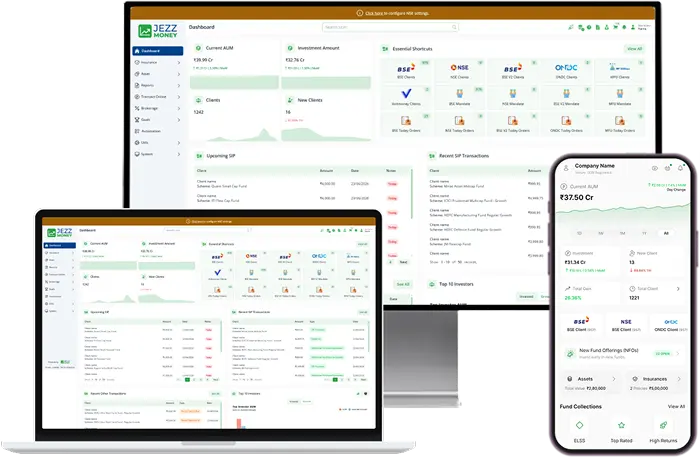
  • JezzMoney provides an all-in-one digital platform for Mutual Fund Distributors and financial advisors. Its client management and portfolio tracking capabilities can support day-to-day operations and help MFDs keep relevant client information organized. Explore JezzMoney's mutual fund distributor software to learn more.

Important: Retirement calculators provide estimates based on the assumptions and information entered. MFDs should use these results as a starting point for discussion, not as a standalone investment recommendation.

Summary

A retirement calculator is a valuable tool that helps Mutual Fund Distributors communicate with clients, calculate retirement goals, and determine how much they need to save for retirement. But a retirement calculator is not the only thing that is needed for proper retirement planning.

To plan for retirement effectively, set realistic expectations, save money, and regularly review and update the plan as needed. With retirement planning tools and a clear overview of client data and portfolio details, Mutual Fund Distributors can track clients' progress toward their retirement goals.

JezzMoney's mutual fund distributor software helps Mutual Fund Distributors manage clients and portfolios, streamline day-to-day operations, and maintain a clear overview of client data.

FAQs about Retirement Calculator use in meetings

How do MFDs use a retirement calculator during client meetings?

What information is required to calculate a retirement corpus in India?

How does inflation affect retirement planning in India?

How can an MFD estimate the SIP required for retirement?

Can a retirement calculator guarantee the amount needed after retirement?

How often should MFDs review a client's retirement plan?