Home Blog Sell More Sips In Market Volatility

How to Sell More SIPs During Market Volatility

Every investor expects market volatility at some point, yet sudden market declines and sharp fluctuations often trigger panic and uncertainty. During periods of volatility, many investors hesitate, delay investment decisions, or even stop their Systematic Investment Plans (SIPs), believing that continuing to invest may increase their losses. While this reaction is understandable, it can prevent investors from taking advantage of long-term wealth creation opportunities through disciplined investing.

For Mutual Fund Distributors (MFDs) and financial advisors, however, volatile markets present an excellent opportunity to educate clients and reinforce the value of SIP investing. When markets decline, investors purchase more mutual fund units at lower Net Asset Values (NAVs), allowing them to benefit from rupee-cost averaging and the long-term power of compounding. Advisors who address investor concerns with clear, fact-based guidance instead of fear can strengthen client trust, improve SIP retention, encourage new SIP registrations, and grow their Assets Under Management (AUM).

In this guide, you'll learn why market volatility is the ideal time to promote SIPs, understand common investor objections, and discover practical strategies to sell more SIPs, retain existing investors, and grow your SIP book using smart client engagement techniques and digital tools like JezzMoney.

Why Investors Stop or Delay SIP Investments During Market Volatility

Market volatility can often make investors emotional and cause them to abandon rational decisions. It is not uncommon for them to wonder if their SIPs are still a good idea after witnessing sharp market falls or frequent ups and downs. Rather than seeing the fluctuation as a chance to buy more units at cheaper levels, they dwell on short-term losses, which may lead them to abandon their investment completely or substantially.

If MFDs can understand why their clients behave this way, they can better address investor concerns while reinforcing the benefits of systematic investing.

Sometimes Investors Express the Following Worries

During volatile market conditions, investors commonly worry about:

  • Portfolio value decreasing: Even investors with a long-term horizon feel anxiety when they see their net asset value going negative.
  • Fear of a continued market fall: Many prefer waiting for the market to reach its lowest point before investing again, believing this is a safer strategy.
  • Uncertain future returns: Market unpredictability causes investors to lose confidence in their long-term investment plans.
  • Negative headlines: Continuous news about market crashes or economic uncertainty often influences investment decisions.
  • Cash flow issues: Some investors prefer to hold cash when markets become uncertain instead of continuing their SIPs.

Biases Which Influence Investment Decisions

Investor psychology is a major factor behind SIP discontinuation during market downturns.

  • Loss Aversion: People generally feel the pain of losses more strongly than the satisfaction of gains, causing them to stop investing after seeing temporary declines.
  • Recency Bias: A recent market correction often makes investors forget that markets have historically recovered over the long term.
  • Copying Other Investors: When friends, family members, or well-known personalities stop investing, others may feel encouraged to do the same.
  • Confirmation Bias: Investors tend to focus only on information that supports their fears while ignoring long-term investment fundamentals.
  • Reacting Hastily: Short-term market movements are often mistaken for permanent trends, leading to impulsive investment decisions.

Impact on SIP Inflows

When investors pause or cancel their SIPs, the impact extends beyond individual portfolios.

  • SIP registrations decline as potential investors postpone new investments.
  • Existing SIPs experience higher discontinuation rates, reducing long-term wealth creation opportunities.
  • Mutual Fund Distributors face slower Assets Under Management (AUM) growth and lower recurring revenue.
  • Investors miss the opportunity to benefit from rupee cost averaging, which is most effective during market corrections.
  • Long-term financial goals may be delayed because interrupted SIPs reduce the power of compounding.

For MFDs, understanding these investor concerns is the first step towards building confidence, providing timely guidance, and helping clients stay invested during periods of market volatility. By focusing on education and proactive communication, advisors can turn uncertainty into an opportunity to strengthen client relationships and grow their SIP book.

Why Market Volatility Is the Best Time to Invest Through SIPs

While market volatility often creates panic among investors, experienced financial advisors know that it can be one of the best times to invest through a Systematic Investment Plan (SIP). Unlike lump-sum investments, SIPs are designed to navigate market fluctuations by investing a fixed amount at regular intervals. Instead of trying to time the market, investors benefit from lower prices during market corrections and higher growth potential when markets recover. For Mutual Fund Distributors (MFDs), educating clients about these advantages can help increase SIP registrations and reduce discontinuations during uncertain times.

Rupee Cost Averaging: Turn Market Dips into an Advantage

One of the biggest advantages of SIP investing is Rupee Cost Averaging. Since a fixed amount is invested at regular intervals, investors automatically purchase more mutual fund units when NAVs are low and fewer units when prices are high. Over time, this reduces the average cost of investment without requiring investors to predict market movements.

Rather than fearing falling markets, investors should understand that market corrections allow them to accumulate more units, which can significantly improve long-term returns when markets recover.

Power of Compounding

Compounding is one of the strongest reasons to stay invested during volatile markets. Returns generated on your investments continue to earn additional returns over time, creating exponential wealth growth.

The earlier investors start their SIPs and the longer they remain invested, the greater the impact of compounding. Even if markets fluctuate in the short term, staying invested allows wealth to grow steadily over the long run.

Buying More Units at Lower NAV

Market corrections often reduce the Net Asset Value (NAV) of mutual fund schemes. While many investors view falling NAVs negatively, disciplined SIP investors benefit by purchasing more units with the same monthly investment amount.

For example:

Monthly SIP NAV Units Purchased
₹5,000 ₹100 50 Units
₹5,000 ₹80 62.5 Units
₹5,000 ₹60 83.3 Units

As markets recover, these additional units appreciate, helping investors build greater wealth over time. This is why market downturns should be viewed as opportunities rather than reasons to stop investing.

Historical Market Recovery Shows the Value of Staying Invested

History has consistently shown that financial markets recover after periods of volatility. Investors who continued their SIPs during market downturns were often rewarded when markets rebounded.

Some notable examples include:

  • 2008 Global Financial Crisis: Despite one of the largest market crashes in history, Indian equity markets recovered strongly in the following years, rewarding disciplined SIP investors.
  • 2020 COVID-19 Market Crash: Markets witnessed a sharp decline but rebounded rapidly, delivering substantial gains to investors who stayed invested.
  • 2022 Inflation and Interest Rate Volatility: Although markets experienced uncertainty due to global inflation and rising interest rates, long-term investors benefited as markets stabilized.
  • Recent Market Corrections: Every correction creates opportunities for investors to accumulate quality mutual fund units at lower prices before the next growth cycle begins.

Market volatility is not a signal to stop SIPs; it is one of the best opportunities to strengthen them. By leveraging rupee cost averaging, the power of compounding, and lower NAVs, investors can build long-term wealth more effectively.

10 Proven Strategies to Sell More SIPs During Market Volatility

Market volatility doesn't have to slow down your SIP business. In fact, it can be the perfect opportunity for Mutual Fund Distributors (MFDs) to educate investors, build trust, and encourage disciplined investing. Instead of focusing on short-term market movements, successful advisors help clients understand the long-term benefits of staying invested. Here are ten proven strategies to increase SIP sales and strengthen client relationships during uncertain market conditions.

1. Educate Clients Instead of Selling Products

During volatile markets, investors are looking for guidance, not sales pitches. Instead of convincing clients to invest immediately, focus on educating them about how SIPs work, the benefits of disciplined investing, and why market fluctuations are a normal part of wealth creation.

Host webinars, create educational videos, share informative blogs, and proactively answer client questions. When investors understand the logic behind SIP investing, they are more likely to continue or even increase their investments.

Pro Tip: Position yourself as a financial educator rather than a salesperson to build long-term trust.

2. Explain Rupee Cost Averaging with Real Examples

Many investors understand the concept of SIPs but fail to appreciate how rupee cost averaging works during market downturns. Use simple examples to show how investing the same amount every month allows you to buy more units when prices are low.

Visual charts, comparison tables, or real fund performance examples make this concept easier to understand and increase investor confidence.

Pro Tip: Replace technical jargon with easy-to-understand illustrations to make your explanation more impactful.

3. Focus on Long-Term Financial Goals

Investors often become distracted by daily market fluctuations and forget the purpose behind their investments. Shift the conversation away from short-term returns and bring the focus back to their financial goals, such as retirement planning, children's education, wealth creation, or buying a home.

When clients understand that SIPs are designed for long-term objectives, they are less likely to discontinue their investments during temporary market declines.

Pro Tip: Review each client's financial goals regularly to reinforce the importance of staying invested.

4. Use Historical Market Recovery Data to Build Confidence

History has repeatedly shown that markets recover from downturns. Share data from previous market corrections, including the 2008 financial crisis, the 2020 COVID-19 crash, and other major market events, to demonstrate how disciplined investors benefited by continuing their SIPs. Historical performance helps replace fear with confidence and gives investors a broader perspective.

Pro Tip: Use charts and timelines to visually show how markets recovered after every major correction.

5. Share Weekly Market Insights with Clients

Lack of communication often increases investor anxiety. Sending weekly market updates helps clients understand why markets are moving and reassures them that someone is monitoring their investments.

Keep your updates simple and educational by covering:

  • Major market developments.
  • Economic news.
  • Investment opportunities.
  • Long-term market outlook.
  • Common investor questions.

Consistent communication builds credibility and reduces panic-driven decisions.

6. Promote SIP Top-Ups During Market Corrections

Market corrections provide an excellent opportunity to encourage investors to increase their SIP contributions through SIP Top-Ups. Investing a little more during lower market levels allows clients to accumulate additional units, which can generate higher returns when markets recover.

Rather than advising clients to wait for better market conditions, explain how increasing investments during corrections can accelerate wealth creation.

Pro Tip: Recommend gradual annual SIP Top-Ups based on income growth to make investing more manageable.

7. Reconnect with Clients Who Paused Their SIPs

Many investors stop their SIPs out of fear without fully understanding the long-term impact. Identify these clients and reach out with personalized messages, educational content, or one-on-one consultations.

Discuss:

  • Why they paused their SIP.
  • The benefits of restarting investments.
  • Missed opportunities during market recoveries.
  • Updated financial goals.

A proactive approach can significantly improve SIP reactivation rates.

8. Use SIP Calculators to Show Future Wealth Creation

Numbers speak louder than assumptions. Instead of simply telling clients to continue investing, show them how consistent SIPs can help achieve their financial goals.

Use SIP calculators to demonstrate:

  • Expected wealth accumulation.
  • The impact of monthly investment amounts.
  • Benefits of longer investment periods.
  • The effect of increasing SIP contributions.

Interactive financial planning tools help investors make informed decisions based on realistic projections rather than emotions.

Pro Tip: JezzMoney's financial calculators can help advisors create personalized investment projections within minutes.

9. Automate Client Follow-Ups via WhatsApp & Email

Following up manually with every client becomes challenging as your client base grows. Automating communication ensures that investors receive timely reminders, market updates, SIP alerts, and educational content without requiring constant manual effort.

Automated communication can include:

  • SIP due reminders.
  • Portfolio review invitations.
  • Weekly market updates.
  • Birthday and anniversary greetings.
  • Educational newsletters.
  • Investment opportunity alerts.

Regular communication keeps your clients engaged and improves SIP retention.

10. Strengthen Relationships Through Regular Reviews

Successful MFDs don't contact clients only when markets fall. Schedule periodic portfolio review meetings to discuss investment performance, financial goals, changing life circumstances, and future investment opportunities.

Regular reviews help you:

  • Build stronger client relationships.
  • Identify opportunities for SIP Top-Ups.
  • Cross-sell suitable financial products.
  • Address investor concerns before they become objections.

Clients who feel supported throughout their investment journey are more likely to remain invested and recommend your services to others.

Market volatility should be viewed as an opportunity, not a setback for growing your SIP business. By educating clients, communicating consistently, leveraging technology, and focusing on long-term financial planning, Mutual Fund Distributors can increase SIP registrations, reduce discontinuation rates, and build lasting client relationships. Platforms like JezzMoney make this process easier with client management, automated follow-ups, SIP calculators, portfolio tracking, and engagement tools that help advisors grow their SIP book efficiently.

Common Investor Objections and How to Handle Them

When markets become volatile, investors often let emotions drive their decisions. As an MFD, your role isn't to predict what the market will do next; it's to help clients stay focused on their long-term financial goals. Here are some of the most common objections you may hear and practical ways to respond.

"I'll wait until the market recovers."

This is probably the most common reaction during a market correction. Many investors believe they'll invest once things "look better." The problem is that by the time the market recovers, prices have already moved up, and they've missed the opportunity to buy more units at lower NAVs.

Instead of trying to predict the perfect entry point, explain that SIPs are built for all market conditions. A fixed monthly investment continues regardless of market movements, allowing investors to benefit from rupee cost averaging over time.

What you can say:

"No one knows exactly when the market will recover. But continuing your SIP today means you're buying more units while prices are lower, which can work in your favor when the market rebounds."

"My portfolio is already in loss."

Seeing negative returns can make anyone uncomfortable. It's natural for investors to question whether they should continue investing when their portfolio value has dropped.

Help them understand that a temporary decline doesn't mean their investment strategy has failed. Unless they redeem their investments, those losses remain on paper. More importantly, continuing their SIP during a downturn helps reduce the average purchase cost by accumulating additional units at lower prices.

You can also revisit their financial goals to remind them why they started investing in the first place. A short-term market correction shouldn't derail a plan meant for 10, 15, or 20 years.

"SIP isn't working."

This objection usually comes from investors who expected quick returns. When markets remain weak for a few months, they assume SIPs are ineffective.

Instead of talking only about returns, explain how SIPs are designed to create wealth gradually. Share a SIP calculator or projection that shows how regular investing can grow over the long term. Sometimes, seeing the numbers is far more convincing than hearing an explanation.

A simple comparison between staying invested and stopping midway can also help clients understand the cost of interrupting their investment journey.

"Fixed Deposits are safer."

Many investors compare SIPs with Fixed Deposits when markets become uncertain. While it's true that FDs offer predictable returns, they serve a different purpose.

Rather than saying one investment is better than the other, explain where each fits in a financial plan. Fixed Deposits can be suitable for short-term goals or emergency funds. In contrast, equity mutual funds through SIPs are generally intended for long-term wealth creation and can outpace inflation over time.

The conversation shouldn't be about choosing one over the other. It should be about selecting the right investment for the right goal.

Best Practices for Mutual Fund Distributors During Market Volatility

Market volatility can either weaken client confidence or strengthen your relationship with them. The difference often comes down to how you communicate and support investors during uncertain times. Instead of reacting to every market movement, focus on helping clients stay committed to their long-term financial plan. These best practices can help you do exactly that.

Communicate Proactively

Don't wait for clients to call after seeing negative headlines. Reach out before concerns turn into panic. A simple message, weekly market update, or quick phone call can reassure investors that someone is watching their portfolio. Regular communication also gives clients a chance to ask questions and clear their doubts before making emotional decisions.

The goal isn't to discuss every market movement. It's to remind clients that short-term volatility is a normal part of long-term investing.

Avoid Market Predictions

One of the biggest mistakes an advisor can make is trying to predict when the market will rise or fall. No one can consistently forecast short-term movements, and making promises about future returns can damage client trust.

Instead, keep the conversation centered on investment discipline, asset allocation, and long-term goals. Investors appreciate honest guidance far more than uncertain predictions.

If a client asks, "When will the market recover?", it's perfectly acceptable to say, "No one knows exactly when that will happen. That's why SIPs are designed to keep investing through every market cycle."

Share Data-Backed Insights

Fear often grows when investors rely only on news headlines or social media. Facts and historical data can help bring perspective. Share simple charts, historical recovery examples, or SIP performance during previous market corrections. Real data is often more convincing than opinions and helps investors understand that volatility has always been part of the investment journey.

Keep your explanations simple. Avoid overwhelming clients with technical jargon or complex market analysis.

Promote Goal-Based Investing

When investors focus only on today's returns, every market dip feels like a setback. Bring the conversation back to why they started investing. Whether it's retirement, a child's education, buying a home, or building long-term wealth, these goals usually span many years. A temporary market correction is just one small phase in that journey.

Regularly reviewing financial goals helps clients stay committed, even when markets become unpredictable.

Build Long-Term Trust

Clients remember how you support them during difficult times. Consistent communication, honest advice, and timely guidance build confidence that lasts well beyond a single market cycle. Avoid pushing products just because markets are down. Instead, focus on understanding each client's concerns and recommending solutions that genuinely fit their financial needs.

When investors trust your advice, they're more likely to continue their SIPs, increase their investments over time, and recommend your services to others.

How JezzMoney Helps MFDs Increase SIP Sales

Growing your SIP book takes more than convincing investors to start investing. It requires regular follow-ups, timely communication, goal tracking, and strong client relationships. As your client base grows, managing all these tasks manually becomes difficult.

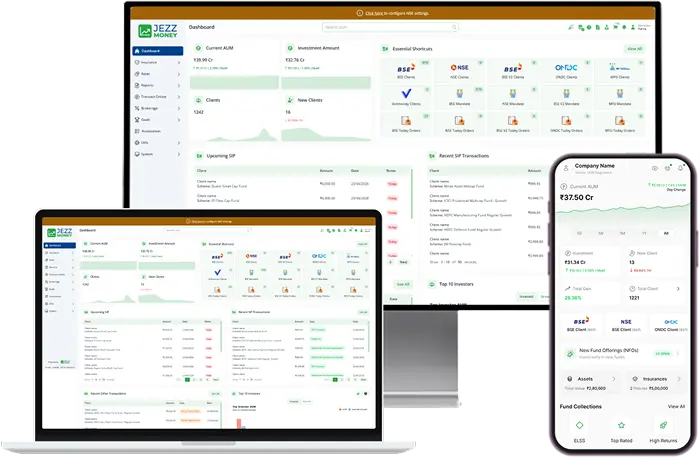
JezzMoney brings these activities together on a single platform, helping Mutual Fund Distributors (MFDs) save time, stay organized, and deliver a better client experience. Here's how it supports your SIP growth efforts.

Manage Clients and Families in One Place

Keeping track of every client, their family members, investments, and financial goals can quickly become overwhelming.

JezzMoney provides a centralized client and family management system, making it easy to access investor information whenever you need it. This helps you offer more personalized advice and ensures no important client details are overlooked.

Never Miss SIP Follow-Ups

Many SIPs are discontinued simply because investors don't receive timely reminders or guidance. With JezzMoney, you can schedule SIP reminders, follow-up notifications, and review meetings without relying on manual tracking. Staying connected with clients at the right time helps improve SIP continuity and reduces the chances of missed investments.

Connect Through WhatsApp and Email

Regular communication plays a big role in building investor confidence, especially during market volatility. JezzMoney lets you reach clients through WhatsApp and email, making it easy to share market updates, investment reminders, portfolio reviews, and educational content. Instead of contacting every client individually, you can communicate consistently while saving valuable time.

Help Clients Invest with Clear Goals

Investors are more likely to stay committed when they know what they're investing for. JezzMoney's goal planning tools help you map investments to specific financial objectives, whether it's retirement, a child's education, buying a home, or wealth creation. This shifts the conversation away from short-term market movements and keeps clients focused on long-term outcomes.

Generate Professional Portfolio Reports

Clients want to understand how their investments are performing without having to interpret complicated statements. JezzMoney offers detailed portfolio reports that present investment performance in a simple and easy-to-understand format. Reviewing these reports together during client meetings makes conversations more productive and strengthens investor confidence.

Use Financial Calculators to Explain Investment Potential

Sometimes, a visual projection is more convincing than a lengthy explanation. JezzMoney includes financial calculators that help you demonstrate how SIPs can grow over time, the benefits of increasing investment amounts, and the impact of staying invested for the long term. These personalized projections make financial planning discussions more meaningful and help clients make informed decisions.

Automate Client Engagement

As your business grows, keeping every client engaged manually becomes challenging. JezzMoney helps automate routine communication, including SIP reminders, follow-up messages, market updates, newsletters, and important greetings. This allows you to maintain regular contact with clients while focusing more on building relationships and acquiring new business.

Track and Grow Your SIP Book

Growing your SIP business starts with knowing where you stand. JezzMoney gives you visibility into your SIP book, helping you monitor registrations, identify inactive investors, track growth, and spot opportunities for SIP top-ups or reactivations. Having these insights in one place makes it easier to plan your next steps and grow your business consistently.

Technology can't replace the relationship between an advisor and a client, but it can strengthen that relationship. By simplifying client management, automating routine tasks, and helping you stay connected with investors, JezzMoney gives you more time to focus on what matters most: building trust and growing your SIP book.

Mistakes MFDs Should Avoid During Volatile Markets

Market volatility can test an investor's patience, but it also tests an advisor's approach. The way you respond during uncertain times can either strengthen client relationships or weaken them. Avoiding a few common mistakes can make a significant difference in client retention and long-term SIP growth.

Stopping Client Communication

One of the biggest mistakes is becoming silent when markets are falling. If clients don't hear from you, they'll often look elsewhere for answers—whether that's social media, television, or friends. Unfortunately, that information isn't always accurate or relevant to their financial goals.

Stay in touch with regular updates, educational content, or simple check-in calls. Even a short message can reassure clients that you're available to guide them through market fluctuations.

Focusing Only on Returns

When markets are down, discussing only portfolio returns can increase investor anxiety. Clients may start judging their investments based on recent performance instead of their long-term objectives.

Instead, shift the conversation towards financial goals, investment discipline, and the benefits of staying invested. Help clients understand that short-term market movements are just one part of a much longer investment journey.

Ignoring Existing SIP Investors

Many advisors spend most of their time acquiring new clients while paying less attention to investors who already have active SIPs. During volatile markets, this can lead to unnecessary SIP cancellations and lower client confidence.

Reach out to your existing investors regularly. Answer their questions, review their portfolios, and remind them why they started investing. Retaining an existing SIP is often easier and more valuable than replacing it with a new one.

Lack of Follow-Up

A single conversation is rarely enough to address an investor's concerns. Clients may still have doubts after your first discussion, especially if market volatility continues. Plan regular follow-ups to check on their concerns, share market updates, and review their financial goals. Consistent communication shows clients that you're invested in their financial success, not just their investments.

Emotional Selling

When markets are unstable, some advisors try to create a sense of urgency by being overly aggressive in their claims or by promising short-term recovery. This kind of manipulation can only hurt their credibility if the market performs differently from what was promised to clients. Keep your head clear, tell the truth, and only promise those things that you know you can keep.

Good Mutual Fund Distributors know that market turbulence is not the mere result of financial mismanagement, but of managing people's feelings and emotions about their investments. You can forge deep, lasting relationships with your clients if you provide regular updates, talk about investment objectives in the longer run, and give them genuine advice. Such a relationship would survive even through the darkest periods of market crashes.

Summary

The most successful advisors understand that SIPs are built for every market cycle. By educating clients, addressing their concerns, communicating regularly, and using the right technology, you can improve SIP retention, encourage new investments, and build stronger, long-lasting client relationships.

Every conversation you have during a market downturn is an opportunity to strengthen investor confidence. When clients understand the value of staying invested, they're more likely to continue their SIPs and stay committed to their long-term financial goals.

If you're looking for a smarter way to manage clients, automate follow-ups, track SIP growth, and deliver a better investment experience, JezzMoney gives you everything you need on a single platform. Explore our Mutual Fund Distributor Software Features or get started with JezzMoney today.

FAQs about Sell More SIPs

Should investors continue SIPs during market volatility?

How can MFDs convince hesitant investors?

Is SIP better than a lump sum during market corrections?

What is rupee cost averaging?

How can JezzMoney help grow SIP registrations?